


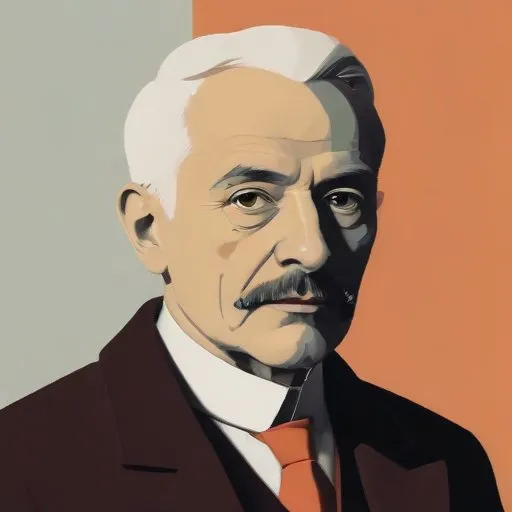
A pioneering scholar who explored Eastern European cultures, languages, and histories, and wrote influential works of fiction, including the Gothic novel "The Manuscript Found in Saragossa".
Jan Potocki, a Polish nobleman, ethnologist, linguist, and author, is best known for his captivating picaresque novel, The Manuscript Found in Saragossa, a work that has earned him a revered place in the literary world. This multifaceted individual's fascinating life, filled with adventure, intellectual pursuits, and a dash of the mysterious, has captivated readers and historians alike.
Born on March 8, 1761, into the affluent Potocki aristocratic family, Jan's life was marked by extensive travels, military service, and a passion for learning. He was educated in Switzerland, where he developed a deep appreciation for linguistics and ethnology. His journeys took him across Europe, Asia, and North Africa, where he immersed himself in local cultures, documenting customs, wars, and national awakenings, earning him the title of a pioneer of travel literature.
In addition to his literary pursuits, Jan served as a captain of engineers in the Polish Army, participating in the War of the Bavarian Succession. He also played a role in the Great Sejm, the Polish-Lithuanian Commonwealth's parliament, shortly before its demise.
Fascinated by the mysterious and the unknown, Jan delved into the world of ancient cultures, rituals, and secret societies. His interest in the occult has sparked speculation about his involvement with mysterious organizations, adding to the enigmatic aura surrounding his life.
Despite his many accomplishments, Jan's life was not without its challenges. He struggled with mental illness, melancholy, and clinical lycanthropy, which led him to believe he was transforming into a werewolf. Tragically, on December 23, 1815, Jan took his own life by gunshot, leaving behind a legacy shrouded in mystery.
Jan Potocki's contributions to literature, ethnology, and linguistics have left an indelible mark on the intellectual landscape of the Enlightenment era. His work continues to inspire scholars and readers alike, offering a unique glimpse into the complexities of his time. As a true Renaissance man, Jan's life serves as a testament to the power of curiosity, passion, and intellectual pursuit.
Though Jan's life was marked by turmoil and tragedy, his work continues to inspire generations with its wisdom and insight. As he once wrote, "The world is a book, and those who do not travel read only one page."
Jan Potocki's remarkable life, marked by intellectual curiosity, adventure, and a passion for learning, serves as a testament to the power of human ingenuity and creativity. As we reflect on his life and work, we are reminded of the importance of embracing the complexities and mysteries of the human experience.
Born in 1867
A Polish leader who played a crucial role in regaining Poland's independence after World War I and served as the country's prime minister, known for his military prowess and statesmanship.
Born in 1798
A national hero in Poland, celebrated for his romantic poetry and plays that ignited a sense of patriotism and freedom during a time of foreign rule. His works are still widely read and performed today.
Born in 1809
A leading figure of the Polish Romantic movement, known for his poetic and theatrical works that explored themes of love, freedom, and national identity. His plays and poems are still widely performed and studied in Poland today.
Born in 1869
A Polish Renaissance man who excelled in poetry, playwriting, and painting, creating iconic works that merged folk motifs with modernist styles. His innovative art and literature continue to inspire Polish culture.
Born in 1846
A Polish journalist and author who wrote epic historical novels, including "Quo Vadis", which won him the Nobel Prize in Literature in 1905. His works are known for their vivid storytelling and historical accuracy.
