


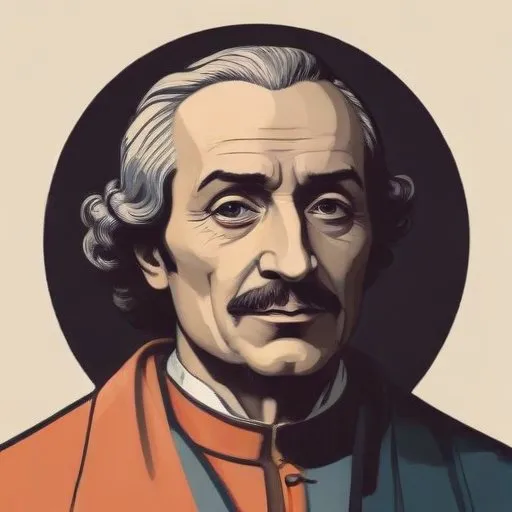
A French philosopher who critiqued modern society, arguing that Western democracies are threatened by their own weaknesses, and that intellectuals often fail to confront the dangers of totalitarianism. He's known for his provocative writings on politics, philosophy, and culture.
JeanFranois Revel, a renowned French philosopher, journalist, and author, is best known for his provocative book, Without Marx or Jesus: The New American Revolution Has Begun, published in French in 1970. This groundbreaking work cemented his reputation as a prominent European proponent of classical liberalism and free market economics.
Born JeanFranois Ricard on January 19, 1924, in Marseille, Revel grew up in a prosperous middle-class family. During World War II, he participated in the French Resistance, an experience that would later shape his writing style and approach to intellectual inquiry. He adopted the pseudonym Revel, eventually making it his legal surname, and went on to study philosophy at the prestigious École normale supérieure (ENS) in Paris.
Revel's career was a testament to his boundless intellectual curiosity and critical thinking skills. He began teaching philosophy in French Algeria, Italy, and Mexico, before settling in Lille. In 1963, he quit teaching to pursue a career in journalism and writing, eventually becoming the chief literary editor for France Observateur and L'Express.
Initially a socialist, Revel was a speechwriter for French politician François Mitterrand and even ran as a socialist candidate in the 1967 parliamentary elections, which he lost. However, as the Cold War unfolded, Revel began to question socialism and eventually became a champion of classical liberal values, advocating for individual freedom, free markets, and limited government intervention.
Revel's philosophical contributions primarily revolved around the intersection of politics, economy, and society. He believed in the importance of critical thinking, intellectual freedom, and the protection of individual rights. His work was characterized by a strong emphasis on reason, empirical evidence, and the dangers of ideologies that stifle human progress.
Revel's ideas and writings have had a profound impact on modern society, shaping the intellectual landscape of France and beyond. His advocacy for classical liberalism has inspired generations of thinkers, policymakers, and entrepreneurs. As a member of the Académie française, Revel played a significant role in promoting intellectual inquiry and critical thinking in French society.
Revel's ideas and writings have influenced a wide range of fields, from politics and economics to literature and art. His critique of socialism and advocacy for classical liberalism have inspired numerous writers, filmmakers, and artists, shaping the cultural and intellectual landscape of modern society.
JeanFranois Revel's life and work serve as a testament to the power of intellectual curiosity, critical thinking, and the pursuit of truth. His legacy continues to inspire generations of thinkers, politicians, and entrepreneurs, offering a beacon of hope in the face of ideological dogma and intellectual conformity.
Born in 1905
A prominent public intellectual who wrote extensively on politics, history, and philosophy, offering insightful critiques of totalitarianism and communism. Known for his advocacy of liberal democracy and nuanced understanding of modern society.
Born in 1913
A French novelist, philosopher, and journalist who wrote influential works like "The Stranger" and "The Plague", exploring absurdism and the human condition.
Born in 1905
Existentialist philosopher and playwright who argued that humans have complete freedom to choose their actions and create their own meaning in life, influencing modern thought on morality and individual responsibility.
Born in 1908
A pioneering feminist philosopher who wrote extensively on ethics, politics, and gender, famously arguing that "one is not born, but rather becomes, a woman."
Born in 1908
A French philosopher and academic who developed the concept of phenomenology, exploring the relationship between the self and the world, and is known for his work on perception, consciousness, and embodiment.
Born in 1889
A German philosopher and academic who explored the meaning of existence, time, and human existence, influencing 20th-century philosophy with his concept of "Being-in-the-world".
Born in 1724
Developed influential philosophical frameworks, such as the Critique of Pure Reason, that shaped modern Western thought on ethics, morality, and human understanding.
