


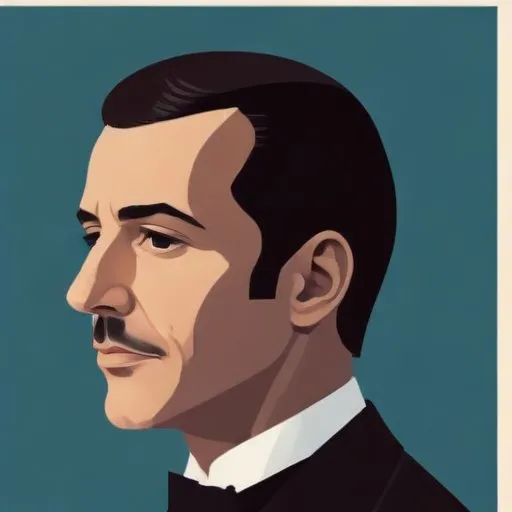
A French Baroque composer and conductor, known for his grand and festive music, particularly his "Rondeau" from the opera "Sylvie", which is still widely recognized today.
Renowned for his dramatic works that catapulted him to the forefront of Baroque music in France, Jean-Joseph Mouret is a name synonymous with masterpieces that continue to enchant audiences to this day. Specifically, his iconic Fanfare-Rondeau from his first Suite de symphonies has become an enduring signature tune, featured in the PBS program Masterpiece and frequently played at modern weddings.
Born on April 11, 1682, in Avignon, France, Mouret was the son of Jean Bertrand Mouret, a silk merchant. His father recognized his early talent for music and provided him with a good education, which included musical studies. Mouret's gifts for singing and composition earned him success from a young age, and by the time he was twenty-five, he had settled in Paris.
In Paris, Mouret's agreeable personality and exceptional talent quickly made him well-known. In 1708, he was introduced to Anne, Duchess of Maine, whose salon at Sceaux was a hub of courtly society during the reign of Louis XIV. The Duchess, impressed by Mouret's skills, appointed him as her Surintendant de la musique at Sceaux, a position that allowed him to showcase his craft to the elite audience of France.
During his time at Sceaux, Mouret produced operas and was responsible for organizing the sixteen biweekly Grandes nuits in the 1714-1715 season. He created intermèdes and allegorical cantatas in the court masque tradition, collaborating with the most esteemed musicians of the time. This period saw the creation of some of his most esteemed works, including Les fêtes, ou Le triomphe de Thalie, a ballet-opera with a libretto by Joseph de La Font, which premiered at the Opéra on August 19, 1714.
The original prologue of Les fêtes, which depicted Thalia, the muse of Comedy, triumphing over Melpomene, the muse of Tragedy, sparked controversy and was promptly revised. The revised opening, titled La critique des fêtes de Thalie, was presented on October 9, 1714. Despite the controversy, Mouret's work continued to thrive, and the 1720 edition of Les fêtes was published with a revised title.
Although many of Mouret's works are rarely performed today, his influence on French Baroque music is undeniable. His compositions continue to inspire musicians and delight audiences, and his Fanfare-Rondeau remains an iconic piece of music. Mouret's legacy serves as a testament to the power of art to transcend time and captivate generations to come.
Born in 1683
A prominent figure in the Baroque period, this composer and theorist revolutionized Western classical music with innovative harmonies and treatises on music theory, shaping the course of classical music.
Born in 1714
A pioneering opera composer who revolutionized the art form with his innovative and expressive works, blending music and drama in a way that captivated audiences.
Born in 1714
A prominent composer of the Neapolitan School, he wrote over 80 operas and was a key figure in the transition between the Baroque and Classical periods. His music was known for its dramatic intensity and expressive melodies.
Born in 1710
A Baroque composer, violinist, and organist who made significant contributions to the development of opera and sacred music, particularly with his famous "Stabat Mater" composition.
Born in 1705
A virtuosic musette player and composer, he crafted delightful Baroque music, particularly for the French court. His works showcased exceptional technique and lyricism.
Born in 1697
A virtuosic violinist and prolific composer, he crafted over 900 works, including sonatas, concertos, and operas, showcasing his mastery of Baroque music. His compositions remain a staple of classical music repertoire today.
Born in 1700
A virtuosic flutist and composer, known for his expressive and technically demanding works that showcased the instrument's capabilities. He was a prominent figure in the French Baroque period, influencing the development of flute music.
Born in 1668
A renowned Baroque composer and organist, known for his intricate and expressive harpsichord music that showcased his mastery of counterpoint and ornamentation. His works continue to inspire and influence classical music today.
