


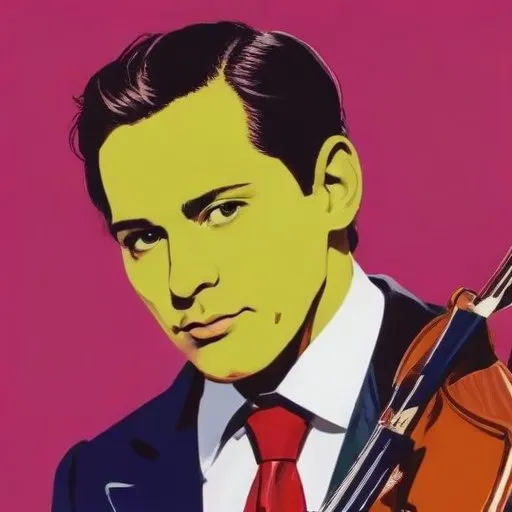
A Czech composer, violinist, and Kapellmeister, known for his contributions to the development of the classical symphony and opera, particularly in the 18th century.
Ji Antonn Benda, born in 1864, was a Czech philosopher, journalist, and literary critic who made a profound impact on modern philosophy with his groundbreaking ideas on existentialism, phenomenology, and logic. He is most renowned for his influential book, The Crisis of the Modern Mind, which critiqued the intellectual and moral bankruptcy of modern European society.
Benda was born in Prague, Bohemia (now the Czech Republic), to a Jewish family. He pursued his higher education in philosophy at the Charles-Ferdinand University, where he was deeply influenced by the teachings of German philosopher, Edmund Husserl. This exposure to phenomenology would later shape his distinctive philosophical perspective.
Benda's philosophical oeuvre was characterized by a piercing critique of modernity's moral decay and intellectual complacency. He argued that the crisis of modern society stemmed from the rejection of spiritual values and the unchecked pursuit of scientific progress. In his seminal work, The Crisis of the Modern Mind, he posited that humanity's reliance on technology and scientific positivism had led to a vacuum of moral responsibility and intellectual curiosity.
Benda's philosophical ideas had far-reaching implications for modern society. His critique of modernity's ills inspired a generation of thinkers, including existentialists like Jean-Paul Sartre and Martin Heidegger. His emphasis on the importance of spiritual values and individual responsibility resonated with a broader audience, influencing the development of phenomenology, existentialism, and humanism.
Benda's life was marked by personal and intellectual turbulence. His Jewish heritage placed him in a precarious position during World War II, and he was forced to flee Nazi-occupied Czechoslovakia in 1939. He spent the remainder of his life in exile, continuing to write and publish until his death in 1948.
Benda's philosophical legacy extends beyond his own lifetimes. His ideas on existentialism, phenomenology, and the crisis of modernity continue to inspire scholars and thinkers today. As a Czech philosopher, his work reflects the intellectual and cultural ferment of Eastern Europe in the early 20th century, bridging the gap between philosophical traditions and cultural identities.
Benda's philosophical ideas shared affinities with those of his contemporaries, such as Edmund Husserl, Martin Heidegger, and Karl Jaspers. While his critique of modernity was unique, his emphasis on individual responsibility and spiritual values resonated with the existentialist and phenomenological movements of the time.
Born in 1685
A master of Baroque music, he composed over 1,000 works, including orchestral suites, cantatas, and passions, that still inspire and influence musicians today. His innovative use of counterpoint and harmony raised the bar for classical music.
Born in 1685
A renowned Baroque composer and organist, famous for creating majestic orchestral suites, operas, and oratorios, including the iconic "Messiah" masterpiece.
Born in 1678
A virtuosic violinist and prolific composer, he crafted over 400 concertos, including "The Four Seasons," which remains a beloved and iconic masterpiece of classical music.
Born in 1732
A renowned composer and pianist of the Classical period, known for his symphonies, operas, and chamber music that showcased his innovative and expressive style. He played a significant role in shaping the Classical music era.
Born in 1756
A child prodigy and master of classical music, he composed over 600 works, including symphonies, operas, and chamber music, that continue to inspire and influence musicians today.
Born in 1770
A musical genius who expanded the possibilities of classical music, creating iconic symphonies and piano sonatas that continue to inspire and influence generations of artists.
Born in 1797
A renowned composer of symphonies, operas, and chamber music, particularly famous for his emotional and expressive lieder (art songs) that showcased his mastery of melody and harmony.
Born in 1810
A renowned Romantic-era composer and influential music critic, known for his expressive and emotionally charged works, including symphonies, piano music, and art songs.
