


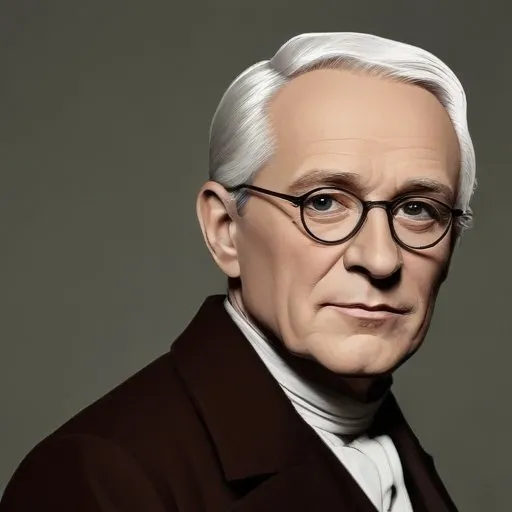
A prominent Baroque composer and music theorist, known for his innovative and influential compositions, particularly in the concerto grosso genre. His treatise on counterpoint is still studied today.
Johann David Heinichen is renowned as one of the most influential Baroque composers of his time, celebrated for bringing the musical genius of Venice to the court of Augustus II the Strong in Dresden. His groundbreaking contributions to music theory, particularly the invention of the circle of fifths, have left an indelible mark on the world of music.
Heinichen was born on April 17, 1683, in the small village of Krssuln, Saxony-Anhalt, Germany. His father, Michael Heinichen, was a pastor and a music lover who had studied at the Thomasschule Leipzig, a prestigious music institution. Heinichen's early exposure to music led him to attend the same school, where he studied music with renowned composers Johann Schelle and Johann Kuhnau.
Heinichen pursued a law degree at the University of Leipzig, qualifying as a lawyer in 1705. However, his passion for music never wavered, and he continued to compose operas while practicing law in Weissenfels. This dual career path was not uncommon for composers of the time, with notable figures like Kuhnau, Graupner, and Telemann also having law degrees.
In 1710, Heinichen published the first edition of his seminal treatise on thoroughbass, a comprehensive guide to harmony and counterpoint. He then embarked on a seven-year journey to Italy, where he spent most of his time in Venice. During this period, he achieved great success with two operas, Mario and Le passioni per troppo amore (1713). The operas were performed to great acclaim, with Mario being restaged in Hamburg in 1716 under the German title Calpurnia, oder die römische Grossmut.
In 1712, Heinichen became the music teacher to Leopold, Prince of Anhalt-Köthen, who later appointed him as composer. This royal patronage led to his appointment as Kapellmeister at the court of Augustus II the Strong in Dresden, where he worked alongside other prominent composers, including Johann Sebastian Bach.
Heinichen's contributions to music theory have had a lasting impact on Western classical music. His invention of the circle of fifths, a fundamental concept in music harmony, has influenced generations of composers. Although his music fell into relative obscurity after his death, his work as a music theorist and composer has experienced a resurgence in popularity in recent years.
Heinichen's personal life is marked by his passion for music and his dedication to his craft. He died on July 16, 1729, leaving behind a legacy that continues to inspire and influence musicians to this day.
Born in 1685
A master of Baroque music, he composed over 1,000 works, including orchestral suites, cantatas, and passions, that still inspire and influence musicians today. His innovative use of counterpoint and harmony raised the bar for classical music.
Born in 1685
A renowned Baroque composer and organist, famous for creating majestic orchestral suites, operas, and oratorios, including the iconic "Messiah" masterpiece.
Born in 1685
A virtuosic harpsichordist and composer, renowned for crafting over 550 sonatas that showcased his innovative and expressive style, blending Italian and Portuguese influences. 42
Born in 1678
A virtuosic violinist and prolific composer, he crafted over 400 concertos, including "The Four Seasons," which remains a beloved and iconic masterpiece of classical music.
Born in 1714
A renowned 18th-century musician, he was a prolific composer and virtuosic performer, known for his expressive and innovative keyboard music that bridged the Baroque and Classical styles. His compositions, particularly for harpsichord and piano, showcased his mastery of counterpoint and harmony.
Born in 1714
A pioneering opera composer who revolutionized the art form with his innovative and expressive works, blending music and drama in a way that captivated audiences.
Born in 1714
A prominent composer of the Neapolitan School, he wrote over 80 operas and was a key figure in the transition between the Baroque and Classical periods. His music was known for its dramatic intensity and expressive melodies.
