


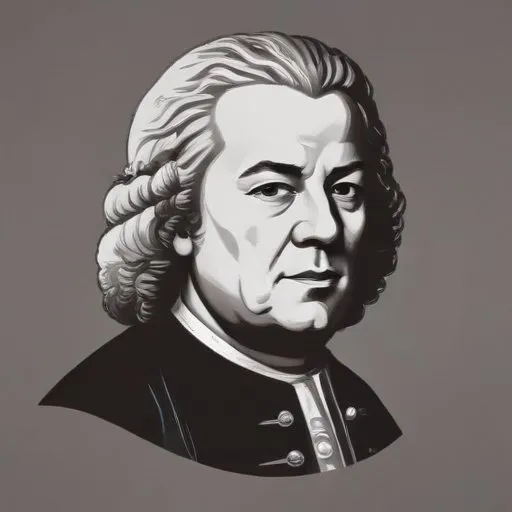
A German Baroque composer, known for his sacred music and contributions to the development of the chorale cantata form. His works showcase a unique blend of traditional and innovative elements.
Johann Michael Bach, often overshadowed by his more famous cousins, Johann Sebastian Bach and Johann Christoph Bach, was a remarkable German composer of the Baroque period. He is renowned for his stunning chorale preludes, cantatas, and instrumental works, which showcase his mastery of intricate harmonies and melodies.
Born in Arnstadt, Schwarzburg-Sondershausen, on August 19, 1648, Johann Michael was the son of Heinrich Bach, a great uncle of Johann Sebastian Bach. In 1673, he became the organist and town clerk of Gehren, a position he held until his death in 1694.
One of Johann Michael's most celebrated works is the small chorale prelude for organ, In Dulci Jubilo, which was mistakenly attributed to Johann Sebastian Bach for many years. This beautiful piece showcases Johann Michael's ability to craft complex harmonies and lilting melodies.
Other notable works include cantatas such as Ach, bleib bei uns, Herr Jesu Christ, Liebster Jesu, hr mein Flehen, and Ach, wie sehnlich wart ich der Zeit, which demonstrate his skill in combining vocal and instrumental forces.
In addition to his choral and instrumental works, Johann Michael was also a skilled craftsman, creating harpsichords and other musical instruments.
Johann Michael was the father of Maria Barbara Bach, who would later become the first wife of Johann Sebastian Bach. This familial connection has led some to refer to him as the "Gehrener Bach," distinguishing him from the "Wuppertaler Bach," Johann Michael Bach (1745-1820).
Despite his impressive compositional output and family connections, Johann Michael's life was marked by simplicity and humility. He remained in Gehren for most of his life, dedicating himself to his duties as organist and town clerk.
Johann Michael Bach's contributions to the world of music are undeniable, yet he remains somewhat overshadowed by his more famous cousins. Nevertheless, his music continues to delight audiences and inspire composers to this day.
His legacy extends beyond his compositions, as he played a significant role in shaping the musical traditions of the Bach family. His influence can be seen in the works of his cousins, particularly Johann Sebastian, who often incorporated elements of Johann Michael's style into his own music.
Despite his relatively short life, Johann Michael Bach left an indelible mark on the world of music. His compositions, though sometimes overlooked, continue to inspire and delight audiences, ensuring his legacy as a master of the Baroque era.
Born in 1685
A master of Baroque music, he composed over 1,000 works, including orchestral suites, cantatas, and passions, that still inspire and influence musicians today. His innovative use of counterpoint and harmony raised the bar for classical music.
Born in 1714
A renowned 18th-century musician, he was a prolific composer and virtuosic performer, known for his expressive and innovative keyboard music that bridged the Baroque and Classical styles. His compositions, particularly for harpsichord and piano, showcased his mastery of counterpoint and harmony.
Born in 1735
A renowned Baroque composer and viol player, known for his innovative and expressive works that blended German and Italian styles. He was a prominent figure in London's musical scene during the 18th century.
Born in 1710
Eldest son of J.S. Bach, a Baroque composer who blended his father's style with emerging Classical elements, creating innovative and expressive works. He was a renowned organist and harpsichordist.
Born in 1677
A German Baroque composer and violinist, known for his orchestral suites and sacred music, contributing to the development of the concerto grosso form.
Born in 1685
A renowned Baroque composer and organist, famous for creating majestic orchestral suites, operas, and oratorios, including the iconic "Messiah" masterpiece.
Born in 1678
A virtuosic violinist and prolific composer, he crafted over 400 concertos, including "The Four Seasons," which remains a beloved and iconic masterpiece of classical music.
Born in 1585
A renowned Baroque composer and organist, known for his contributions to the development of the oratorio and passion genres, creating over 500 works that showcased his mastery of choral music.
