


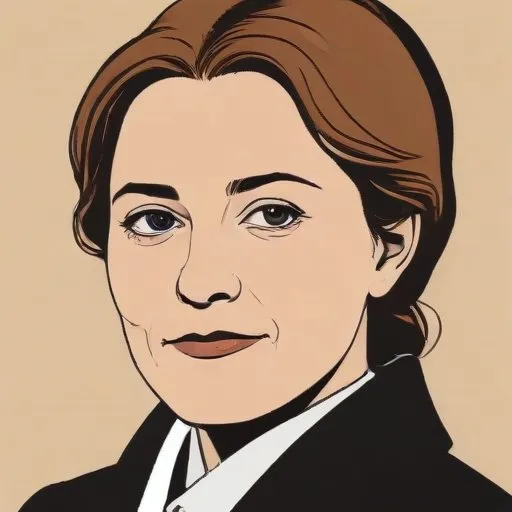
A pioneering female composer who broke into the male-dominated world of classical music, creating symphonies, operas, and chamber music that showcased her unique voice and style.
Johanna MllerHermann was a trailblazing Austrian composer and pedagogue, known for her remarkable contributions to the world of music. With a body of work that spans over four decades, she left an indelible mark on the music scene, inspiring generations of musicians and composers.
Born on January 15, 1868, in Vienna, Austria, Johanna began receiving music lessons at a young age, alongside her two siblings. Her father, a section head in the Austrian Ministry of Culture and Education, encouraged her musical pursuits. Despite the societal norms of the time, which limited women's access to higher education, Johanna graduated from a teacher training college and taught at a public education school in Vienna.
In 1893, Johanna married Otto Mller-Martini, a transport expert, which allowed her to pursue her musical ambitions full-time. She continued her musical studies, taking piano and violin lessons, and receiving instruction in music theory from renowned composers such as Guido Adler, Alexander von Zemlinsky, Josef Foerster, and Franz Schmidt.
Johanna's first published work, Seven Songs, was released in 1895. Her music was regularly performed at the Vienna Musikverein and women's composition evenings, where she met fellow composer Mathilde Kralik von Meyrswalden. In 1918, she succeeded her teacher Joseph Bohuslav Foerster as professor of music theory at the New Vienna Conservatory, becoming one of the first women to hold the position.
Johanna's oeuvre includes songs, chamber music, and large-scale works for soloists, choir, and orchestra, often inspired by literary and programmatic themes. Her oratorio, Lied der Erinnerung (In Memoriam), set to a text by Walt Whitman, and her symphonic fantasy on the Ibsen play Brand, showcase her mastery of orchestration and musical storytelling.
After her death in 1941, Johanna's work was championed by prominent conductors like Wilhelm Furtwngler, ensuring the preservation of her compositions for future generations. Her legacy extends beyond her music, as she paved the way for women in music, inspiring a new wave of female composers and pedagogues.
Johanna's commitment to education and her perseverance in the face of societal barriers reflect her strong belief in the power of music to transform and uplift. Her music, characterized by its lyrical and expressive qualities, celebrates the human experience and continues to resonate with audiences today.
Johanna MllerHermann's trailblazing career has inspired countless women to pursue careers in music, pedagogy, and beyond. Her music, though rooted in the classical tradition, continues to influence contemporary composers and musicians, ensuring her legacy as a pioneer in the world of music.
Born in 1879
Austrian-American composer and author who bridged the gap between late Romanticism and early Modernism, known for her own compositions and her influence on notable artists like Gustav Mahler and Franz Werfel.
Born in 1874
A pioneer of atonality and 12-tone serialism, revolutionizing classical music with innovative compositions that pushed boundaries of harmony and melody.
Born in 1860
A visionary composer and conductor who expanded symphonic music's emotional depth and complexity, creating works of profound beauty and intensity.
Born in 1864
A renowned composer and conductor of the late Romantic era, known for his tone poems and operas that showcased his mastery of orchestration and expressive storytelling.
Born in 1860
A Slovene-Austrian composer who expanded the art of songwriting by setting poetic lyrics to music, creating a new level of emotional intensity and depth. His innovative compositions continue to influence classical music today.
Born in 1897
A child prodigy turned Hollywood legend, he composed iconic film scores, including the swashbuckling adventures of Errol Flynn, and is revered for his lush, romantic music.
Born in 1878
Austrian composer and conductor of early 20th-century operas and symphonies, known for his bold, expressive, and innovative style that blended late Romanticism with early Modernism. His works are still performed today, offering a glimpse into a bygone era.
