


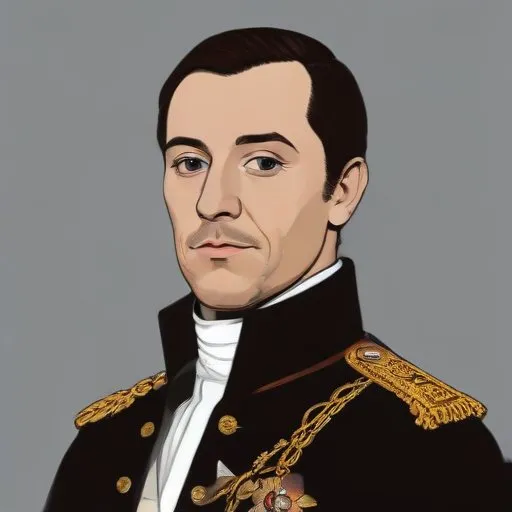
A 17th-century English nobleman and politician who served as Governor of Tangier and played a key role in the Restoration of the monarchy. He's also known for his military campaigns and loyalty to the crown.
John Belasyse, 1st Baron Belasyse, was a prominent English nobleman, Royalist officer, and Member of Parliament, known for his bravery and unwavering loyalty to the crown during the tumultuous era of the Civil War.
Born on June 24, 1614, at Newburgh Grange, Yorkshire, Belasyse was baptized on July 24, 1614, at Coxwold, Yorkshire. He was the second son of Thomas Belasyse, 1st Viscount Fauconberg, a Member of Parliament for Thirsk, and his wife Barbara Cholmondeley, daughter of Sir Henry Cholmondeley of Roxby in Yorkshire.
Belasyse's career was marked by his unwavering dedication to the Royalist cause. Shortly after the start of the Civil War, he was disabled from sitting in the Long Parliament and joined the Royalist forces. He raised six regiments of horse and foot soldiers at his own expense and took part in several battles, including the Battle of Edgehill, the Battle of Brentford, the First Battle of Newbury, the Battle of Selby, and the Battle of Naseby.
Belasyse was wounded several times during his military campaigns, but his bravery and loyalty earned him recognition. On January 27, 1645, he was raised to the peerage by King Charles I under the title of Baron Belasyse of Worlaby, Lincolnshire.
After the Civil War, Belasyse's life was marked by turmoil and imprisonment. He suffered a long spell of imprisonment during the Popish Plot, although he was never brought to trial. Despite this, he continued to live a life of luxury, impressing Samuel Pepys with his impressive collection of paintings at his residence in Whitton, near Twickenham in Middlesex.
John Belasyse, 1st Baron Belasyse, left an indelible mark on English history. His bravery, loyalty, and dedication to the Royalist cause during the Civil War earned him recognition and admiration from his contemporaries. His legacy serves as a testament to the complexities and challenges of living during a time of great upheaval and change.
Belasyse's life and legacy serve as a reminder of the importance of loyalty, bravery, and dedication to one's principles. His story has inspired numerous historical accounts and continues to captivate historians and enthusiasts alike.
Born in 1630
The last monarch of the House of Stuart, restored to the throne after a republican Commonwealth, known for his lavish spending, mistresses, and the Great Fire of London. He ruled with a mix of absolutism and indulgence, shaping England's Restoration era.
Born in 1633
The last Catholic monarch of England, Scotland, and Ireland, who attempted to restore Catholicism and absolute monarchy, sparking the Glorious Revolution. He's infamous for his authoritarian rule and religious intolerance.
Born in 1616
A 17th-century Scottish politician who served as Secretary of State for Scotland, known for his role in restoring the Scottish Episcopacy and his influence on the country's government during the Restoration period.
Born in 1608
A prominent military leader and politician who played a key role in the Restoration of the monarchy in England, Scotland, and Ireland, and served as Lord Lieutenant of Ireland.
Born in 1609
A 17th-century historian and politician who served as Chancellor of the Exchequer, known for his influential historical writings and shaping England's government. He penned the "History of the Rebellion," a seminal work on the English Civil War.
Born in 1641
A skilled diplomat who played a crucial role in shaping British foreign policy during the late 17th century, particularly in negotiating the Treaty of Ryswick. He was also a key advisor to King William III.
Born in 1650
A renowned military strategist and politician who led British forces to numerous victories in the War of the Spanish Succession, earning him great acclaim and prestige. He was also a trusted advisor to Queen Anne.
