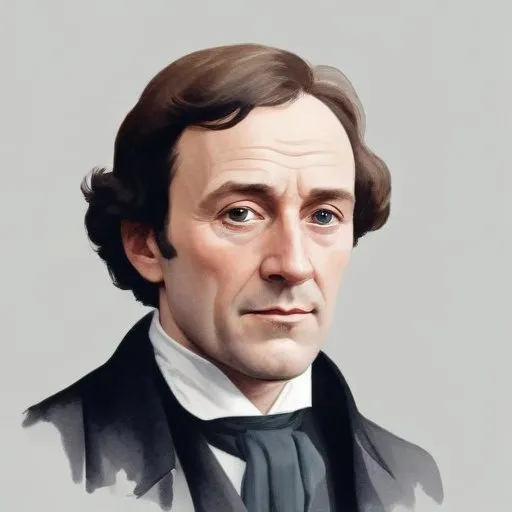
John Cleveland: The Satirical Voice of the English Civil War
A Royalist Poet with a Penchant for Politics
John Cleveland, a 17th-century English poet, is best known for his biting political satire that endeared him to the Royalist cause during the English Civil War. His clever use of heroic couplets and witty verse made him a celebrated figure among his contemporaries.
Early Life and Education
Born on June 16, 1613, in Loughborough, Cleveland was the son of Thomas Cleveland, Vicar of Hinckley. He received his education at Hinckley Grammar School and later attended Christs College, Cambridge, where he graduated with a BA in 1632. Cleveland became a fellow of St Johns College in 1634, taking on the roles of college tutor and lecturer in rhetoric.
A Staunch Royalist
Cleveland's allegiance to the Royalist cause was unwavering, and he vehemently opposed the election of
Oliver Cromwell as member for Cambridge in the Long Parliament. This stance led to his dismissal from his college post in 1645. Undeterred, Cleveland joined King Charles I, who welcomed him warmly, and appointed him judge advocate at Newark-on-Trent.
Imprisonment and Redemption
In 1646, Cleveland lost his judge advocacy and wandered the country, relying on the kindness of fellow Royalists. He was eventually imprisoned at Great Yarmouth in 1655, but managed to secure his release by appealing to Cromwell himself.
Poetic Works
Cleveland's poetic talent was first showcased in
The Character of a London Diurnal in 1647. Throughout his career, his poems appeared in over 20 collections, solidifying his reputation as a master of satirical verse. His most notable work,
Poems, was published in 1654. Cleveland's writing often explored historical themes, including the 14th-century Wat Tyler rebellion against Richard II.
Legacy and Impact
John Cleveland's contributions to English literature are undeniable. His biting satire and clever use of language have earned him recognition as a detached, intellectual, and metaphysical poet. Cleveland's work continues to inspire and entertain readers to this day, offering a unique glimpse into the tumultuous world of 17th-century England.
Interesting Facts
- Cleveland wrote Royalist news books, including Mercurius Pragmaticus, which supported King Charles II.
- He was a college tutor and lecturer in rhetoric at St Johns College, Cambridge.
- Cleveland's poem, "May it please yr Highnesse," was written in 1657 as a petition to Cromwell.
In Conclusion
John Cleveland's remarkable life and works offer a fascinating insight into the world of 17th-century English politics and literature. His commitment to the Royalist cause and his mastery of satirical verse continue to captivate readers and inspire new generations of writers.
FAQ
Who was John Cleveland?
John Cleveland was an English poet and educator who lived from 1613 to 1658. He was a prominent figure in English literary circles during the 17th century, and is best known for his satirical poetry.
What is John Clevelands most famous work?
John Clevelands most famous work is his satirical poem The Rebel Scot, which was published in 1639. The poem is a scathing critique of the Scottish invasion of England during the Bishops Wars.
How did John Clevelands poetry influence English literature?
John Clevelands poetry had a significant impact on English literature, influencing the development of satire and other literary forms. His work was widely read and admired during his lifetime, and continues to be studied by scholars today.
What is John Clevelands legacy in English literature?
John Clevelands legacy lies in his contributions to English literature, particularly in the field of satire. He is remembered as a master of the satirical poem, and his work continues to be admired for its wit and cleverness.
How did John Clevelands education influence his writing?
John Clevelands education at Cambridge University had a significant impact on his writing, exposing him to classical literature and rhetoric. His education helped to shape his writing style and influenced his use of satire and other literary forms.