


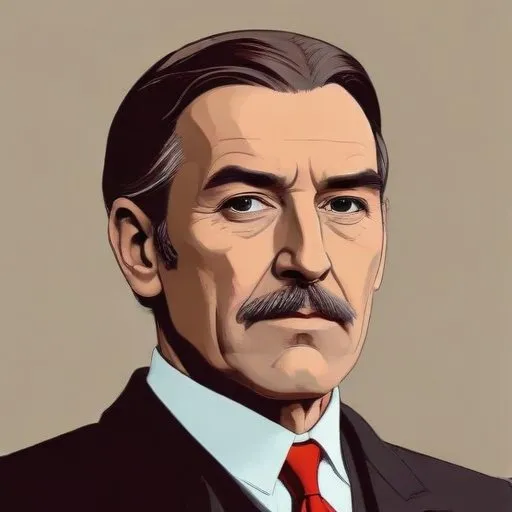
A 16th-century English politician who served as a member of Parliament and held various government positions, known for his involvement in the English Reformation and his role in the Pilgrimage of Grace.
John Neville, 3rd Baron Latimer, is perhaps best known for his brief but significant marriage to Catherine Parr, who would later become the sixth and final wife of King Henry VIII. However, Neville's life was marked by more than just his notable marriage, as he navigated the complex web of 16th-century English politics and aristocracy.
Born on November 17, 1493, John Neville was the eldest son of Richard Neville, 2nd Baron Latimer, and Anne Stafford. He had five brothers and six sisters, and his family's reputation for military service and seeking power was well-established in the North.
Neville came to court as one of the King's gentlemen pensioners and served in King Henry VIII's French campaign in 1513, where he was knighted after the capture of Tournai. He later took part in the investigation of the Holy Maid of Leominster around 1517.
In 1529, Neville was knight of the shire MP for Yorkshire, alongside his cousin, Sir Marmaduke Constable. After his father's death in 1530, Neville was appointed to the Council of the North and signed the letter petitioning Pope Clement VII to grant Henry VIII a divorce from Catherine of Aragon.
However, Neville's involvement in the Pilgrimage of Grace in 1536 remains shrouded in mystery. While rumors suggested he was captured by the rebels, Neville himself described his role as "a very painful and dangerous time to me." He later represented the insurgents in conferences with the royal leaders, helping to secure an amnesty, but took no part in Bigod's Rebellion the following year.
Neville lived chiefly at Snape Castle in Yorkshire and was known for his ambivalent stance during the Pilgrimage of Grace. His marriage to Catherine Parr, which took place in 1533, lasted only a few years until his death on March 2, 1543.
Despite his relatively short life, Neville left a lasting impact on English history, particularly through his marriage to Catherine Parr, who would go on to become a influential queen and stepmother to Henry VIII's children, including Edward VI, Mary I, and Elizabeth I.
Born in 1925
A renowned stage and screen actor, celebrated for his versatility in playing a wide range of characters, from Shakespearean roles to villainous parts in popular TV shows.
73 Years Old
A British singer-songwriter and pianist known for his emotive, poetic lyrics and soaring melodies, crafting introspective and atmospheric indie-pop soundscapes.
Born in 1284
The king whose disastrous reign led to his eventual deposition and mysterious death, remembered for his alleged homosexual relationships and power struggles with nobles.
Born in 1367
The last king of the House of Plantagenet, deposed in a coup, known for his extravagance and tyranny, leading to his downfall and the rise of the Lancastrian dynasty.
Born in 1133
King of England from 1154 to 1189, known for establishing a strong centralized government, reforming the English church, and his tumultuous relationships with Thomas Becket and his sons.
Born in 1491
A larger-than-life monarch who ruled England with an iron fist, infamous for his six marriages and the English Reformation.
