


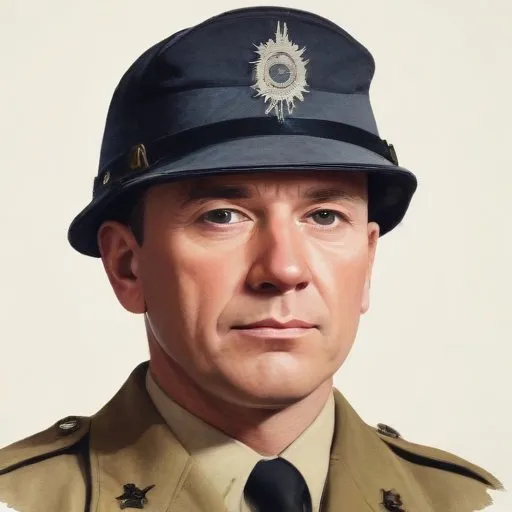
Developed advanced submarine designs and played a key role in the US Navy's Special Projects Office, leading to significant advancements in underwater warfare technology.
John P. Craven, an American scientist, is renowned for his groundbreaking work in Bayesian search theory and his instrumental role in recovering lost objects at sea. As the Chief Scientist of the Special Projects Office of the United States Navy, Craven's innovative approaches have had a profound impact on the field of oceanic systems.
Born on October 30, 1924, in Brooklyn, New York, Craven's fascination with ocean technology began at a young age. He attended Brooklyn Technical High School, where he studied ocean technology, and later earned a Bachelor of Arts degree from Cornell University.
Caven's academic pursuits continued at the California Institute of Technology, where he received a Master of Science degree, and later at the University of Iowa, where he earned a Ph.D. He also holds a law degree from the National Law Center of the George Washington University.
Caven's illustrious naval career spanned over 40 years, during which he played a pivotal role in the innovation, development, design, construction, and operational deployment of major oceanic systems. During World War II, he served as an enlisted man on the USS New Mexico BB40 and later earned his commission as an ensign in the navy through the V12 program for officer trainees.
Craven's work at the David Taylor Model Basin of the Naval Surface Warfare Center at Carderock, Maryland, focused on nuclear submarine hull designs, earning him two civilian service awards. He later became the project manager for the navy's Polaris submarine program and the navy's Special Projects Office, eventually rising to the position of Chief Scientist.
Craven's contributions to the navy were recognized with two Distinguished Civilian Service Awards, the Department of Defense's highest honor for civilians, among other commendations.
Craven's most significant achievement lies in his pioneering work on Bayesian search techniques to locate objects lost at sea. His innovative approach, known as Bayesian search theory, has been instrumental in numerous recovery operations.
By applying Bayesian principles to search operations, Craven's method enables the efficient allocation of resources, increasing the chances of successful recovery. This groundbreaking approach has had a profound impact on the field of oceanic systems, making Craven a legend in his own right.
John P. Craven's work has left an indelible mark on the scientific community, inspiring generations of researchers and engineers. His innovative approaches have not only improved the efficacy of search and recovery operations but have also contributed significantly to the advancement of oceanic systems.
Caven's legacy extends beyond his scientific contributions, as he has inspired a new generation of scientists and engineers to explore the mysteries of the ocean.
John P. Craven's remarkable journey, marked by innovative breakthroughs and pioneering spirit, serves as a testament to the power of human ingenuity and the importance of pushing the boundaries of scientific knowledge.
Born in 1900
A pioneering naval officer who played a crucial role in developing the US Navy's nuclear submarine program, revolutionizing underwater warfare and national defense.
Born in 1765
An American engineer revolutionized the cotton industry with a machine that simplified harvesting, making cotton production more efficient and profitable. This innovation had a significant impact on the economy and society.
Born in 1904
Leading the development of the atomic bomb during World War II, this brilliant mind made groundbreaking contributions to theoretical physics, pushing the boundaries of human understanding.
88 Years Old
The 18th United States Secretary of Defense, a captain and politician, served during the Clinton administration, overseeing the US military and implementing the "don't ask, don't tell" policy. He's known for his efforts to reform the military and his role in the Somalia crisis.
Born in 1917
The 35th President of the United States was a charismatic leader who navigated the country through the Cuban Missile Crisis and advocated for civil rights, leaving a lasting legacy in American politics.
Born in 1916
The 8th United States Secretary of Defense played a crucial role in shaping US foreign policy during the Cold War era, particularly in the Vietnam War. He is infamous for his controversial decisions and legacy.
Born in 1906
A pioneering Air Force general who played a crucial role in shaping the US military's strategic bombing capabilities during World War II and the Cold War. He's also known for his hawkish stance on communism and his influence on US foreign policy.
Born in 1885
Led the U.S. Pacific Fleet to victory in World War II, playing a crucial role in defeating Japan and ending the war. He was a highly respected and decorated naval leader.
