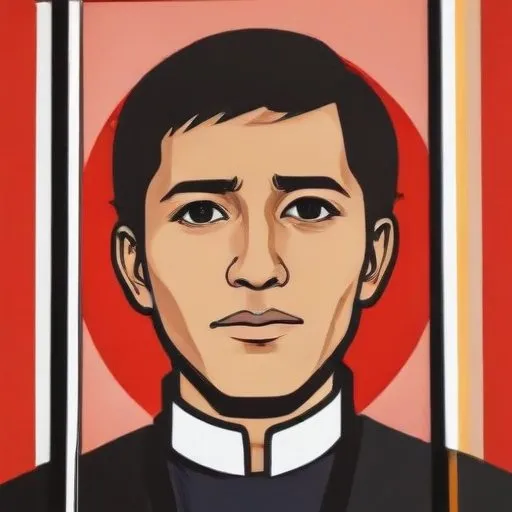
Jos Burgos: The Filipino Catholic Priest Who Fought for Reform
A Champion of Nationalist Views and Ecclesiastic Reforms
Jos Burgos, a Catholic priest from the Philippines, is remembered for his fearless advocacy for nationalist views and ecclesiastic reforms in the 19th century. Along with two other clergymen, Mariano Gomez and Jacinto Zamora, he was tried and executed by the Spanish colonial authorities, earning them the collective moniker of Gomburza.
Early Life and Education
Born on February 9, 1837, in Vigan, Ilocos Sur, Jos Burgos y Garca was the son of a Spanish officer, Don Jos Tiburcio Burgos y Caldern, and a Filipino mestiza mother, Florencia Garca. He received an impressive education, earning three undergraduate degrees with honors, two masters degrees, and two doctorate degrees from the Colegio de San Juan de Letran and the University of Santo Tomas.
Contributions and Nationalist Views
Burgos' editorial essays championed political and ecclesiastic reforms, advocating for the empowerment of native clergymen. He was a strong critic of prejudice in the Church and wrote several signed articles in response to anonymous attacks on the Filipino clergy. His nationalist views caught the attention of Spanish authorities, who accused him of promoting separatism.
The Anonymous Pamphlet and the Accusations
In 1864, an anonymous pamphlet was published in Manila, criticizing the prejudice in the Church and providing rebuttals against canards against the native clergy. Although unsigned, historians believe Burgos was the author due to its style and content. This pamphlet, along with his subsequent writings, led to his accusation of spreading nationalist propaganda.
The Felip Buencamino Incident
In 1869, Felip Buencamino, a young student and acquaintance of Burgos, was charged with spreading nationalist propaganda. Buencamino had staged a protest against being required to speak Latin in classes and was accused of distributing leaflets demanding academic freedom. This incident further solidified Burgos' reputation as a threat to the Spanish colonial authorities.
Legacy and Impact
Jos Burgos' bravery and conviction have left an indelible mark on Philippine history. His fight for reform and his advocacy for the empowerment of native clergymen have inspired generations of Filipinos. Today, he is remembered as a national hero, and his legacy continues to inspire Filipinos to fight for freedom, justice, and equality.
Quotes and Memorable Sayings
- "The native clergy is not inferior to the Spanish clergy, and we should not be treated as such."
- "Reform is not rebellion, but a call for justice and equality."
Historical Context and Legacy
Jos Burgos' execution, along with Gomez and Zamora, marked a turning point in Philippine history. The event sparked widespread outrage and protest against Spanish colonial rule, ultimately contributing to the Philippine Revolution. Today, Burgos is revered as a hero and a symbol of resistance against oppression. His legacy serves as a reminder of the importance of fighting for justice, equality, and freedom.
FAQ
What was José Burgoss role in the Philippine Revolution?
José Burgos was a Filipino priest, revolutionary, and reformist who played a key role in the Philippine Revolution against Spanish colonial rule. He was a vocal critic of Spanish exploitation and advocated for Filipino rights.
What was José Burgoss contribution to Filipino literature?
Burgos was a prolific writer and journalist who wrote extensively on Filipino history, culture, and politics. His works include plays, novels, and essays that promoted Filipino nationalism.
What was José Burgoss relationship with José Rizal?
Burgos was a close friend and mentor to José Rizal, the national hero of the Philippines. Rizal was deeply influenced by Burgoss ideas and activism.
Where was José Burgos born?
José Burgos was born on February 9, 1837, in Vigan, Ilocos Sur, Philippines.
What was José Burgoss fate during the Philippine Revolution?
Burgos was executed by Spanish authorities in 1872, along with two other Filipino priests, on charges of sedition and rebellion. His martyrdom sparked outrage and fueled the Philippine Revolution.