


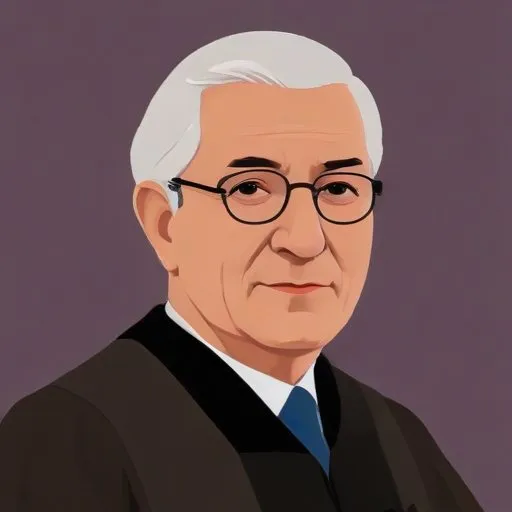
A Canadian lawyer, judge, and politician who served as the 7th Secretary of State for Canada, known for his contributions to the country's early development and governance. He played a significant role in shaping Canada's political landscape during the late 19th century.
As the sixth premier of Quebec, Joseph-Alfred Mousseau left an indelible mark on the province's history, serving from July 31, 1882, to January 22, 1884. During his tenure, he played a crucial role in shaping the province's politics, economy, and society, earning him a place among the most influential figures in Quebec's history.
Born on July 17, 1837, in Sainte-Geneviève-de-Berthier, Lower Canada, Mousseau came from a family with strong roots in politics. His father, Louis Mousseau, and uncle, Alexis Mousseau, both held prominent positions in the region. This familial influence likely inspired Mousseau's own passion for politics, which led him to pursue a career in law.
Mousseau's entry into politics began in 1874, when he was elected as a Conservative Member of Parliament for the riding of Bagot. He went on to be reelected three times, earning the trust of his constituents and establishing himself as a skilled politician.
In 1880, Mousseau's talents caught the attention of Prime Minister Sir John A. Macdonald, who appointed him to the Cabinet as President of the Queen's Privy Council of Canada. This prestigious position paved the way for Mousseau's later appointment as Secretary of State for Canada.
In 1882, Mousseau exchanged places with Joseph-Adolphe Chapleau, leaving federal politics to become the sixth Premier of Quebec. During his two-year tenure, Mousseau focused on issues such as education, infrastructure, and economic development, working tirelessly to improve the lives of Quebecers.
After resigning as Premier in 1884, Mousseau was appointed as a puisne judge of the Superior Court for the district of Rimouski. He continued to serve in this capacity until his untimely death on March 30, 1886, in Montreal.
Mousseau's family played a significant role in his life, with his brother, Joseph-Octave Mousseau, also serving as a member of the Canadian House of Commons. This familial connection highlights the strong tradition of public service that ran through the Mousseau family.
Through his dedication to public service and his commitment to improving the lives of Quebecers, Joseph-Alfred Mousseau left a lasting impact on the province's history. His legacy continues to inspire future generations of politicians and citizens alike.
Born in 1841
The 7th Prime Minister of Canada, a champion of national unity and French-English relations, who navigated the country through significant industrial and economic growth. He's also known for his role in shaping Canada's autonomy from Britain.
Born in 1874
A Canadian lawyer and politician who served as the 9th Prime Minister of Canada, known for his strong leadership during World War I and his role in shaping Canada's autonomy.
Born in 1870
The 11th Prime Minister of Canada, a lawyer-turned-politician who led the country through the Great Depression, implementing policies to alleviate economic suffering. He's known for his efforts to establish a Canadian welfare state.
Born in 1882
The 12th Prime Minister of Canada, a strong leader who played a crucial role in shaping the country's post-war economy and foreign policy, and is credited with establishing universal hospital insurance and old-age pensions.
Born in 1897
A Canadian leader who served as Prime Minister and won the Nobel Peace Prize for resolving the Suez Canal Crisis, known for his diplomatic efforts and peacekeeping initiatives.
Born in 1919
The charismatic leader who championed Canadian unity and implemented progressive policies, known for his iconic style and influential legacy in shaping modern Canada.
92 Years Old
The 20th Prime Minister of Canada, serving from 1993 to 2003, known for his leadership during the Quebec sovereignty movement and his role in shaping Canada's national unity. He implemented policies like the Clarity Act and the National Child Benefit.
45 Years Old
American professional ice hockey player who won two Stanley Cup championships and was a four-time NHL All-Star. Known for his rugged defensive play and physical presence on the ice.
