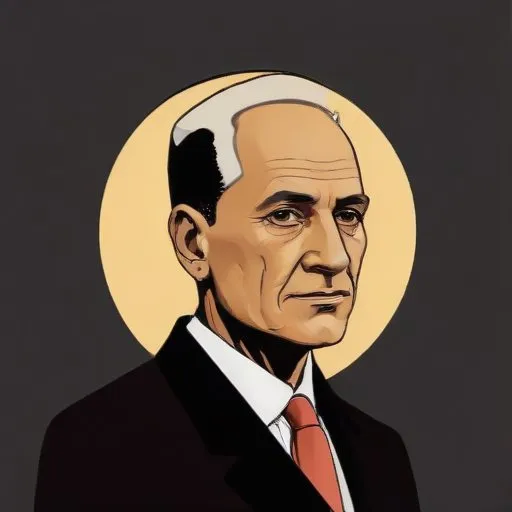
Karl Richard Lepsius: The Pioneer of Egyptology
A Life Dedicated to Unraveling the Mysteries of Ancient Egypt
Karl Richard Lepsius is widely recognized as one of the most prominent Egyptologists of the 19th century, renowned for his magnum opus,
Denkmäler aus Ägypten und Äthiopien (Monuments of Egypt and Ethiopia). This monumental work, comprising 12 volumes and over 400 plates, is a testament to Lepsius' tireless efforts to document and preserve the rich cultural heritage of ancient Egypt.
Early Life and Education
Born on December 23, 1810, in Naumburg, Saxony, Karl Richard Lepsius was the son of Karl Peter Lepsius, a classical scholar, and Friederike née Gläser, daughter of composer
Carl Ludwig Traugott Gläser. The family name, originally "Leps," had been Latinized to "Lepsius" by his paternal great-grandfather, Peter Christoph Lepsius. Lepsius' early interest in classical studies led him to pursue higher education in Greek and Roman archaeology at the Universities of Leipzig, Göttingen, and Berlin.
Pursuing the Decipherment of Hieroglyphics
After receiving his doctorate in 1833, Lepsius traveled to Paris, where he attended lectures by the French classicist Jean Letronne, an early disciple of
Jean-François Champollion. This exposure sparked his fascination with the decipherment of the Egyptian language. Lepsius went on to study lithography and engraving, which would later prove essential in his documentation of Egyptian monuments.
A Systematic Study of Hieroglyphics
Following the death of Champollion, Lepsius delved deep into the French scholar's posthumously published
Grammaire égyptienne (Egyptian Grammar). In a series of letters to Ippolito Rosellini, Lepsius expanded on Champollion's explanation of phonetic signs in hieroglyphic writing, proposing that vowels were not written. This groundbreaking work laid the foundation for his future research.
The Commission and the Expediton to Egypt
In 1842, Lepsius was commissioned by King
Frederick William IV of Prussia to lead an expedition to Egypt, following recommendations from prominent scholars such as
Alexander von Humboldt and Christian Charles Josias Bunsen. This expedition would prove to be a pivotal moment in Lepsius' career, allowing him to document and collect vital information on Egyptian monuments.
Denkmäler aus Ägypten und Äthiopien: A Lasting Legacy
The result of Lepsius' expedition was the publication of
Denkmäler aus Ägypten und Äthiopien, a comprehensive and meticulously researched work that showcased the rich cultural heritage of ancient Egypt. This magnum opus, comprising 12 volumes, features over 400 plates and provides an unparalleled insight into the history, architecture, and art of ancient Egypt.
A Life of Contributions and Honors
Lepsius' contributions to the field of Egyptology were recognized and celebrated during his lifetime. He was awarded numerous honors, including the title of Royal Prussian Councilor and membership in the Royal Academy of Sciences. His work continues to inspire and educate scholars, historians, and enthusiasts to this day.
Remembering Karl Richard Lepsius
Karl Richard Lepsius passed away on July 10, 1884, leaving behind a legacy that has shaped our understanding of ancient Egypt. His tireless efforts, passion for discovery, and commitment to documenting the cultural heritage of Egypt have earned him a place among the pantheon of great Egyptologists.
FAQ
What was Karl Richard Lepsiuss contribution to the field of Egyptology?
Karl Richard Lepsius was a German Egyptologist who made significant contributions to the field of Egyptology, particularly in the study of ancient Egyptian language and culture.
What was Karl Richard Lepsiuss role in the deciphering of hieroglyphics?
Lepsius played a crucial role in the deciphering of hieroglyphics, building on the work of Jean-François Champollion. He developed a more comprehensive understanding of hieroglyphic grammar and syntax.
How did Karl Richard Lepsiuss work influence the development of Egyptology?
Lepsiuss work had a profound influence on the development of Egyptology, establishing it as a distinct field of study. He founded the German Institute of Archaeology in Cairo and trained a generation of Egyptologists.
What was Karl Richard Lepsiuss approach to the study of ancient Egyptian culture?
Lepsiuss approach to the study of ancient Egyptian culture emphasized the importance of understanding the language, literature, and art of ancient Egypt. He believed in the importance of interdisciplinary approaches to understanding ancient cultures.
What honors did Karl Richard Lepsius receive for his contributions to Egyptology?
Lepsius received several honors for his contributions to Egyptology, including being elected as a member of the Royal Prussian Academy of Sciences in 1844. He also received the Copley Medal in 1863 for his work on the deciphering of hieroglyphics.