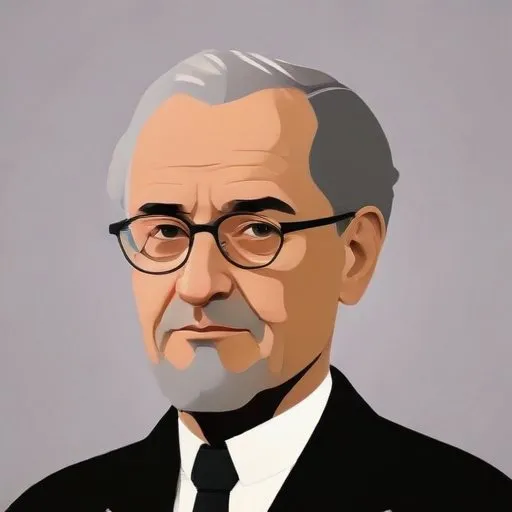
Karl Schwarz

Karl Schwarz

Karl Schwarz was born on November 19th, 1812

Full Name: Karl Schwarz
Nationality: German
Occupation: Theologian, Politician
Birth Year: 1812
Death Year: 1885
Field: Theology, Politics
Notable Position: Member of the Prussian House of Lords
University: University of Berlin

A 19th-century theologian and politician who played a significant role in shaping the Lutheran Church in Germany, advocating for social justice and education.

Written by: Emily Carter Emily Carter

Karl Schwarz: A Pioneering Theologian of the 19th Century

Karl Schwarz, a German Protestant theologian, is renowned for his significant contributions to liberal theology and his influential works that shaped the intellectual landscape of 19th-century Germany. Born on November 19, 1812, in Wiek, Rügen, Schwarz's life was marked by a passion for theology, philosophy, and social reform.

Early Life and Education

Schwarz was born into a family of intellectuals. His father, Theodor Schwarz, was a pastor and a writer who penned popular works under the pseudonym Theodor Melas. Schwarz's early education was marked by a strong emphasis on theology and philosophy. He studied at Halle, Bonn (1831), and Berlin (1832-1834), where he came under the influences of prominent thinkers such as Schleiermacher and G. W. F. Hegel.

Academic Career and Distinctions

Major Works and Contributions

Legacy and Impact

Karl Schwarz's legacy extends beyond his academic achievements. He played a crucial role in the founding and direction of the German Protestantenverein, an organization that advocated for liberal theology and social reform. In recognition of his contributions, a Karl-Schwarz-Stiftung was established in 1911, in connection with the theological faculty at the University of Jena.

Schwarz's work continues to influence theologians and scholars to this day, offering a rich legacy that testifies to his commitment to intellectual inquiry and social justice.

Timeline
1812
Born in Halle, Prussia
Karl Schwarz was born on November 21, 1812, in Halle, Prussia, to a family of theologians and scholars.
1834
Earned His Theological Degree
Schwarz earned his theological degree from the University of Halle, beginning his career as a theologian and educator.
1843
Became a Professor at the University of Halle
Schwarz became a professor at the University of Halle, teaching theology and philosophy to a new generation of scholars.
1861
Published Christology
Schwarz published Christology, a seminal work that explored the nature and significance of Jesus Christ.
1885
Died in Halle, Prussia
Karl Schwarz died on May 11, 1885, in Halle, Prussia, leaving behind a legacy as a theologian, educator, and author.
Karl Schwarz

Karl Schwarz Quiz

Karl Schwarz was a prominent figure in which Christian denomination?

Score: 0/5
FAQ
What was Karl Schwarzs role in German politics?
Karl Schwarz was a prominent German theologian and politician who served in the Prussian Landtag and the German Reichstag. He advocated for social justice, workers rights, and democratic reforms, using his platform to promote progressive policies.
What were Karl Schwarzs theological contributions?
As a theologian, Karl Schwarz made significant contributions to the development of Christian social ethics, emphasizing the importance of social justice and compassion. His work influenced German Protestantism and continues to inspire Christian social activism.
What was Karl Schwarzs stance on workers rights?
Karl Schwarz was a strong advocate for workers rights, believing that social and economic justice were essential to a healthy society. He campaigned for better working conditions, fair wages, and labor protections, earning him the respect of the German working class.
What legacy did Karl Schwarz leave behind?
Karl Schwarzs legacy is one of committed public service, theological innovation, and unwavering dedication to social justice. He is remembered as a beacon of progressive values and a champion of the marginalized and oppressed.
What awards did Karl Schwarz receive for his contributions to German society?
Karl Schwarz received numerous awards and honors for his contributions to German society, including the prestigious Wilhelm-Leuschner-Medaille, which recognizes outstanding achievements in social policy and social justice.

Related People:

Friedrich Schleiermacher

Born in 1768

A pioneering theologian and philosopher who shaped modern Christian thought and hermeneutics, known for his emphasis on individual experience and understanding of religious texts.

Ferdinand Christian Baur

Born in 1792

A 19th-century German theologian and scholar who pioneered the historical-critical method of biblical analysis, revolutionizing the field of New Testament studies.

Ludwig Feuerbach

Born in 1804

A 19th-century philosopher who critiqued religion and idealism, arguing that God is a human creation and that people should focus on this life rather than the afterlife. His ideas influenced many prominent thinkers, including Karl Marx and Friedrich Nietzsche.

Karl Barth

Born in 1886

A 20th-century theologian who redefined Christian doctrine with his emphasis on God's revelation and humanity's sinful nature, influencing modern Christian thought.

Dietrich Bonhoeffer

Born in 1906

A German pastor and theologian who resisted the Nazi regime, writing influential books on faith and ethics, and ultimately giving his life for his convictions.