


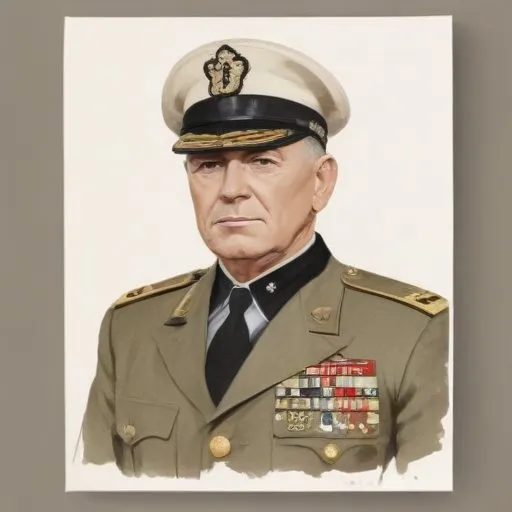
American colonel who played a crucial role in the development of the US Army's Special Forces, also known as the Green Berets, and was instrumental in shaping the country's unconventional warfare strategy.
Lawrence N. Guarino, a United States Air Force officer, is best known for his remarkable resilience and leadership as a prisoner of war (POW) during the Vietnam War, where he spent over eight years in captivity, including time at the infamous Hanoi Hilton. His extraordinary heroism and determination earned him the Air Force Cross, the highest honor bestowed upon an Air Force member for valor in combat.
Lawrence Nicholas Guarino, affectionately known as "Larry," was born on April 16, 1922. He joined the United States Air Force, where he flew the Supermarine Spitfire during World War II. His military career spanned three wars, with his final duty station being Patrick Air Force Base.
On his 50th combat mission, Guarino was shot down and captured by the North Vietnamese. He was imprisoned at the Hanoi Hilton, where he shared a cell with future United States Senator John McCain. During his captivity, Guarino demonstrated exceptional leadership, assuming command of the prisoner organization and leading numerous escape attempts. His bravery and defiance in the face of brutal torture earned him the respect and admiration of his fellow prisoners.
Guarino chronicled his experiences as a POW in his book, A P.O.W.'s Story: 2801 Days in Hanoi. The memoir provides a firsthand account of the harsh realities of captivity, including the physical and psychological torture he endured. The book is a testament to Guarino's unwavering spirit and his commitment to his fellow prisoners.
Guarino's extraordinary heroism and service were recognized with numerous awards and decorations, including:
After retiring from the Air Force, Guarino settled in Satellite Beach and Indian Harbour Beach, Florida. He passed away on August 18, 2014, leaving behind a legacy of courage, resilience, and leadership.
Lawrence N. Guarino's legacy extends beyond his remarkable service as a POW. His story serves as an inspiration to those facing adversity, demonstrating the power of human resilience and determination. His contributions to the military and his unwavering commitment to his fellow prisoners have cemented his place as a true American hero.
Born in 1914
A decorated four-star general who played a crucial role in the Vietnam War, leading US military forces to victory in several key battles and later becoming the Army's Chief of Staff.
Born in 1914
Led the United States Army during the Vietnam War, implementing a strategy of search and destroy, and was a prominent figure in the war's escalation. He was later criticized for his tactics and the war's outcome.
Born in 1906
A pioneering Air Force general who played a crucial role in shaping the US military's strategic bombing capabilities during World War II and the Cold War. He's also known for his hawkish stance on communism and his influence on US foreign policy.
Born in 1901
American general and diplomat who served as United States Ambassador to South Vietnam, playing a crucial role in shaping US foreign policy during the Vietnam War. He's known for his efforts to stabilize the region and prevent communist takeover.
Born in 1908
The 36th President of the United States, a skilled politician and leader, played a crucial role in passing landmark civil rights legislation, including the Civil Rights Act and Voting Rights Act.
Born in 1916
The 8th United States Secretary of Defense played a crucial role in shaping US foreign policy during the Cold War era, particularly in the Vietnam War. He is infamous for his controversial decisions and legacy.
Born in 1902
American colonel and politician who served as the 3rd United States Ambassador to the United Nations, playing a key role in shaping international relations during the Cold War era. He's most known for his diplomatic efforts and leadership in the UN.
