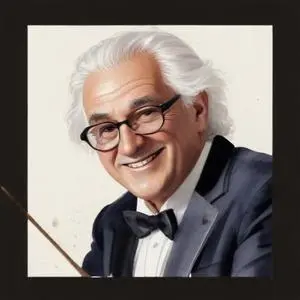
Leon Fleisher: A Legendary Pianist, Conductor, and Pedagogue
A Legacy of Refined and Transcendent Music
Leon Fleisher, widely regarded as one of the most renowned pianists and pedagogues in the world, left an indelible mark on the classical music landscape. With a career spanning over six decades, he was particularly well known for his interpretations of the two piano concertos of Brahms and the five concertos of Beethoven, which he recorded with
George Szell and the Cleveland Orchestra.
Early Life and Studies
Fleisher was born on July 23, 1928, in San Francisco, to poor Jewish immigrants Bertha and Isidor Fleisher. His father, from Odessa, and his mother, from Poland, instilled in him a love for music from a tender age. Fleisher started studying the piano at age four and made his public debut at eight. At age nine, he became one of the few child prodigies to be accepted for study with the renowned Austrian teacher
Artur Schnabel.
A Career Marked by Adaptation and Innovation
In 1964, Fleisher's career took an unexpected turn when he lost the use of his right hand due to a neurological condition eventually diagnosed as focal dystonia. This setback forced him to focus on the repertoire for the left hand, including Ravel's Piano Concerto for the Left Hand and many compositions written specifically for him. However, in 2004, he regained some control of his right hand and began playing and recording two-hand repertoire again. This remarkable adaptation is a testament to Fleisher's unwavering dedication to his craft.
A Distinguished Pedagogue
Fleisher's impact on the musical world extends far beyond his impressive performance career. As a teacher, he spent over 60 years sharing his knowledge and expertise with students at the Peabody Institute at
Johns Hopkins University, the Curtis Institute of Music, and other prestigious institutions. His pedagogical approach, marked by a deep understanding of the human experience and a passion for music, has inspired generations of musicians.
Awards and Honors
Fleisher's contributions to the world of classical music have been recognized with numerous awards and honors, including the Kennedy Center Honors in 2007. Throughout his career, he has received critical acclaim for his performances, recordings, and teaching, solidifying his position as a leading figure in the classical music community.
Legacy and Impact
Leon Fleisher's legacy extends far beyond his own remarkable career. He has left an indelible mark on the world of classical music, inspiring countless musicians, composers, and music lovers. His impact on modern society is a testament to the power of music to bring people together, to inspire, and to transcend boundaries.
Personal Milestones and Key Life Events
- 1937: Fleisher makes his debut with the New York Philharmonic at age nine.
- 1944: He begins studying with Artur Schnabel, a renowned Austrian teacher.
- 1964: Fleisher loses the use of his right hand due to focal dystonia.
- 2004: He regains some control of his right hand and begins playing two-hand repertoire again.
- 2007: Fleisher receives the Kennedy Center Honors.
Historical Context and Legacy
Leon Fleisher's legacy is a testament to the enduring power of music to inspire, to uplift, and to bring people together. As a pianist, conductor, and pedagogue, he has left an indelible mark on the classical music community. His remarkable career, marked by adaptation, innovation, and a deep passion for music, serves as a beacon of inspiration for generations to come.
FAQ
What was Leon Fleishers most notable piano performance?
Leon Fleishers most notable piano performance was his rendition of Beethovens Piano Concerto No. 4, conducted by George Szell.
How did Leon Fleisher overcome his hand injury?
Leon Fleisher overcame his hand injury by learning to play with his left hand only, and later, through a series of surgical procedures, was able to regain the use of his right hand.
What was Leon Fleishers approach to teaching piano?
Leon Fleishers approach to teaching piano emphasized the importance of technique, musicality, and intellectual curiosity.
What awards did Leon Fleisher receive for his piano performances?
Leon Fleisher received several awards for his piano performances, including the Grammy Lifetime Achievement Award and the Kennedy Center Honors.
What was Leon Fleishers legacy in the world of classical music?
Leon Fleishers legacy in the world of classical music is one of dedication, perseverance, and artistic excellence, inspiring generations of pianists and music lovers.