


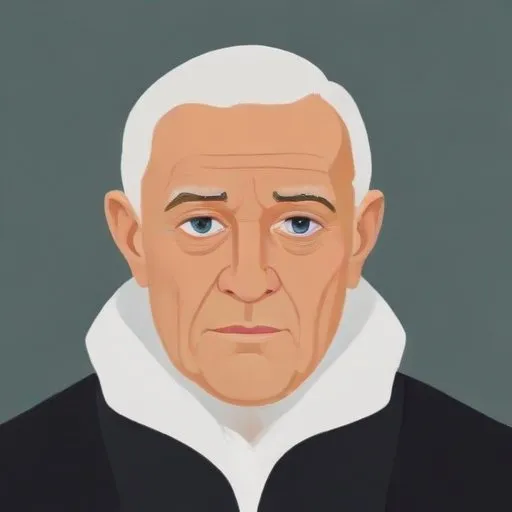
A 16th-century Dutch physician and writer who penned influential works on medicine, philosophy, and literature, particularly on the human condition and emotions.
Levinus Lemnius, a 16th-century Dutch physician, left an indelible mark on the world of medicine and natural philosophy with his groundbreaking works. He is best known for his magnum opus, Occulta naturae miracula, a comprehensive treatise that delved into the mysteries of nature, combining classical sources with Christian doctrine.
Lemnius was born on May 20, 1505, in Zierikzee, Netherlands. He pursued his passion for medicine at the University of Leuven, where he studied under the renowned Rembert Dodoens and Konrad Gesner. His thirst for knowledge led him to Padua, where he learned from the celebrated Andreas Vesalius. He also traveled to Switzerland and England, broadening his understanding of the medical landscape.
Lemnius is credited with several groundbreaking contributions, including the discovery of bone staining using madder root. His work on teratology, which connected Aristotelian theories of generation to birth defects, paved the way for future research. Additionally, his humoral theory, which divided phlegm into four and further subdivided the other humors, expanded the understanding of human physiology.
After the untimely death of his wife, Lemnius became a priest, devoting himself to his faith and continued scholarly pursuits. He passed away on July 1, 1568, in Zierikzee, leaving behind a lasting legacy in the world of medicine and natural philosophy.
Lemnius' works had a profound impact on the development of medicine and natural philosophy. His efforts to reconcile classical knowledge with Christian doctrine helped bridge the gap between science and faith, influencing generations of scholars and thinkers. His contributions to demonology, alongside Johann Weyer, shed light on mental illness and disturbances, laying the groundwork for future research.
In conclusion, Levinus Lemnius was a trailblazing physician and author whose works continue to inspire and educate scholars today. His dedication to unraveling nature's secrets has left an indelible mark on the history of medicine and natural philosophy.
Born in 1497
A 16th-century Renaissance scholar who made significant contributions to the development of the Protestant Reformation and education, known for his theological writings and astronomical observations.
Born in 1483
A German monk and priest who sparked the Protestant Reformation, challenging Catholic Church authority and shaping Western Christianity. He's famous for nailing 95 theses to a church door, sparking a religious revolution.
Born in 1509
A French pastor and theologian who played a key role in the Protestant Reformation, shaping Christian theology and influencing Western civilization. He's famous for his teachings on predestination and his role in establishing Calvinism.
Born in 1484
Leader of the Swiss Reformation, advocating for church reform and inspiring other Protestant movements.
Born in 1478
A renowned Renaissance humanist and statesman who served as Lord Chancellor of England, famous for his literary work "Utopia" and his martyrdom for refusing to acknowledge the English monarch's supremacy over the Church.
Born in 1489
Leader of the English Reformation, instrumental in creating the Church of England and authoring the Book of Common Prayer.
