


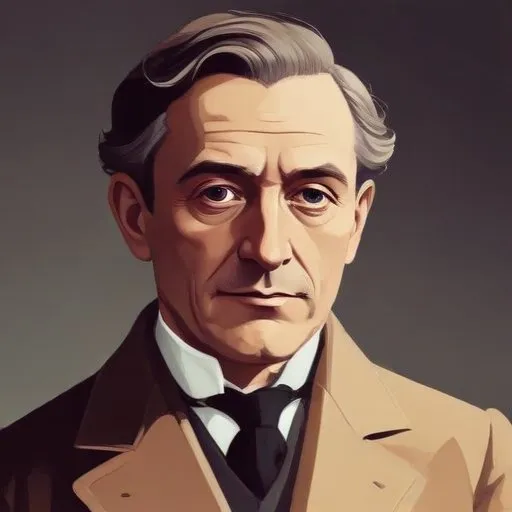
A German-born chemist and British industrialist who discovered metal carbonyls, a crucial class of compounds used in industrial processes and catalysis, revolutionizing the field of organometallic chemistry.
Ludwig Mond, a German-born British chemist and industrialist, is renowned for his groundbreaking discovery of metal carbonyls, a class of compounds that revolutionized the nickel industry. His innovative Mond process, which enables the production of pure nickel from its ores, cemented his legacy as a pioneer in the field of chemistry.
Born on March 7, 1839, in Kassel, Germany, to a Jewish family, Mond's curiosity for chemistry was sparked from an early age. He studied chemistry at the University of Marburg under Hermann Kolbe and later at the University of Heidelberg under Robert Bunsen. Although he never obtained a degree, his passion for chemistry drove him to pursue a career in the field.
Mond's contributions to the field of chemistry have had a profound impact on modern society. The Mond process has been instrumental in the production of stainless steel, alloys, and other nickel-based materials, which are used in a wide range of industries, including aerospace, construction, and consumer goods.
Mond's work was driven by a passion for discovery and a commitment to understanding the fundamental principles of chemistry. His breakthroughs in the field of metal carbonyls have paved the way for future generations of chemists and have inspired a deeper understanding of the properties of metals and their compounds.
Ludwig Mond's pioneering work in the field of chemistry has left an indelible mark on the industry. His discovery of metal carbonyls and the development of the Mond process have cemented his place as a giant in the world of chemistry, and his contributions continue to inspire future generations of scientists and industrialists.
Born in 1868
Developed a process to synthesize ammonia, revolutionizing agriculture and warfare, and was awarded the Nobel Prize in Chemistry in 1918.
Born in 1874
Developed the Haber-Bosch process, a method to produce ammonia on an industrial scale, revolutionizing fertilizer production and agriculture. This innovation had a profound impact on global food supply and population growth.
Born in 1833
A Swedish chemist and engineer who invented dynamite and established a prestigious award recognizing outstanding contributions in fields like literature, peace, and science.
Born in 1853
A Latvian-German chemist and academic who pioneered work on catalysis, chemical equilibria, and reaction rates, earning a Nobel Prize in Chemistry in 1909. He's also credited with developing the Ostwald process for producing nitric acid.
Born in 1852
Pioneering chemist who discovered the laws of chemical equilibrium and osmotic pressure, revolutionizing our understanding of chemical reactions.
Born in 1859
A Nobel Prize-winning physicist and chemist who pioneered the understanding of acid-base chemistry and greenhouse gases, laying the foundation for modern climate science.
Born in 1864
A German chemist and physicist who developed the third law of thermodynamics and made significant contributions to the field of physical chemistry, earning him a Nobel Prize in Chemistry in 1920.
