


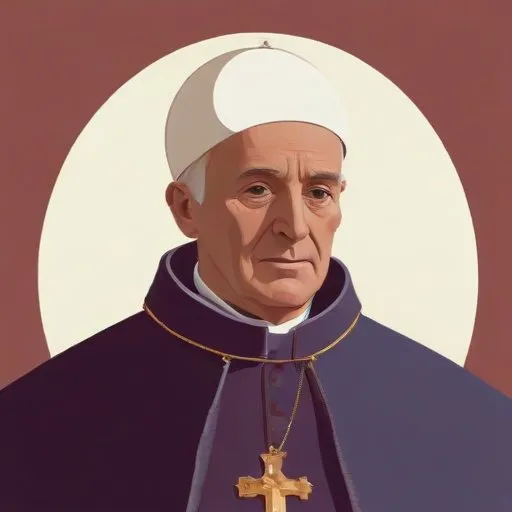
The pope who served for only 22 days in 1555, known for being the first to take the name Marcellus, and for his brief, uneventful reign.
As the 222nd Pope of the Catholic Church, Marcellus II is remembered for his brief yet impactful reign, marked by his commitment to reform and his extensive diplomatic experience. Born Marcello Cervini degli Spannocchi on May 6, 1501, he is the most recent pope to retain his birth name as his regnal name upon his accession.
Marcellus II was born in Montefano, a small village near Macerata and Loreto, to Ricardo Cervini, the Apostolic Treasurer in Ancona. His family originated from Tuscany, and he was the son of a father who had an interest in astrology. This interest led Ricardo to encourage Marcellus' path to the priesthood, believing that his son's horoscope predicted high ecclesiastical honors.
Marcellus received his education locally, and later in Siena and Florence, where he became proficient in Latin, Greek, and Italian. He also received instruction in jurisprudence, philosophy, and mathematics, laying the foundation for his future diplomatic career.
Marcellus' early career saw him serving in the household of Cardinal Alessandro Farnese, later Pope Paul III. Upon Farnese's accession, Marcellus became his secretary and was employed on various diplomatic missions. This experience would prove invaluable in his later papacy, as he developed a reputation as a skilled diplomat and negotiator.
On April 10, 1555, Marcellus was elected to succeed Pope Julius III, becoming the first pope to choose to retain his birth name as his regnal name since Marcellus I in the 4th century. Unfortunately, his papacy was cut short, as he died of a stroke just 22 days later, on May 1, 1555.
Despite his brief reign, Marcellus II left a lasting impact on the Catholic Church. He was a strong advocate for reform and was committed to addressing the issues facing the Church during the Counter-Reformation. His diplomatic experience and skills would have likely played a significant role in shaping the Church's response to the challenges it faced during this tumultuous period.
Despite his short reign, Marcellus II's legacy as a skilled diplomat and advocate for reform continues to resonate within the Catholic Church. His commitment to addressing the challenges facing the Church during the Counter-Reformation sets an important precedent for future generations of Catholic leaders.
Born in 1417
A 15th-century pope who played a significant role in the fall of the Western Schism, ending the division in the Catholic Church. He's also known for his lavish spending and nepotism.
Born in 1504
Leader of the Catholic Church during the Counter-Reformation, he excommunicated Queen Elizabeth I and played a key role in the Council of Trent.
Born in 1487
A 16th-century Pope who commissioned Michelangelo to paint the Sistine Chapel's frescoes and was a patron of the arts, leaving a lasting impact on Renaissance art and architecture.
Born in 1002
Reformed the Catholic Church, ending simony and promoting clerical celibacy. Strengthened the papacy and launched the Investiture Controversy.
Born in 1765
The last pope to condemn freedom of the press and the last to maintain the Catholic Church's opposition to democracy, he's known for his conservative stance and attempts to resist modernization.
Born in 1521
The shortest-reigning pope in history, serving for only 13 days in 1590, he is remembered for his brief but tumultuous tenure.
