


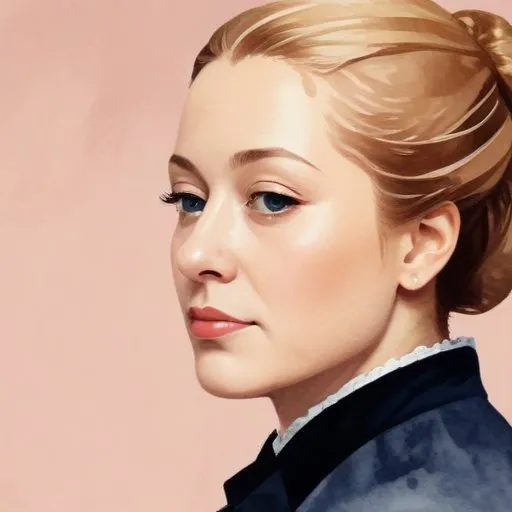
A talented Austrian pianist and composer who was a prominent figure in the Classical period, known for her remarkable musical abilities despite being blind from a young age. Her music was highly regarded by Mozart and Haydn, and she was a pioneer for women in music.
Maria Theresia von Paradis was a renowned Austrian musician and composer who defied the odds of her time, overcoming the loss of her eyesight at a tender age to become a virtuosic pianist and singer. Her remarkable talent and perseverance earned her the admiration of prominent composers, including Wolfgang Amadeus Mozart, who may have written his Piano Concerto No. 18 in B-flat major specifically for her.
Born on May 15, 1759, Maria Theresia von Paradis was the daughter of Joseph Anton von Paradis, Imperial Secretary of Commerce and Court Councilor to Empress Maria Theresa. Despite her namesake, the Empress was not her godmother, as often believed. Between the ages of 2 and 5, Paradis tragically lost her eyesight.
Undeterred, she received a comprehensive musical education from some of the most esteemed teachers of her time. Her instructors included Karl Frieberth (music theory and composition), Leopold Kozeluch (piano), Vincenzo Righini (singing), Antonio Salieri (singing and composition), and Abbé Vogler (music theory and composition).
Paradis's exceptional memory and acute hearing allowed her to learn over sixty concertos by heart, as well as an extensive repertoire of solo and religious works. By 1775, she was performing as a singer and pianist in various Viennese salons and concerts.
In 1773, she was commissioned to perform an organ concerto by Antonio Salieri, which survives to this day, minus its second movement. Her fame soon extended beyond Vienna, prompting her to embark on an extended tour of Europe in 1783, accompanied by her mother and librettist Johann Riedinger.
During her tour, Paradis visited the Mozarts in Salzburg, where she likely met the young Mozart. The exact nature of their relationship remains unclear, but it is speculated that Mozart may have written his Piano Concerto No. 18 in B-flat major specifically for her.
Paradis also interacted with other prominent composers and musicians of her time, including Haydn, Gluck, and Salieri. Her remarkable talent and networking abilities helped establish her as a celebrated figure in European musical circles.
In 1776, Paradis underwent treatment with the famous Franz Anton Mesmer, who temporarily improved her blindness. However, her improvement was short-lived, and she was eventually removed from Mesmer's care amidst concerns about potential scandal and the loss of her disability pension.
Undeterred, Paradis continued to tour and perform, undertaking an arduous journey to Paris and London with her mother and Riedinger. Her determination and perseverance in the face of adversity serve as a testament to her unwavering dedication to music.
Maria Theresia von Paradis left an indelible mark on the world of music, paving the way for future generations of female musicians and composers. Her remarkable story serves as a beacon of inspiration for anyone facing adversity, demonstrating that with determination and hard work, even the most daunting challenges can be overcome.
Maria Theresia von Paradis's extraordinary life and achievements serve as a testament to the power of human spirit and creativity, reminding us that even in the darkest of times, music can be a source of solace, comfort, and inspiration.
Born in 1732
A renowned composer and pianist of the Classical period, known for his symphonies, operas, and chamber music that showcased his innovative and expressive style. He played a significant role in shaping the Classical music era.
Born in 1770
A musical genius who expanded the possibilities of classical music, creating iconic symphonies and piano sonatas that continue to inspire and influence generations of artists.
Born in 1797
A renowned composer of symphonies, operas, and chamber music, particularly famous for his emotional and expressive lieder (art songs) that showcased his mastery of melody and harmony.
Born in 1750
A renowned 18th-century composer and conductor, known for his operas and rivalry with Mozart, as depicted in the movie Amadeus.
Born in 1714
A pioneering opera composer who revolutionized the art form with his innovative and expressive works, blending music and drama in a way that captivated audiences.
Born in 1782
A virtuosic violinist and composer who revolutionized the instrument's technical possibilities, leaving an indelible mark on classical music.
Born in 1833
A renowned pianist and composer, he crafted complex, expressive works that blended traditional and innovative techniques, leaving an indelible mark on classical music.
Born in 1811
A virtuosic pianist and composer who revolutionized classical music with his technically demanding and emotionally expressive works, blending Hungarian folk influences with Romantic-era drama.
