


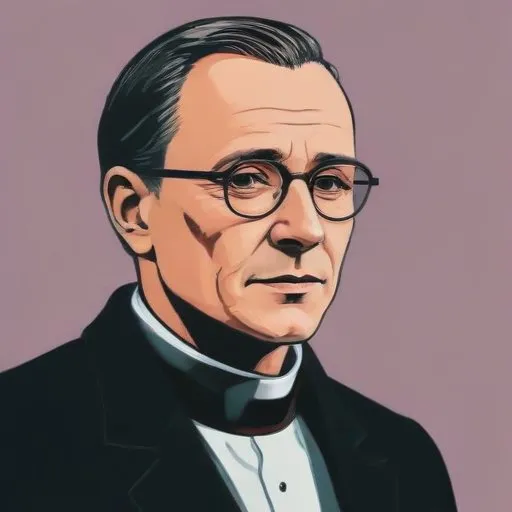
A 19th-century Estonian pastor and poet, known for his contributions to the country's national awakening and literary heritage through his patriotic and romantic poetry.
Lipp's early life was marked by a deep sense of spirituality and a love for literature. His father, a Lutheran pastor, instilled in him a strong moral foundation and a passion for the written word. This dual influence would later converge in Lipp's own life, as he went on to become a respected pastor and poet in his own right.
Lipp's magnum opus, "The Estonian Flag," transcended the realm of mere poetry to become a rallying cry for the Estonian people. The poem's soaring lyrics and majestic rhythms captured the essence of Estonian identity, and its impact was felt across generations. During the Estonian Singing Revolution of the late 1980s, "The Estonian Flag" played a pivotal role, inspiring a nation to reclaim its independence and cultural heritage.
In addition to his poetic endeavors, Lipp served as the pastor of St. Lawrence Church in No, Estonia. This dual vocation allowed him to blend his love of words with his commitment to spirituality. As a pastor, Lipp's eloquence and compassion earned him the admiration of his congregation, while his poetry continued to captivate a wider audience.
Lipp's work had a profound impact on Estonian society, fostering a sense of national pride and unity. His poem, "The Estonian Flag," continues to be celebrated as a testament to the power of art to inspire and mobilize a nation. As Estonia navigates the complexities of modernity, Lipp's legacy serves as a beacon of cultural resilience and artistic expression.
Though Lipp's writing was marked by eloquence and lyricism, few direct quotes have been attributed to him. However, his poetry continues to inspire and uplift, offering a window into the soul of a nation and the heart of its people.
Martin Lipp's life and work were shaped by the tumultuous landscape of 19th- and early 20th-century Estonia. As the country navigated the complexities of national identity, Lipp's poetry provided a unifying force, bridging the gap between past and present. Today, his legacy serves as a testament to the transformative power of art and the enduring spirit of the Estonian people.
Lipp's work can be seen in the context of a broader literary movement that swept across Estonia during the late 19th and early 20th centuries. His poetry, though unique in its style and scope, shares affinities with the work of other Estonian writers, such as Friedrich Robert Faehlmann and Lydia Koidula. Together, they helped shape the contours of Estonian literature, exploring themes of national identity, folklore, and the human experience.
Born in 1483
A German monk and priest who sparked the Protestant Reformation, challenging Catholic Church authority and shaping Western Christianity. He's famous for nailing 95 theses to a church door, sparking a religious revolution.
Born in 1497
A 16th-century Renaissance scholar who made significant contributions to the development of the Protestant Reformation and education, known for his theological writings and astronomical observations.
Born in 1485
A key figure in the Protestant Reformation, he played a crucial role in shaping Lutheran theology and was a close advisor to Martin Luther. He's also known for his work in establishing the Lutheran Church in Denmark and Norway.
Born in 1498
A 16th-century theologian who sparked controversy by anonymously publishing a preface to Copernicus' De revolutionibus orbium coelestium, which led to a misunderstanding of the astronomer's heliocentric model. They also contributed to the development of Lutheran theology.
Born in 1906
A German pastor and theologian who resisted the Nazi regime, writing influential books on faith and ethics, and ultimately giving his life for his convictions.
Born in 1886
A 20th-century theologian who redefined Christian doctrine with his emphasis on God's revelation and humanity's sinful nature, influencing modern Christian thought.
Born in 1886
A renowned philosopher and theologian who explored the intersection of faith and modern culture, developing a unique Christian existentialist perspective that continues to influence contemporary theology and philosophy.
