


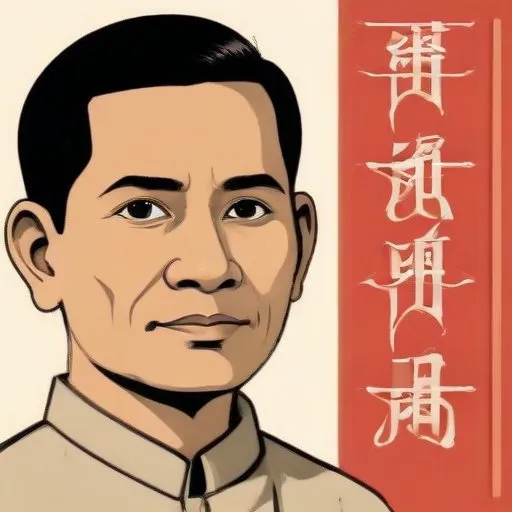
A Burma-based scholar and educator who pioneered modern Burmese literature and education, introducing Western-style learning to the country.
Pe Maung Tin, a renowned Burmese scholar, educator, and Pali language expert, is best known for his groundbreaking contributions to the field of Buddhist studies and his tireless efforts to promote Burmese literature.
Born on April 24, 1888, in Pauktaw, Insein Township, Rangoon, Pe Maung Tin graduated with a B.A. degree from University College, Rangoon in 1909, and an M.A. degree from the University of Calcutta in 1911. At the age of 24, he became the youngest professor in Burma, holding the position of national professor of Pali language at University College, Rangoon.
Additionally, he served as the librarian of Bernard Free Library and the Honorary Secretary of the Burma Research Society, as well as the editor of its journal, JBRS. His expertise in Pali language and Buddhism earned him the nickname "M.A. Maung Tin" or "Pali Maung Tin."
Pe Maung Tin's academic accomplishments were further solidified when he obtained his Bachelor of Letters (B.Litt.) degree from Oxford University in 1922. He also spent time in Paris (1920-1921) for further studies and was later invited to lecture on Asian literature in 1936.
A dedicated advocate for Burmese literature, Pe Maung Tin worked tirelessly to raise its status as an Honours degree subject. He authored texts to teach Burmese literature and introduced the first course in 1924. His efforts bore fruit when his student, Sein Tin, graduated in 1927 and later became a celebrated author under the pen name Theippan Maung Wa.
Pe Maung Tin was known for his close friendships with prominent scholars, including professors J.S. Furnivall of the BRS and Gordon H. Luce, who married his sister Tee Tee in 1915. He actively participated in language debates held by the Burma Research Society between 1922 and 1925.
In 1934, Pe Maung Tin published "Hkit san pon byin," a testament to his devotion to preserving and promoting Burmese culture. Throughout his illustrious career, he left an indelible mark on the fields of Pali language, Buddhist studies, and Burmese literature, cementing his legacy as a pioneer in his field.
Pe Maung Tin's work was deeply rooted in his passion for understanding and promoting Buddhist principles. He believed in the importance of education and intellectual pursuits, as evident in his tireless efforts to establish Rangoon University as an independent institution.
Pe Maung Tin's life and work spanned a pivotal period in Burmese history, marked by the country's transition from colonial rule to independence. His contributions to the field of Buddhist studies and Burmese literature continue to inspire and influence scholars and researchers to this day.
Born in 1909
A Burmese educator and diplomat who served as the 3rd United Nations Secretary-General, mediating international conflicts and promoting global cooperation. He's known for his quiet diplomacy and leadership during the Cold War era.
81 Years Old
A democracy icon and human rights activist, she led the fight against Myanmar's military rule and was awarded the Nobel Peace Prize in 1991.
Born in 1907
First Prime Minister of Burma, leading the country to independence from British colonial rule and establishing a democratic government. He's also known for his efforts to promote Buddhism and national unity.
Born in 1893
A Burmese lawyer and politician who served as Prime Minister of Burma, leading the country to independence from British colonial rule and playing a key role in shaping its early years. He's also known for his efforts to promote national unity and reconciliation.
Born in 1910
A Burmese army general and politician who ruled the country with an iron fist, implementing isolationist and nationalist policies that led to economic stagnation and human rights abuses.
81 Years Old
A former general who led Myanmar's transition from military rule to democracy, known for his reforms and release of political prisoners.
Born in 1915
Led the fight for Burmese independence from British colonial rule and is considered the founder of modern Burma. He was assassinated before independence was achieved, but his daughter Aung San Suu Kyi continued his legacy.
