


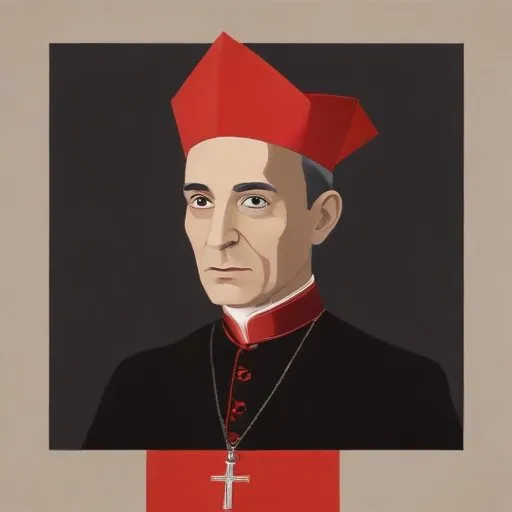
A 16th-century Spanish Catholic cardinal who served as the Archbishop of Seville and played a significant role in the Spanish Inquisition, known for his strong stance against Protestantism.
Pedro Pacheco de Villena, also known as Pedro Pacheco Ladrón de Guevara, was a renowned Spanish cardinal and viceroy of Naples, leaving an indelible mark on the ecclesiastical and political landscape of the 16th century.
Born on June 29, 1488, Pedro was the son of Alfonso Tellez Giron and Maria Teresa Giron, heiress of her House. His uncle, the Marques de Villena, played a significant role in his early life. Pedro pursued his studies at the prestigious University of Salamanca, laying the foundation for his future success.
His intellectual prowess and ambition earned him a position as chamberlain to Pope Alexander VI, which he held until 1522. Subsequently, he worked in various capacities within the Roman Curia, including as referendary at the Supreme Tribunal of the Apostolic Signatura.
As Bishop of Pamplona, Pedro implemented several reforms, including the regulation of the canons, which was reached after a year of negotiations and opposition. He also convoked a synod for his diocese in August 1544, establishing the custom of annual processions on significant feast days.
In addition to his ecclesiastical roles, Pedro served as viceroy of Naples, showcasing his exceptional administrative abilities. Emperor Charles V held him in high esteem, appointing him to various positions, including Bishop of Jaén.
Throughout his life, Pedro demonstrated his commitment to his faith and his people. His nephew, Francisco Pacheco de Toledo, followed in his footsteps, becoming a cardinal in his own right.
Pedro Pacheco de Villena's remarkable life and achievements leave a lasting legacy in the annals of Spanish history. His dedication to the Catholic Church, combined with his administrative prowess, earned him a revered place among his contemporaries and secured his position as a prominent figure of the 16th century.
Pedro Pacheco de Villena passed away on March 5, 1560, leaving behind a testament to his unwavering commitment to his faith, his people, and his legacy.
Born in 1417
A 15th-century pope who played a significant role in the fall of the Western Schism, ending the division in the Catholic Church. He's also known for his lavish spending and nepotism.
Born in 1504
Leader of the Catholic Church during the Counter-Reformation, he excommunicated Queen Elizabeth I and played a key role in the Council of Trent.
Born in 1502
Introduced the Gregorian calendar, a solar-based calendar that's widely used today, reforming the Julian calendar's inaccuracies.
Born in 1414
Established the Vatican Archives and commissioned the Sistine Chapel's ceiling, which was famously painted by Michelangelo. He also played a significant role in the Renaissance.
Born in 1568
The 17th-century Catholic leader who reigned for 21 years, known for his strong stance against Galileo Galilei and his scientific discoveries, as well as his extensive patronage of the arts.
Born in 1519
The 151st Pope of the Catholic Church, serving for only two months in 1591, he is mostly remembered for his brief and uneventful papacy.
Born in 1536
Led the Catholic Church during a tumultuous period, issuing papal bulls and playing a key role in the Counter-Reformation. He's also famous for his coffee habit, being the first Pope to try and approve of it.
Born in 1535
The second shortest-reigning pope in history, serving for just 27 days in 1605, he is most known for his brief but tumultuous papacy marked by power struggles and controversy.
