


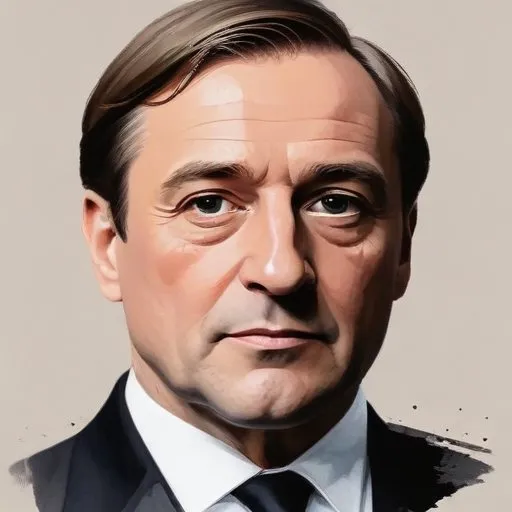
The first Chancellor of Germany's Weimar Republic, known for proclaiming the country a republic from a balcony in Berlin, marking the end of the German Empire. He played a crucial role in shaping Germany's early democracy.
Philipp Scheidemann, a German politician of the Social Democratic Party of Germany (SPD), is renowned for proclaiming a German Republic from a balcony of the Reichstag building during the German Revolution of 1918-1919. This pivotal moment marked the end of the German Empire and paved the way for the young Weimar Republic, with Scheidemann playing a leading role in both his party and the new government.
Born on July 26, 1865, in Kassel, Germany, Scheidemann was the son of upholsterer Friedrich Scheidemann and Wilhelmine (née Pape). After completing his education, Scheidemann worked as a typesetter and letterpress printer, eventually joining the SPD in 1883.
In the early 20th century, Scheidemann became an influential figure in the SPD, advocating for social and political reform. During World War I, he opposed the war efforts and called for a negotiated peace, which led to his imprisonment in 1917. However, his popularity grew, and he became a leader in the SPD, eventually being elected as the Reich Minister President by the National Assembly in 1919.
On November 9, 1918, Scheidemann stood on the balcony of the Reichstag building and declared the establishment of the German Republic, marking the end of the German Empire. This historic moment was a culmination of his tireless efforts to bring about democratic reforms and an end to the monarchical system.
As the Reich Minister President, Scheidemann played a crucial role in shaping the Weimar Republic. However, he resigned from office in 1919 due to disagreements with his cabinet over the Treaty of Versailles. Despite his resignation, Scheidemann remained an influential figure in German politics, serving as a member of the Reichstag until 1933.
After Adolf Hitler and the Nazi Party came to power in 1933, Scheidemann was forced into exile, where he continued to write extensively about German politics. He eventually settled in Copenhagen, Denmark, where he passed away on November 29, 1939.
Philipp Scheidemann's role in shaping the Weimar Republic and his commitment to democratic values have made him a significant figure in modern German history. His proclamation of the German Republic and his leadership during a tumultuous period in German politics have cemented his place as a champion of democracy and social reform.
Philipp Scheidemann's life and legacy serve as a testament to his unwavering commitment to democracy and social reform. His impact on modern German history is undeniable, and his story continues to inspire generations of politicians, historians, and citizens alike.
Born in 1815
Unified Germany's founder, a master strategist who forged a nation through diplomacy and war, leaving a lasting legacy in European politics.
Born in 1851
A French field marshal who played a crucial role in World War I, leading the Allied forces to victory and earning the title "The Tiger" for his tenacity and strategic genius. He's also known for his post-war efforts to maintain peace and stability in Europe.
Born in 1847
A German field marshal and politician who served as the 2nd President of Germany during the Weimar Republic, playing a crucial role in the rise of the Nazi Party. He's infamous for appointing Adolf Hitler as Chancellor of Germany in 1933.
Born in 1865
A German general and politician who played a crucial role in World War I, masterminding the 1918 Spring Offensive and later promoting Nazi ideology.
Born in 1878
A German journalist and politician who served as Chancellor of Germany during the Weimar Republic, known for his efforts to rebuild Germany after World War I and his Nobel Peace Prize win in 1926. He played a crucial role in stabilizing the German economy and improving international relations.
Born in 1897
A mastermind of Nazi propaganda, he crafted a persuasive narrative that fueled the Third Reich's rise to power, leaving a lasting impact on the world.
Born in 1893
A high-ranking Nazi official, he was a decorated World War I fighter pilot and later became a prominent politician, serving as Minister President of Prussia. He's infamous for his role in the Nazi regime and war crimes trials.
Born in 1889
The dictator of Nazi Germany, responsible for the genocide of six million Jews and millions of other people during World War II, and infamous for his extreme nationalist and anti-Semitic ideology.
