


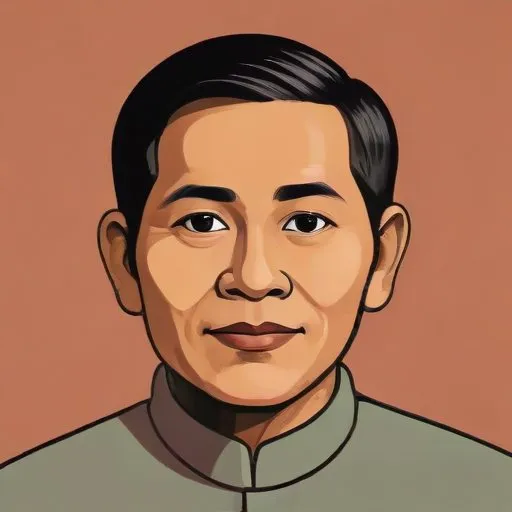
A renowned Burmese writer and educator who advocated for education reform and wrote influential literary works that promoted cultural heritage and national identity.
Po Kya, also known as Nga Tan, is a relatively unknown yet influential figure in Burmese history, credited with playing a crucial role in the development of the Bagan Empire during the 11th century. As a skilled politician and military strategist, Po Kya is remembered for his contributions to the consolidation of power and the establishment of a strong foundation for the empire.
Little is known about Po Kya's early life, but his rise to power is a testament to his unwavering ambition and dedication to the kingdom. He began his career as a trusted official in the court of King Anawrahta, the founder of the Bagan Empire, and quickly gained recognition for his exceptional administrative skills and military prowess.
Po Kya's legacy extends far beyond his achievements during his lifetime. His contributions to the consolidation of power and the establishment of a strong foundation for the Bagan Empire paved the way for the kingdom's future prosperity and cultural flourishing.
Despite his significant contributions to Burmese history, Po Kya remains a relatively unknown figure, overshadowed by more prominent leaders of the Bagan Empire. However, his impact on the kingdom's development and growth cannot be overstated, and his legacy continues to inspire and influence contemporary Burmese culture.
Po Kya's philosophical views are reflective of the Buddhist and Hindu influences that shaped the Bagan Empire. He believed in the concept of kamma, or the idea that one's actions have consequences, and was known for his fairness, justice, and compassion.
While little is known about Po Kya's personal life, his career milestones are well-documented. He served as a trusted official under King Anawrahta, eventually rising to the position of chief minister before becoming king himself.
Po Kya's legacy continues to influence modern Burmese society, with his administrative and military reforms serving as a model for future generations of leaders. His commitment to infrastructure development and fiscal responsibility has had a lasting impact on the country's economy and governance.

From his early days as a trusted official to his eventual rise to power, Po Kya's life was marked by significant milestones and achievements that have had a lasting impact on Burmese history.
For those interested in learning more about Po Kya and the Bagan Empire, there are a number of resources available, including historical texts, academic studies, and cultural exhibitions.
81 Years Old
A democracy icon and human rights activist, she led the fight against Myanmar's military rule and was awarded the Nobel Peace Prize in 1991.
81 Years Old
A former general who led Myanmar's transition from military rule to democracy, known for his reforms and release of political prisoners.
93 Years Old
A Burmese general and politician who served as the Prime Minister of Burma from 1992 to 2011, known for his authoritarian rule and human rights abuses.
Born in 1915
Led the fight for Burmese independence from British colonial rule and is considered the founder of modern Burma. He was assassinated before independence was achieved, but his daughter Aung San Suu Kyi continued his legacy.
Born in 1910
A Burmese army general and politician who ruled the country with an iron fist, implementing isolationist and nationalist policies that led to economic stagnation and human rights abuses.
Born in 1893
A Burmese lawyer and politician who served as Prime Minister of Burma, leading the country to independence from British colonial rule and playing a key role in shaping its early years. He's also known for his efforts to promote national unity and reconciliation.
Born in 1907
First Prime Minister of Burma, leading the country to independence from British colonial rule and establishing a democratic government. He's also known for his efforts to promote Buddhism and national unity.
