


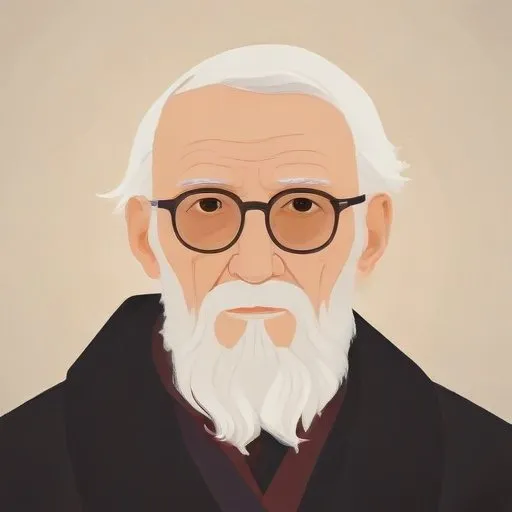
A 16th-century Lutheran theologian who wrote influential commentaries on the Bible and played a key role in shaping Protestant theology. His works remain significant in Lutheran circles.
Polykarp Leyser the Elder is renowned for his significant contributions to Lutheran theology, serving as a superintendent of Braunschweig, superintendent-general of the Saxon church circle, and professor of theology at the University of Wittenberg. Throughout his illustrious career, he played a crucial role in shaping Lutheran orthodoxy, earning him the nickname "the pope of Dresden."
Polykarp Leyser was born on March 18, 1552, in Winnenden. His father, Andreae, and stepfather, Osiander, supported his education, which was further influenced by his teacher Martin Chemnitz. This strong foundation in Lutheran orthodoxy would later shape his theological stance.
Leyser's literary output was staggering, with over 60 theological works and an extensive corpus of sermons. Some of his most notable works include:
These works showcased his commitment to Lutheran orthodoxy and his ability to articulate complex theological concepts in a clear and concise manner.
Leyser was instrumental in shaping the Lutheran concord in northern and central Germany. He played a key role in the development of the Formula of Concord, advocating for the limitation of sponsors to three people. His writings and teachings helped to establish Lutheran orthodoxy, earning him recognition as one of the most important figures of his time.
In 1580, Leyser married Elisabeth, the daughter of Lucas Cranach the Younger, and their children included Polykarp Leyser II, another prominent theologian. This union marked the beginning of a dynasty of theologians, with great-grandson Polykarp Leyser III and great-great-grandson Polykarp Leyser IV continuing the family's theological legacy.
Leyser's contributions to Lutheran theology continue to influence modern Lutheran thought and practice. His emphasis on orthodoxy and his commitment to defending Lutheran teachings have had a lasting impact on the Lutheran Church.
In conclusion, Polykarp Leyser the Elder was a towering figure in Lutheran theology, whose writings, teachings, and commitment to orthodoxy have left an indelible mark on the Lutheran Church. His legacy continues to inspire and inform Lutheran scholars and theologians to this day.
Born in 1483
A German monk and priest who sparked the Protestant Reformation, challenging Catholic Church authority and shaping Western Christianity. He's famous for nailing 95 theses to a church door, sparking a religious revolution.
Born in 1509
A French pastor and theologian who played a key role in the Protestant Reformation, shaping Christian theology and influencing Western civilization. He's famous for his teachings on predestination and his role in establishing Calvinism.
Born in 1484
Leader of the Swiss Reformation, advocating for church reform and inspiring other Protestant movements.
Born in 1497
A 16th-century Renaissance scholar who made significant contributions to the development of the Protestant Reformation and education, known for his theological writings and astronomical observations.
Born in 1499
A prominent figure in the Protestant Reformation, this theologian played a key role in shaping Lutheran theology and was a close associate of Martin Luther. He's also known for his biblical commentaries and liturgical reforms.
Born in 1522
A 16th-century astrologer and theologian who merged Christian theology with astrological concepts, influencing Lutheran thought and reform. He's known for his critiques of Catholicism and papal authority.
Born in 1498
A 16th-century theologian who sparked controversy by anonymously publishing a preface to Copernicus' De revolutionibus orbium coelestium, which led to a misunderstanding of the astronomer's heliocentric model. They also contributed to the development of Lutheran theology.
Born in 1485
A key figure in the Protestant Reformation, he played a crucial role in shaping Lutheran theology and was a close advisor to Martin Luther. He's also known for his work in establishing the Lutheran Church in Denmark and Norway.
