


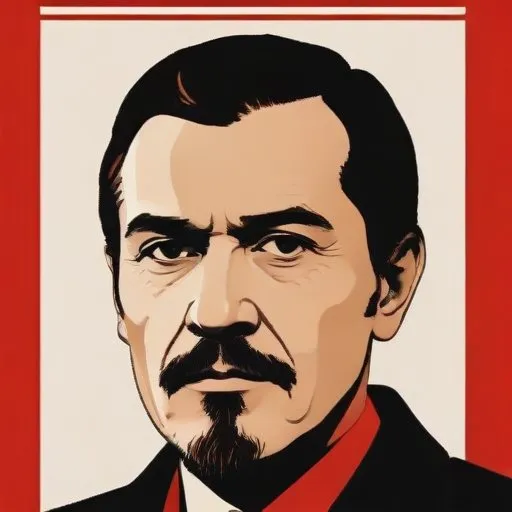
A Croatian philosopher who merged Marxist ideology with humanist principles, advocating for a more compassionate and equitable society. He's known for his critiques of capitalism and totalitarianism.
Predrag Vranicki was a renowned Marxist Humanist and a prominent figure of the Praxis school in 1960s Yugoslavia, known for his contributions to the fields of humanism, history, and freedom. Through his extensive works, he explored the complexities of dialectical and historical materialism, making him a leading authority in his field.
Born on January 21, 1922, in Benkovac, Croatia, Vranicki's life was marked by resistance against fascist occupation during World War II, where he fought alongside the National Liberation Army. After the war, he pursued his academic interests, earning a diploma in philosophy from the University of Zagreb in 1947 and a PhD from the University of Belgrade Faculty of Philosophy in 1951.
Vranicki's academic career was marked by several notable milestones. He served as the dean of the Faculty of Philosophy in Zagreb from 1964 to 1966 and later became the rector of Zagreb University from 1972 to 1976. He was also elected as the president of the Yugoslav Society for Philosophy in 1966 and became a full member of the Croatian Academy of Sciences and Arts in 1979.
His major works include:
Vranicki's philosophical contributions had a profound impact on modern society, particularly in the context of Yugoslavia. His work on Marxist humanism and his association with the Praxis school led to a deeper understanding of the complexities of humanism, history, and freedom.
Predrag Vranicki's legacy continues to inspire scholars and philosophers around the world. His work remains a testament to his commitment to Marxist humanism and his pursuit of knowledge in the face of adversity. His contributions to the fields of philosophy, history, and humanism have left an indelible mark on modern society.
Vranicki's life and work are a powerful reminder of the importance of resistance against oppression and the pursuit of knowledge in the face of adversity. His legacy serves as a beacon of hope for those seeking to understand the complexities of humanism, history, and freedom.
Predrag Vranicki passed away on January 31, 2002, leaving behind a rich legacy of philosophical contributions and a profound impact on modern society. His work continues to inspire and educate scholars and philosophers around the world, ensuring his legacy endures for generations to come.
Born in 1885
A German philosopher who explored the concept of utopia and the human desire for a better world, influencing Marxist thought and critical theory.
Born in 1898
A critical theorist who challenged traditional notions of freedom, democracy, and consumerism, arguing that modern society is oppressive and dehumanizing.
Born in 1905
Existentialist philosopher and playwright who argued that humans have complete freedom to choose their actions and create their own meaning in life, influencing modern thought on morality and individual responsibility.
Born in 1889
A German philosopher and academic who explored the meaning of existence, time, and human existence, influencing 20th-century philosophy with his concept of "Being-in-the-world".
Born in 1903
A critical theorist who critiqued modern society, culture, and capitalism, arguing that they perpetuate inequality and stifle individual freedom. His work influenced many fields, from sociology to musicology.
Born in 1895
A critical theorist who developed the concept of Critical Theory, which critiques modern capitalist society and advocates for social change. Known for his work on authoritarianism and the culture industry.
Born in 1885
A Hungarian philosopher and critic who developed Marxist theory and critiqued capitalism, known for his ideas on reification and the role of class consciousness in shaping society.
