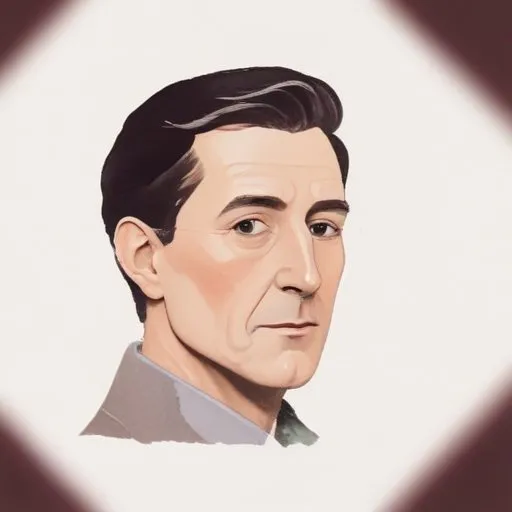
Roger Quilter: The Maestro of English Art Songs
A Legacy of Lyrical Beauty
Roger Quilter, a British composer born on November 1, 1877, is renowned for his exquisite art songs, which have become an integral part of the English art song tradition. With over a hundred songs to his credit, Quilter's works are often set to the texts of
William Shakespeare, showcasing his masterful blending of music and poetry.
Early Life and Education
Born in Hove, Sussex, to Sir William Quilter, 1st Baronet, a wealthy landowner, politician, and art collector, Roger was exposed to the world of art and music from a young age. A commemorative blue plaque adorns the house at 4 Brunswick Square, marking the composer's birthplace. Quilter's educational journey began at the preparatory school in Farnborough, followed by Eton College. It was at the Hoch Conservatory in Frankfurt, where he studied for almost five years under the guidance of Professor Iwan Knorr, that Quilter's musical talents truly flourished. During this period, he became acquainted with fellow composers
Percy Grainger,
Cyril Scott, and H. Balfour Gardiner, who would later form the Frankfurt Group.
The Frankfurt Group and Early Career
The Frankfurt Group, a circle of composers who studied at the Hoch Conservatory in the late 1890s, played a significant role in shaping Quilter's compositional style. His early career was marked by the creation of light music for bands, trios, and orchestras, including the popular Children's Overture, which wove together nursery rhyme tunes in a unique and captivating way. Quilter's art songs, however, remained his true passion, and it was this genre that would ultimately secure his place in the annals of English music.
Collaborations and Influences
Quilter's fruitful collaboration with the tenor Gervase Elwes, which lasted until Elwes' untimely death in 1921, resulted in the creation of some of the composer's most celebrated works. The influence of Quilter's music can be seen in the works of several English composers, including
Peter Warlock. Quilter's opera,
Julia, though not an immediate success, showcased his ability to craft dramatic music that would resonate with audiences.
Personal Life and Struggles
As a gay man living during the late 19th and early 20th centuries, Quilter faced significant challenges in coping with the societal pressures that came with his hidden homosexuality. The loss of his nephew, Arnold Guy Vivian, during World War II, took a devastating toll on Quilter's mental health. Despite these struggles, Quilter continued to compose, leaving behind a legacy of beauty and elegance.
Legacy and Impact
Roger Quilter's contributions to the world of English art song are immeasurable. His music has inspired generations of composers, singers, and music lovers alike. Quilter's unique ability to merge poetry and music has created a body of work that continues to enchant audiences today. As we reflect on his life and achievements, we are reminded of the power of music to transcend time and touch the human heart.
- Children's Overture (1914)
- Where the Rainbow Ends (1911)
- Julia (1936)
- To The New/Old Century (1940)
Final Years and Legacy
Roger Quilter passed away on September 21, 1953, at his home in St. John's Wood, London, just a few months after celebrating his 75th birthday. His legacy, however, continues to flourish, inspiring new generations of musicians and music enthusiasts to explore the enchanting world of English art song.
FAQ
What type of music did Roger Quilter compose?
Roger Quilter composed mainly art songs, which are songs that are written for solo voice and piano accompaniment. He is known for his beautiful and expressive melodies, which showcase his mastery of vocal music.
What inspired Roger Quilters music?
Roger Quilter was inspired by the works of Renaissance-era composers, as well as by the poetry of English Romantic-era poets. He was particularly drawn to the poetry of William Shakespeare and Robert Louis Stevenson.
Did Roger Quilter only compose music for solo voice?
No, Roger Quilter did not only compose music for solo voice. He also wrote music for chorus and orchestra, including several large-scale works such as oratorios and cantatas.
Is Roger Quilter considered a prominent composer?
Yes, Roger Quilter is considered a prominent composer of art songs. His music is still widely performed today, and he is regarded as one of the leading figures in the English art song tradition.
What is Roger Quilters most famous work?
Roger Quilters most famous work is probably his Seven Elizabethan Lyrics, a set of songs that showcase his mastery of vocal music and his ability to set poetry to music.