


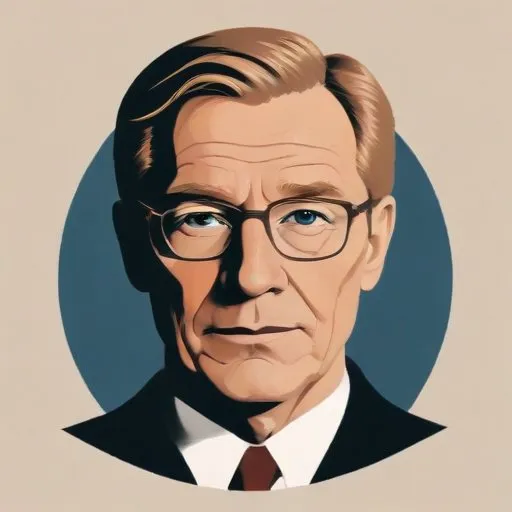
A Norwegian industrialist and art collector who built a business empire and amassed a significant art collection, which he later donated to the Norwegian state.
Rolf Stenersen was a Norwegian businessman, non-fiction writer, essayist, novelist, playwright, and biographer who made a significant impact on the country's cultural and literary scene. He was also an accomplished track and field athlete and art collector, with a vast collection of works by renowned artists such as Edvard Munch.
Stenersen's career was marked by his versatility and entrepreneurial spirit. He started his own business, AS Stenersen og Waage, in 1925, which operated in the rubber business and the Dutch stock market. He was also an avid art collector and friend of Edvard Munch, serving as the artist's financial advisor and collecting many of his works.
Stenersen's love for art led him to organize an exhibition of his collection in 1926, featuring works by Munch and Ludvig Karsten. He also wrote essays on various artists, including Erik Harry Johannessen, Jakob Weidemann, and Paul Klee. His writing talent extended to fiction, with his debut short story collection, Godnatt da du, published in 1931.
In 1936, Stenersen donated his extensive collection of Norwegian art to the municipality of Aker, which is now displayed in the Stenersen Museum in Oslo. His biography of Edvard Munch, published in 1944, is considered one of his greatest writing successes, having been translated into several languages.
During World War II, Stenersen's books were banned by the Nazi regime, forcing him to flee to Sweden. Despite these challenges, he continued to write and publish works, including his play Eva og Johannes, which was staged at Nationaltheatret in 1953.
Rolf Stenersen's contributions to Norwegian culture and literature are immeasurable. His writing and art collection have inspired generations, and his legacy continues to be celebrated through the Stenersen Museum and his many published works.
Rolf Stenersen's remarkable life and career serve as a testament to his boundless energy, creativity, and passion for the arts. His legacy continues to inspire and educate, making him an important figure in Norwegian cultural history.
Born in 1828
A pioneer of realism in theater, known for plays that probed the human condition, challenging social norms and morals through complex characters and situations.
Born in 1863
A Norwegian painter who created iconic, emotionally charged works that explored the human experience, including the famous piece "The Scream".
Born in 1859
A Norwegian literary giant, celebrated for his pioneering works that explored the human condition, nature, and the search for meaning. His writing style, a blend of realism and lyricism, influenced generations of writers.
Born in 1882
A Danish-Norwegian writer who penned epic historical novels, including the Kristin Lavransdatter trilogy, which explores themes of love, faith, and identity in medieval Norway. Her works are celebrated for their rich detail and strong female characters.
Born in 1832
A Norwegian-French author and playwright who wrote influential works that explored themes of social justice, morality, and national identity, earning him the Nobel Prize in Literature in 1903.
Born in 1849
A prominent figure in Norwegian literature, known for his realistic and socially conscious plays and novels that critiqued the social conventions of his time.
Born in 1897
A renowned Norwegian literary figure, celebrated for his poignant and evocative writings that explore the human condition, often delving into themes of love, nature, and the complexities of rural life.
