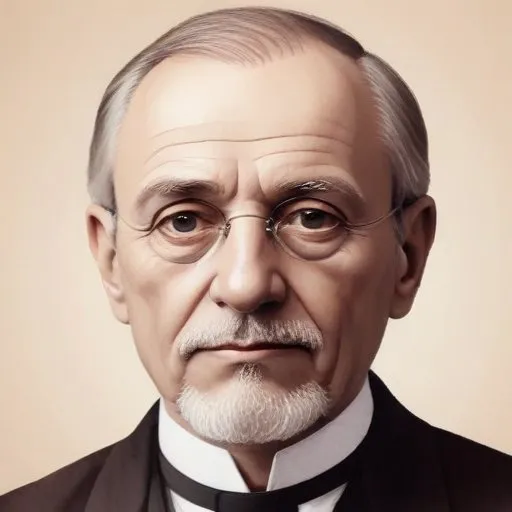
Rudolf Bahro: The Philosopher-Dissident Who Redefined Sustainability
A Life of Courageous Dissent
Rudolf Bahro, a renowned East German dissident, philosopher, and author, left an indelible mark on the world of politics and sustainability. As a pioneer of ecological thought, Bahro's work continues to inspire generations of environmentalists and social activists.
Early Life and Education
Born on November 18, 1935, in Lower Silesia, Bahro's early life was marked by turmoil. His family was torn apart by the tumultuous events of World War II, and he was eventually reunited with his father in Austria. This experience of displacement and loss would later shape his philosophical outlook on life. After completing his high school education in Frstenberg, Bahro attended Humboldt University in Berlin, where he studied philosophy under the tutelage of prominent scholars like Kurt Hager and Georg Klaus.
The Emergence of a Dissident
Bahro's initial ideological allegiance was to the Socialist Unity Party (SED), but he soon became disillusioned with the party's authoritarianism. In 1959, he wrote his thesis on
Johannes R. Becher, a prominent East German poet and politician. This work was a subtle critique of the SED's cultural policies, foreshadowing Bahro's future as a dissident voice.
The Greens and Beyond
In the 1970s, Bahro became a key figure in the West German Green Party, advocating for environmentalism and social justice. However, he grew disillusioned with the party's bureaucratic structure and left in 1985. This marked a turning point in his life, as he began to explore spiritual approaches to sustainability and ecological thought.
Philosophical Contributions
Bahro's philosophical work focused on the intersection of ecology, social justice, and human spirituality. He argued that humanity's disconnection from nature was the root cause of social and environmental crises. His magnum opus,
The Alternative in Eastern Europe, proposed a radical shift in human consciousness, emphasizing the need for a new ecological and democratic order.
Influence on Modern Society
Bahro's work has inspired a generation of environmentalists, community activists, and social justice advocates. His ideas on ecological sustainability, decentralized decision-making, and human-scale technology have influenced movements like the anti-nuclear campaign, the peace movement, and the feminist movement.
Personal Milestones and Key Life Events
- 1945: Separated from his family during World War II, Bahro was forced to flee to Austria
- 1950: Reluctantly joined the Free German Youth (FDJ), a Socialist Unity Party (SED) organization
- 1952: Applied for membership in the SED, which he joined in 1954
- 1959: Completed his thesis on Johannes R. Becher at Humboldt University
- 1970s: Became a key figure in the West German Green Party
- 1985: Left the Green Party, citing disillusionment with its bureaucratic structure
- 1997: Passed away on December 5, leaving behind a legacy of courageous dissent and ecological thought
Legacy and Historical Context
Rudolf Bahro's life and work serve as a testament to the power of courageous dissent and the importance of reevaluating our relationship with the natural world. As we navigate the complexities of the Anthropocene era, Bahro's ideas on ecological sustainability, social justice, and human spirituality offer a powerful beacon of hope for a more harmonious and equitable future.
FAQ
What is Rudolf Bahros role in German politics?
Rudolf Bahro is a German philosopher and politician, known for his activism in the Green Party and his advocacy for environmental and social justice.
What is Rudolf Bahros most notable work?
Rudolf Bahros most notable work is his 1978 book, The Alternative in Eastern Europe, which critiqued the policies of Eastern Bloc countries and advocated for democratization and ecological reform.
What awards has Rudolf Bahro won?
Rudolf Bahro has received several awards, including the Alternative Nobel Prize and the Right Livelihood Award, for his contributions to environmentalism and human rights.
What is Rudolf Bahros early life and education?
Rudolf Bahro was born in East Germany and studied philosophy and economics at the University of Leipzig, later becoming a prominent dissident and activist in the East German democracy movement.
Is Rudolf Bahro still active in German politics?
Although Rudolf Bahro is no longer actively involved in politics, his contributions to the Green Party and the environmental movement continue to inspire Germans today.