


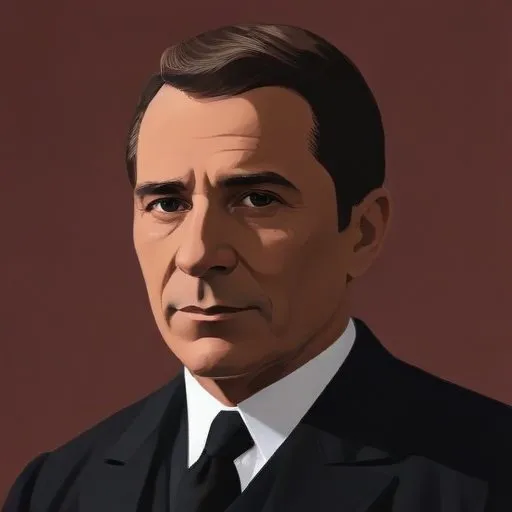
A renowned lawyer and historian who prosecuted Nazi war criminals at the Nuremberg Trials, shedding light on the atrocities of the Holocaust. His work helped establish the foundation for modern international law.
Renowned American lawyer and professor Telford Taylor is best known for his pivotal role in prosecuting war criminals after World War II, his unwavering opposition to McCarthyism in the 1950s, and his outspoken criticism of American actions during the Vietnam War. As a champion of justice, Taylor's remarkable career spanned military service, government agencies, and academia, leaving an indelible mark on the pursuit of human rights and accountability.
Born on February 24, 1908, in Schenectady, New York, Taylor was the son of John Bellamy Taylor and Marcia Estabrook Jones. He was a descendant of the renowned author Edward Bellamy. Taylor's academic pursuits took him to Williams College and later to Harvard Law School, where he earned his law degree in 1932.
Taylor's early career was marked by stints with various government agencies during the 1930s. He provided legal counsel to a subcommittee of the Senate Interstate Commerce Committee, working alongside notable figures such as Harry S. Truman. In 1940, he became the general counsel for the Federal Communications Commission.
Taylor's involvement in World War II began in 1942, when he joined Army Intelligence as a major. He played a pivotal role in analyzing information obtained from intercepted German communications using Ultra encryption, working closely with British intelligence at Bletchley Park. Taylor's contributions led to his promotion to lieutenant colonel in 1943, followed by a promotion to full colonel in 1944.
After the war, Taylor served as the assistant to Robert H. Jackson in the initial Nuremberg trial before the International Military Tribunal. He later became the lead counsel for the prosecution in the 12 subsequent Nuremberg trials before US military courts, working tirelessly to bring war criminals to justice.
In the 1950s, Taylor emerged as a vocal critic of McCarthyism, denouncing the Red Scare's witch-hunting tactics and defending the rights of those accused. During the Vietnam War, Taylor spoke out against American involvement, calling for greater accountability and transparency in the government's actions.
Taylor's commitment to justice extended beyond his professional life. He was married to Kathryn John Finn, and the couple had two children together. Taylor's legacy is one of unwavering dedication to human rights, accountability, and the pursuit of truth.
"The Nuremberg trials were not just a culmination of a particular phase of history, but a beacon for the future, illuminating the path to a more just and peaceful world."
Taylor's remarkable career was marked by numerous honors and awards, including the Legion of Merit and the Army Distinguished Service Medal.
Telford Taylor's tireless efforts to promote human rights, accountability, and the rule of law continue to inspire generations of lawyers, academics, and activists. His legacy serves as a powerful reminder of the importance of upholding the principles of justice, even in the face of adversity.
Telford Taylor's remarkable life and career serve as a testament to the power of dedicated individuals in shaping the course of history. His courageous stance against injustice, his unwavering commitment to human rights, and his pursuit of truth have left an indelible mark on the world.
Born in 1890
Led the Allied forces to victory in World War II and later served as President, maintaining peace and prosperity during the Cold War era. He's known for his strategic leadership and diplomatic skills.
Born in 1880
A highly decorated military leader and statesman who played a crucial role in shaping post-WWII foreign policy and was awarded the Nobel Peace Prize for his efforts. He's most known for authoring the Marshall Plan, a massive economic aid program that helped rebuild war-torn Europe.
Born in 1893
Led the US Army in World War II and became the last five-star general, playing a crucial role in shaping post-war American military strategy. He's also known for his humble and unassuming leadership style.
Born in 1880
A highly decorated war hero and master strategist who led troops to victory in World War I and II, and later became a prominent figure in the occupation of Japan.
Born in 1885
A renowned military leader who played a crucial role in World War II, particularly in the Allied victory in Europe, known for his bold tactics and unapologetic style.
Born in 1885
Led the U.S. Pacific Fleet to victory in World War II, playing a crucial role in defeating Japan and ending the war. He was a highly respected and decorated naval leader.
Born in 1891
Led the US Air Forces to victory in World War II, pioneering the use of strategic bombing and playing a crucial role in shaping the US military's air power.
Born in 1898
American general who played a crucial role in post-WWII Germany, overseeing the Berlin Airlift and helping to establish the country's post-war government. He's also known for his efforts to rebuild and democratize Germany.
