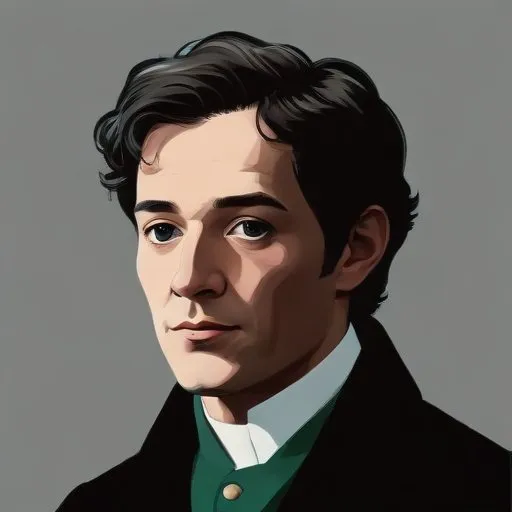
Thomas Moore: The Irish Poet and Lyricist Who Captivated the Nation
A Melodious Legacy
Thomas Moore, also known as
Tom Moore, was an Irish writer, poet, and lyricist celebrated for his iconic Irish Melodies, which harmoniously blended traditional Irish tunes with English language verse. His works marked a significant transition in popular Irish culture, shifting from Irish to English, and earning him a place in the hearts of music lovers across the nation.
Early Life and Artistic Beginnings
Born on May 28, 1779, in Aungier Street, Dublin, Moore was the first of three children to Anastasia Codd from Wexford and
John Moore from County Kerry. His parents' grocery shop served as a humble abode for the young family. Moore's early fascination with music and performance led him to stage musical plays with friends, nurturing hopes of becoming an actor. Attending Samuel Whyte's coeducational English grammar school, Moore developed fluency in French and Italian, alongside a solid foundation in Latin and Greek.
A Poetic Career Takes Flight
Moore's literary talent was evident from a young age. By 14, one of his poems was published in a local magazine, foreshadowing a prolific career. His poetry and lyrics often reflected his Irish heritage, weaving together myth, history, and culture with masterful ease. The publication of his first collection,
Odes of Anacreon, in 1800, earned him the nickname "Anacreon Moore," likening him to the ancient Greek composer of drinking songs and erotic verse.
Irish Melodies: A Timeless Legacy
Moore's most enduring legacy lies in his iconic Irish Melodies. This collection of poems, set to traditional Irish airs, includes timeless classics like "The Minstrel Boy" and "The Last Rose of Summer." These works not only showcased Moore's lyrical prowess but also helped to popularize Irish music and culture among the English-speaking world.
Awards and Honors
Moore's contributions to literature and music earned him several accolades, including being named a doctor of laws by Trinity College, Dublin, in 1811. He was also appointed as the Regius Professor of Greek at Trinity College, a position he held from 1835 until his death in 1852.
Philosophical Contributions and Beliefs
Moore's writings often reflected his sympathies with democratic reform and his defense of the Catholic Church in Ireland. His longer prose works, such as
The Life and Death of Lord Edward Fitzgerald, portrayed the United Irish leader as a martyr in the cause of democratic reform. Moore's commitment to social justice and equality is evident in his support for Catholic Emancipation, which was finally achieved in 1829.
Personal Milestones and Key Life Events
Moore married Elizabeth "Bessy" Dyke, a Protestant actress, in 1812, and the couple had five children together. His friendship with
Lord Byron was marked by controversy, as Moore was accused of mishandling Byron's memoirs, which were eventually destroyed.
Influence on Modern Society
Moore's impact on Irish culture and literature is still felt today. His Irish Melodies have been performed and adapted by countless musicians, ensuring the endurance of traditional Irish music. Moore's legacy extends beyond the literary world, inspiring generations to explore and appreciate Ireland's rich cultural heritage.
Quotes and Memorable Sayings
- "The wish, that every heart should entertain, is that the Irish people may be prosperous, happy, and united."
- "I knew, by the smoke, that soot was made."
Legacy and Historical Context
Thomas Moore's life and works are inextricably linked with the cultural and political landscape of 19th-century Ireland. His literary contributions not only reflected the era's intellectual fervor but also helped shape the nation's identity. As a poet, lyricist, and advocate for social justice, Moore's legacy continues to inspire and captivate audiences around the world.
FAQ
What was Thomas Moores role in Irish literature?
Thomas Moore was a prominent Irish poet, singer, and songwriter who played a significant role in the development of Irish literature during the early 19th century. He is best known for his poetry and songs, which often celebrated Irish culture and history.
What were Thomas Moores contributions to Irish music?
Thomas Moore was a prolific composer and songwriter, and his music reflected his strong sense of Irish identity and culture. He is credited with helping to popularize Irish music and promote Irish cultural heritage.
How did Thomas Moore respond to Irish politics?
Thomas Moore was a strong advocate for Irish independence and self-governance. He was a vocal critic of British rule in Ireland and often used his writing to promote Irish nationalist causes.
What was Thomas Moores relationship with other Irish writers?
Thomas Moore was part of a circle of prominent Irish writers, including Walter Scott and Lady Morgan. He collaborated and corresponded with these figures, contributing to the development of Irish literature and culture during the early 19th century.
What is Thomas Moores legacy in Irish literature?
Today, Thomas Moore is remembered as a celebrated figure in Irish literature, particularly for his poetry and music. His contributions to Irish cultural heritage and his promotion of Irish identity continue to be celebrated and studied by scholars and literature lovers around the world.