


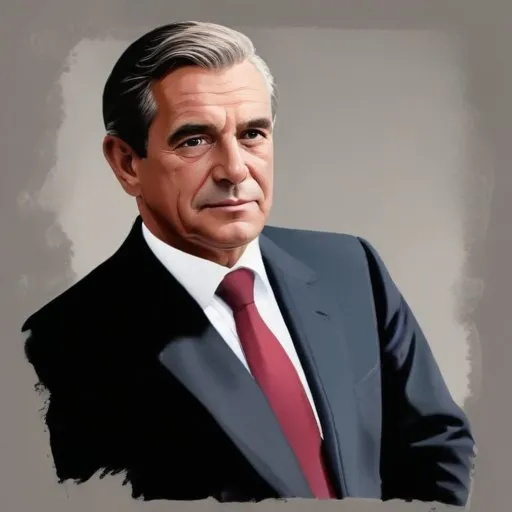
Austrian businessman and politician who served as Chancellor of Austria from 1997 to 2000, known for his economic reforms and EU integration efforts.
Viktor Klima is widely recognized as the Austrian Chancellor who led the country from 1997 to 2000, steering it towards a more centrist approach. As the leader of the Social Democratic Party of Austria (SPÖ), Klima's tenure was marked by significant reforms, privatizations, and a shift away from traditional Marxist ideologies.
Born on June 4, 1947, in Schwechat, Lower Austria, Klima began his career at the state-owned OMV oil company in 1969. He quickly rose through the ranks, becoming a member of the management board before leaving to pursue a career in politics in 1992.
Klima's entry into politics was facilitated by Chancellor Franz Vranitzky, who appointed him Minister of Transportation and Nationalized Industry in 1992. Klima held this position until 1996, when he became Finance Minister for a year. His impressive performance in these roles paved the way for his eventual election as Chancellor in 1997.
As Chancellor, Klima implemented a range of reforms, drawing inspiration from the "Third Way" strategy popularized by European leaders like Tony Blair and Gerhard Schröder. He led the SPÖ towards the center, embracing populism and spin doctors to reposition the party.
Key initiatives during his tenure included:
Klima's reforms had significant consequences, both within Austria and beyond. His move towards the center alienated some traditional working-class voters, who redirected their support to the far-right Freedom Party (FPÖ). However, Klima's commitment to excluding the FPÖ from coalition governments remained unwavering.
Klima's leadership also influenced the broader European political landscape, as his "Third Way" approach found echoes in other countries.
In addition to his political achievements, Klima has been recognized for his personal milestones, including:
Klima's shift towards the center and his embrace of populism reflect his philosophical commitment to pragmatic, results-driven governance. His beliefs are rooted in a focus on economic efficiency, social equality, and the importance of adaptability in an ever-changing world.
Did you know that:
Viktor Klima's transformative leadership and commitment to centrist policies have left a lasting impact on Austrian politics and beyond. As a champion of the "Third Way," he has paved the way for future generations of politicians to navigate the complexities of modern governance.
93 Years Old
Austrian politician and diplomat who served as the 10th President of Austria from 1992 to 2004, known for his efforts to strengthen Austria's international relations and promote European integration.
81 Years Old
The 26th Chancellor of Austria, a lawyer and politician, served as the country's leader from 2000 to 2007, known for his conservative policies and European integration efforts. He played a key role in shaping Austria's economy and foreign policy during his tenure.
87 Years Old
The 11th President of Austria, a renowned academic and politician, served as the country's head of state from 2004 to 2016, known for promoting unity and stability. He's also a respected historian and law expert.
66 Years Old
The 28th Chancellor of Austria, serving from 2008 to 2016, is most known for his strong stance on European Union policies and his efforts to reform Austria's economy. He played a key role in shaping the country's response to the European sovereign-debt crisis.
Born in 1918
An Austrian colonel and politician who served as the 9th President of Austria, known for his controversial past as a Nazi officer during World War II. He was also the Secretary-General of the United Nations from 1972 to 1981.
97 Years Old
The 19th Chancellor of Austria, who served from 1983 to 1986, is most known for his social democratic policies and efforts to reform the Austrian economy. He played a key role in shaping the country's post-war politics.
