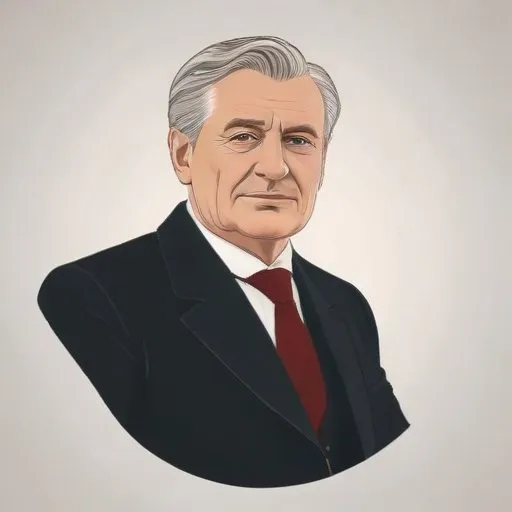
Wilhelm Cuno

Wilhelm Cuno

Wilhelm Cuno was born on July 2nd, 1876

Full Name: Wilhelm Cuno
Place of Birth: Suhl, Germany
Profession: Businessman and politician
Nationality: German
Notable Position: Chancellor of Germany
Born: July 2, 1876
Died: January 3, 1933
Party: German Peoples Party

A German businessman and politician who served as Chancellor of Germany from 1922 to 1923, known for his role in navigating the country through a period of hyperinflation and economic crisis.

Written by: Cassandra Blake Cassandra Blake

Wilhelm Cuno: The Chancellor Who Battled Hyperinflation

A Turbulent Tenure

Wilhelm Cuno, a German businessman and politician, is infamous for his brief but tumultuous stint as the Chancellor of Germany from 1922 to 1923. During his 264-day tenure, Cuno faced the daunting task of navigating Germany through the aftermath of World War I, only to succumb to the catastrophic hyperinflation that ravaged the country.

Rise to Prominence

Born on July 2, 1876, in Suhl, Prussian Saxony (now Thuringia), Cuno was the son of an administrative civil servant. He studied law in Berlin and Heidelberg, earning a Juris Doctor degree. His early career began in the civil service, where he played a crucial role in organizing Germany's food supply during the early years of World War I. In 1917, Cuno joined the Hamburg America shipping company, leveraging his economic expertise to participate in post-war negotiations with the Allied Powers.

The Chancellorship and the Ruhr Crisis

In November 1922, Cuno was appointed Chancellor of Germany, forming a business-friendly ministry comprising political independents. His primary objective was to stabilize the currency and address the war reparations issue. However, his plans were derailed by the French and Belgian occupation of the Ruhr in January 1923. Cuno responded with a policy of passive resistance, providing financial assistance to affected workers and firms. This move, facilitated by printing money, inadvertently sparked the hyperinflation that would soon engulf Germany.

The Hyperinflation Crisis

As the French and Belgian occupation continued, Cuno's government printed more money to fund the resistance efforts. This led to a vicious cycle of inflation, with prices skyrocketing and the German mark becoming almost worthless. The resulting hyperinflation decimated the German economy, wiping out savings and reducing the middle class to poverty. Cuno's government was unable to contain the crisis, and he eventually resigned in August 1923.

Post-Chancellorship and Legacy

After his resignation, Cuno returned to the Hamburg America Line, where he remained until his death on January 3, 1933. Despite his tumultuous tenure, Cuno's economic expertise and negotiating skills earned him recognition as a key player in Germany's post-war reconstruction efforts. His legacy, however, remains marred by the devastating hyperinflation crisis that occurred under his watch. In conclusion, Wilhelm Cuno's brief but eventful tenure as Chancellor of Germany was marked by his valiant efforts to stabilize the economy, despite being ultimately overwhelmed by the catastrophic hyperinflation crisis.
Timeline
1876
Born in Germany
Wilhelm Cuno was born in Suhl, Germany. He would later become a prominent businessman and politician.
1907
Became a Banker
Cuno worked as a banker in Hamburg, Germany.
1922
Became Chancellor of Germany
Cuno served as the Chancellor of Germany from 1922 to 1923.
1923
Resigned as Chancellor
Cuno resigned as Chancellor due to disagreements with the German government.
1933
Died in Germany
Wilhelm Cuno died on January 3, 1933, in Aumühle, Germany.
Wilhelm Cuno

Wilhelm Cuno Quiz

What was Wilhelm Cuno's occupation before entering politics?

Score: 0/5
FAQ
What was Wilhelm Cunos role in German politics?
Wilhelm Cuno was a German businessman and politician who served as Chancellor of Germany from 1922 to 1923.
What was Wilhelm Cunos economic policy during his time as Chancellor?
Cunos economic policy during his time as Chancellor focused on addressing the hyperinflation that plagued Germany in the early 1920s.
How did Wilhelm Cunos business background influence his approach to politics?
Cunos business background gave him a unique perspective on economic policy and helped to inform his approach to governance.
What were some of the challenges Wilhelm Cuno faced during his time as Chancellor?
Cuno faced significant challenges during his time as Chancellor, including hyperinflation, political unrest, and international pressure.
What is Wilhelm Cunos legacy in German politics?
Cunos legacy in German politics is one of pragmatic leadership and a commitment to addressing the economic challenges facing Germany during a tumultuous period.

Related People:

Gustav Stresemann

Born in 1878

A German journalist and politician who served as Chancellor of Germany during the Weimar Republic, known for his efforts to rebuild Germany after World War I and his Nobel Peace Prize win in 1926. He played a crucial role in stabilizing the German economy and improving international relations.

Paul von Hindenburg

Born in 1847

A German field marshal and politician who served as the 2nd President of Germany during the Weimar Republic, playing a crucial role in the rise of the Nazi Party. He's infamous for appointing Adolf Hitler as Chancellor of Germany in 1933.

Franz von Papen

Born in 1879

A German nobleman who served as Chancellor of Germany in 1932, known for his role in appointing Adolf Hitler as Chancellor, paving the way for the Nazi regime.

Kurt von Schleicher

Born in 1882

A German general and politician who briefly served as Chancellor of Germany in 1933, known for his failed attempts to stabilize the Weimar Republic and his role in Hitler's rise to power.

Heinrich Brüning

Born in 1885

Chancellor of Germany during the Weimar Republic, implemented austerity measures to address the Great Depression, but ultimately failed to prevent Hitler's rise to power.

Joseph Goebbels

Born in 1897

A mastermind of Nazi propaganda, he crafted a persuasive narrative that fueled the Third Reich's rise to power, leaving a lasting impact on the world.

Hermann Göring

Born in 1893

A high-ranking Nazi official, he was a decorated World War I fighter pilot and later became a prominent politician, serving as Minister President of Prussia. He's infamous for his role in the Nazi regime and war crimes trials.

Joachim von Ribbentrop

Born in 1893

A German diplomat who served as the Nazi regime's Foreign Minister, orchestrating key alliances and treaties that led to World War II. He was a close associate of Adolf Hitler and played a crucial role in shaping Nazi foreign policy.