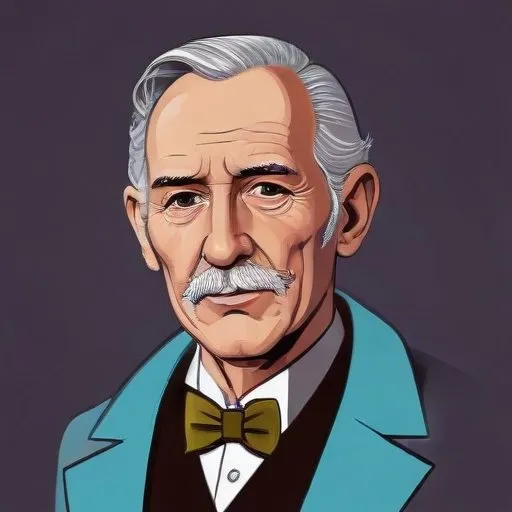
William Sturgeon: The Pioneering Physicist Behind the Electromagnet
The Invention that Changed the Course of History
William Sturgeon, a British physicist and inventor, etched his name in the annals of history by creating the first electromagnet in 1824. This groundbreaking innovation paved the way for the development of the first practical electric motor, solidifying Sturgeon's position as a pioneer in the field of electrical engineering.
Early Life and Military Service
Born on May 22, 1783, in Whittington, Lancashire, Sturgeon initially embarked on a career in shoemaking as an apprentice. However, his desire for knowledge and adventure led him to join the army in 1802. During his military service, Sturgeon devoted his spare time to self-study, delving into mathematics and physics. This autodidactic approach laid the foundation for his future accomplishments.
A New Chapter: Science and Education
Sturgeon's passion for science and education led him to become a lecturer in Science and Philosophy at the East India Company's Military Seminary in Addiscombe, Surrey, in 1824. This appointment marked the beginning of his illustrious career, during which he exhibited his first electromagnet, lifting an impressive nine pounds with a seven-ounce piece of iron wrapped with wire through which a current from a single battery was sent.
Pioneering Achievements and Contributions
- In 1826, Sturgeon invented the first practical electric motor, incorporating a commutator, which revolutionized the field of electrical engineering.
- In 1836, he established the journal Annals of Electricity, Magnetism and Chemistry, a platform for publishing groundbreaking research and discoveries.
- Sturgeon's invention of the galvanometer in 1836 enabled the measurement of electric currents, further advancing the field of electrical science.
- In 1840, he became the superintendent of the Royal Victoria Gallery of Practical Science in Manchester, where he continued to conduct experiments and educate the public on scientific principles.
Collaborations and Legacy
Sturgeon's work was closely tied to that of his contemporaries, including John Peter Gassiot and Charles Vincent Walker. Together, they founded the London Electrical Society in 1837, fostering a community of like-minded individuals dedicated to advancing electrical science. Sturgeon's collaborations with John Davies and
James Prescott Joule further enriched the scientific landscape, promoting the exchange of ideas and innovations.
Publications and Later Life
In 1843, Sturgeon launched
The Annals of Philosophical Discovery and Monthly Reporter of the Progress of Practical Science, a journal that published original research papers, translated articles from foreign journals, and shorter articles. This endeavor cemented his position as a prolific writer and thinker in the scientific community.
Sturgeon's dedication to the advancement of science and education remained unwavering throughout his life. He continued to lecture and demonstrate his experiments, sharing his knowledge with the public until his passing on December 4, 1850. William Sturgeon's pioneering work in electromagnetism and electrical engineering has left an indelible mark on the scientific community, inspiring generations of innovators and scientists to come.
FAQ
What was William Sturgeons contribution to the development of electromagnetism?
William Sturgeon invented the electromagnet and electric motor, making significant contributions to the development of electromagnetism. He was one of the first scientists to demonstrate the principle of electromagnetic induction.
What was William Sturgeons role in the development of the electric motor?
William Sturgeons invention of the electric motor revolutionized industry and transportation. His design improved upon earlier prototypes, paving the way for the widespread adoption of electric motors in the 19th century.
What were William Sturgeons early life and education like?
William Sturgeon was born in 1783 in Lancashire, England. He received little formal education, but was largely self-taught in mathematics and science.
What was William Sturgeons work in the field of physics?
William Sturgeons work in physics focused on electromagnetism, electricity, and magnetism. He was a fellow of the Royal Society and wrote several papers on his research.
When did William Sturgeon die?
William Sturgeon died on December 4, 1850, leaving behind a legacy as a pioneer in the field of electromagnetism.