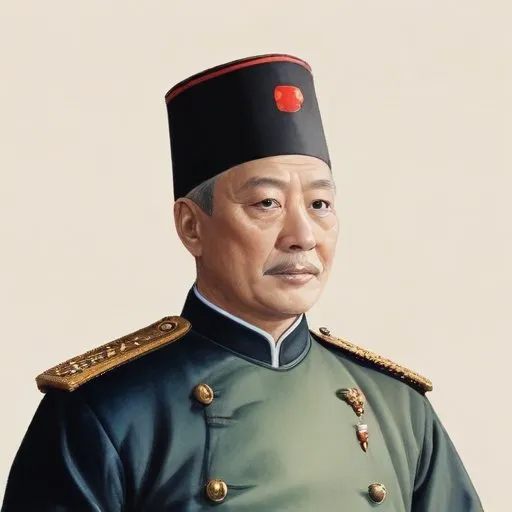
Ye Ting: The Revolutionary Leader Who Shaped China's Future
A Key Figure in the Northern Expedition
Ye Ting was a Chinese military leader who played a pivotal role in the Northern Expedition, a crucial campaign that reunified China after the 1911 Revolution. As a prominent figure in the Chinese Communist Party (CCP), Ye Ting's bravery and strategic mind earned him recognition as one of the most important military leaders of his time.
Early Life and Upbringing
Born on April 10, 1896, in Huiyang, Guangdong, Ye Ting grew up in a family with a rich cultural heritage. His ancestors, who migrated from Henan to the south, settled in Guangdong, where his father, Ye Xisan, worked as a farmer and a fruit planter. Ye Ting was the eighth child in the family and was known for his energetic and helpful nature, often assisting his father with farming tasks. His mother, Wu, instilled in him the importance of education, which would later become a cornerstone of his success.
Education and Early Influences
Ye Ting's educational journey began at the nearby Tengyun school, where he studied classical Chinese literature and philosophy. In 1911, he enrolled in the Sericultural School of Huizhou, where he was deeply influenced by the Second Guangzhou Uprising, a movement that sought to overthrow the Qing dynasty. This experience not only shaped his political beliefs but also led to him being expelled from school for cutting his queue hairstyle, a symbol of rebellion against the traditional norms.
Military Career and Rise to Prominence
After being expelled, Ye Ting entered Huizhou middle school, where he continued to develop his leadership skills. In 1912, he enrolled in the Guangzhou Landforce Primary School, where he honed his military skills and graduated in 1914. He then traveled north to Hubei, where he studied military knowledge in the Hubei Army Second Preparatory School. By the end of 1916, Ye Ting's exceptional performance earned him a place on the Dean's list, and he was recommended for admission to the prestigious military academy in Baoding.
Joining the Chinese Communist Party
In 1924, Ye Ting joined the Chinese Communist Party (CCP), where he quickly rose through the ranks, becoming a key figure in the party's military leadership. His bravery and strategic mind earned him recognition, and he was appointed as the commander of the 24th Division of the National Revolutionary Army.
Northern Expedition and Legacy
Ye Ting's most notable achievement was his role in the Northern Expedition, a campaign aimed at reunifying China after the 1911 Revolution. As the commander of the 24th Division, he played a crucial role in the expedition, leading his troops to several victories against the warlords and their armies. Ye Ting's contributions to the Northern Expedition earned him a place in Chinese history, and he is remembered as one of the most important military leaders of the 20th century.
Later Life and Controversies
Despite his many achievements, Ye Ting's later life was marked by controversy and political turmoil. In 1941, he was accused of being involved in a plot to overthrow
Mao Zedong, the founder of the CCP, and was subsequently detained and executed in 1946. Ye Ting's legacy remains complex, with some viewing him as a hero and a patriot, while others see him as a traitor who betrayed the party.
Conclusion
Ye Ting's life was a testament to his bravery, strategic mind, and unwavering commitment to his country. As a military leader, he played a crucial role in shaping China's future, and his legacy continues to inspire generations of Chinese people. Despite the controversies that surrounded his later life, Ye Ting remains an important figure in Chinese history, and his contributions to the Northern Expedition will always be remembered as a pivotal moment in the country's struggle for unity and independence.
FAQ
What is Ye Tings role in Chinese history?
Ye Ting was a prominent Chinese general who played a crucial role in the Chinese Civil War and the Second Sino-Japanese War. He is known for his bravery and tactical skills on the battlefield.
What were Ye Tings early life and education?
Ye Ting was born in 1896 in Guangdong Province, China. He received his early education in China and later studied military science in Japan.
What was Ye Tings role in the New Fourth Army?
Ye Ting was the commander of the New Fourth Army, a Chinese communist military unit, from 1937 to 1941. He led the army to several victories against the Japanese occupation.
What was Ye Tings relationship with Mao Zedong?
Ye Ting had a complex relationship with Mao Zedong, the Chinese communist leader. While he was a loyal member of the Communist Party, he also disagreed with Mao on several occasions, leading to his eventual purge.
What was Ye Tings fate after the communist takeover?
After the Communist Party took over China in 1949, Ye Ting was purged and eventually died in prison in 1946 under mysterious circumstances.