


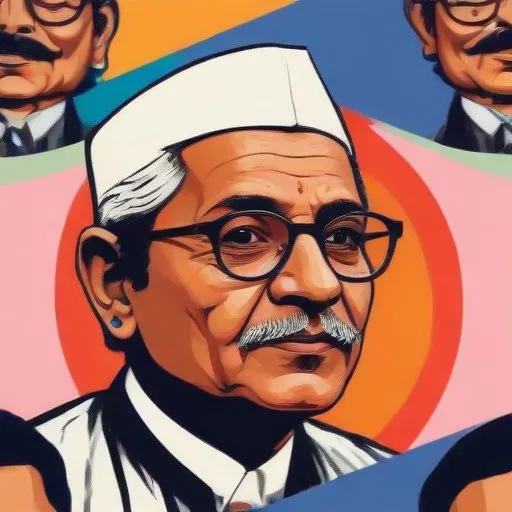
A prominent Indian lawyer and politician who served as the 5th Vice President of India, known for his contributions to the country's governance and development. He played a significant role in shaping India's political landscape during his tenure.
Basappa Danappa Jatti, the 5th Vice President of India, is renowned for his unwavering commitment to the principles of federalism and his unrelenting efforts to strengthen the country's decentralized system of governance. Throughout his political career, Jatti consistently advocated for the empowerment of state governments, earning him the reputation as a true champion of Indian federalism.
Born on September 10, 1912, in Savalagi, a small village in Karnataka, Jatti hailed from a humble agrarian family. He completed his primary education in his village and later pursued his higher education at the Karnataka College in Dharwad. Jatti's academic pursuits were soon interrupted by his involvement in the Indian independence movement, which would shape his future endeavors.
Jatti's entry into politics was marked by his participation in the Quit India Movement in 1942. He was imprisoned for his activism, but this brief setback did not deter him from continuing his fight for independence. Post-independence, Jatti joined the Indian National Congress and held various positions, including the Chief Minister of Mysore (now Karnataka) from 1958 to 1962. His tenure as Chief Minister was characterized by significant reforms in education, agriculture, and social welfare.
In 1974, Jatti was elected as the 5th Vice President of India, a position he held until 1979. During his tenure, he played a crucial role in strengthening the institution of the Vice Presidency, focusing on the welfare of the states and advocating for greater autonomy for state governments.
Jatti's greatest legacy lies in his unwavering commitment to federalism and decentralization. He firmly believed that the empowerment of state governments was essential for the nation's overall development. Throughout his political career, Jatti consistently argued that the Centre should devolve more powers to the states, allowing them to address their unique regional concerns effectively.
His advocacy for decentralization led to the establishment of the Sarkaria Commission in 1983, which aimed to examine the Centre-state relations and recommend measures to strengthen federalism in India. Jatti's contributions to the Commission's report helped shape India's decentralized system of governance, which continues to influence the country's political landscape.
In recognition of his remarkable contributions to Indian politics, Jatti was awarded the Bharat Ratna, India's highest civilian honor, in 1992.
Basappa Danappa Jatti's untiring efforts to strengthen Indian federalism have left an indelible mark on the country's political landscape. His commitment to decentralization and empowerment of state governments has inspired generations of politicians and policymakers. As a champion of Indian federalism, Jatti's legacy continues to shape the nation's governance structure, ensuring that the voices of the states are heard and represented effectively.
Jatti's inspiring story serves as a testament to the power of unwavering dedication and commitment to the principles of democracy. His life's work stands as a beacon of hope for a stronger, more decentralized India, where the states are empowered to address their unique challenges and contribute to the nation's collective growth.
Basappa Danappa Jatti's remarkable journey is a testament to the power of commitment, dedication, and service to the nation. His legacy continues to inspire and influence Indian politics, ensuring that the principles of federalism and decentralization remain at the heart of the country's governance structure.
Born in 1897
The 3rd President of India, a scholar and statesman, played a crucial role in shaping the country's education system and promoting secular values. He was a strong advocate for social justice and equality.
Born in 1894
The fourth President of India, a lawyer and politician who played a key role in India's independence movement and later served as the country's head of state. He's known for his strong leadership and commitment to social justice.
Born in 1913
The 6th President of India, a lawyer-turned-politician who played a significant role in India's independence movement and later served as the country's head of state. He's most known for his humble and unassuming leadership style.
Born in 1916
The first Sikh to hold the office, he served as President of India from 1982 to 1987, playing a crucial role in maintaining national stability during a tumultuous period. He's also remembered for his humble beginnings and rise to prominence.
Born in 1910
The 6th President of India, a lawyer and politician who played a key role in India's independence movement and later served as the country's head of state from 1987 to 1992. He's known for his contributions to India's constitutional development and foreign policy.
Born in 1920
The first Dalit to hold the office, he served as the President of India from 1997 to 2002, known for his advocacy for social justice and human rights.
95 Years Old
Indian engineer, academic, and politician who served as the 11th President of India, known for his contributions to the development of India's space program and missile technology. He's also a renowned author and inspirational figure.
91 Years Old
The first female President of India, serving from 2007 to 2012, known for her efforts to empower women and the underprivileged. She played a significant role in shaping India's foreign policy and promoting education.
