


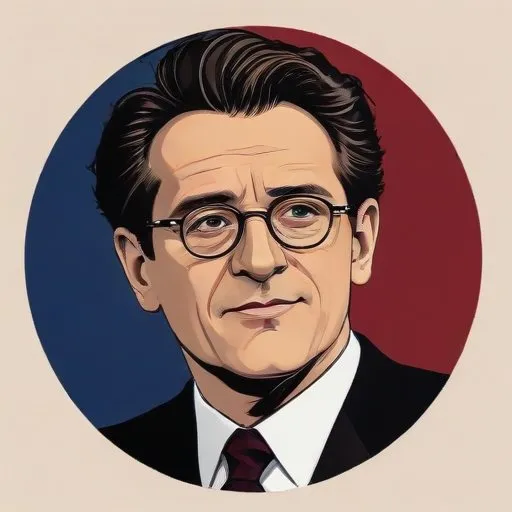
A key architect of Germany's Ostpolitik, he played a crucial role in shaping the country's foreign policy and relations with Eastern Europe during the Cold War era.
Egon Bahr, a German SPD politician, is renowned for creating and promoting Ostpolitik, a pivotal foreign policy approach that aimed to normalize relations between West Germany and Eastern European countries, particularly the Soviet Union and East Germany. As Secretary of State in the German Chancellery from 1969 to 1972, Bahr played a crucial role in shaping the policies of Chancellor Willy Brandt, earning him a place in the annals of German history.
Born on March 18, 1922, in Treffurt, Prussian Province of Saxony, Bahr grew up in a family of modest means. His father, Karl Bahr, was a high school teacher, and his mother, Hedwig, was a homemaker. After completing his secondary education in 1940, Bahr pursued a career as an industrial specialist at the Rheinmetall-Borsig armament corporation in Berlin.
During World War II, Bahr served in the Wehrmacht from 1942 to 1944, rising to the rank of Fahnenjunker cadet. However, he was demoted and accused of being non-Aryan due to his Jewish grandmother, and subsequently worked as an armaments worker at Rheinmetall-Borsig.
After the war, Bahr's journalistic career took off as he worked at the Berliner Zeitung, one of West Berlin's prominent daily newspapers. He later worked at two other West Berlin periodicals, the Allgemeine Zeitung West Berlin and Der Tagesspiegel West Berlin. From 1950 to 1960, he served as chief commentator of the Bonn bureau of RIAS, Rundfunk im amerikanischen Sektor, or Broadcasting in the American Sector.
Bahr's crowning achievement was the development of Ostpolitik, which aimed to ease tensions between West Germany and its Eastern neighbors. As Secretary of State, he was instrumental in negotiating several landmark treaties, including:
These treaties facilitated greater cooperation and understanding between West Germany and the Soviet Union, ultimately leading to a reduction in Cold War tensions.
Egon Bahr's Ostpolitik has had a lasting impact on German and European politics. His efforts paved the way for German reunification and played a crucial role in shaping the country's foreign policy. Today, Bahr is remembered as a visionary statesman who contributed significantly to the promotion of peace and understanding in Europe.
Bahr received numerous accolades for his contributions, including the Order of Merit of the Federal Republic of Germany (1973) and the Willy Brandt Prize (2003).
Bahr passed away on August 19, 2015, at the age of 93, leaving behind a legacy of diplomacy and statesmanship. Despite his many accomplishments, Bahr remained humble and dedicated to his country, earning him a place in the hearts of Germans and Europeans alike.
Born in 1913
A German statesman who served as Chancellor of Germany, known for his efforts to reconcile with Eastern Europe and his "Ostpolitik" policy, earning him a Nobel Peace Prize.
Born in 1918
A German leader who served as Chancellor from 1974 to 1982, known for his pragmatic and socially liberal policies, and his key role in shaping the European Union. He was also a respected economist and published author.
82 Years Old
The 7th Chancellor of Germany, a lawyer-turned-politician, led the country from 1998 to 2005, implementing significant economic and social reforms. He's known for his efforts to modernize Germany and strengthen the European Union.
Born in 1915
A prominent post-war German politician who served as Minister President of Bavaria and played a key role in shaping the country's conservative politics. He was also a strong advocate for European integration.
99 Years Old
A German statesman who served as Vice-Chancellor and Foreign Minister, playing a key role in reunifying Germany and shaping European politics. He's known for his diplomatic efforts and advocacy for human rights.
Born in 1904
A German lawyer and politician who served as Chancellor of Germany from 1966 to 1969, known for his role in rebuilding post-war Germany and his efforts to come to terms with the country's Nazi past.
Born in 1906
A key figure in post-WWII German politics, he played a crucial role in shaping the country's reunification efforts and served as a minister in the German government.
Born in 1926
A German lawyer and politician who served as the 8th Mayor of Berlin, known for his efforts to rebuild and reunify the city during the Cold War era. He played a key role in shaping Berlin's modern identity.
