


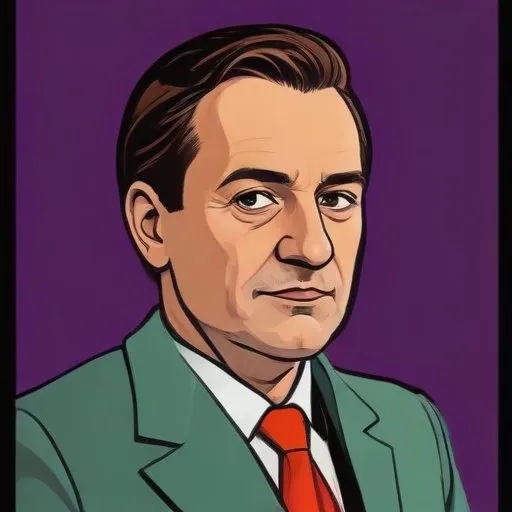
A German politician who served as the Mayor of Marburg, known for his contributions to the city's development and governance.
Georg Gamann, a stalwart figure in German politics, is renowned for his remarkable tenure as the mayor of Marburg, serving the city for nearly two decades. His unwavering commitment to public service earned him numerous accolades, including the prestigious Groes Verdienstkreuz, one of the German Federal Crosses of Merit.
Born on May 28, 1910, in Marburg, Gamann's rise to prominence began with his membership in the Social Democratic Party of Germany (SPD). He went on to serve as a member of the Hessian Landtag in Wiesbaden, cementing his position as a respected figure in regional politics.
Gamann's mayoralty, spanning from 1951 to 1970, was marked by numerous accomplishments that transformed the fabric of Marburg. He worked tirelessly to revitalize the city's infrastructure, promoting urban development and economic growth. His vision for a modern, vibrant Marburg earned him the respect and admiration of its citizens.
In recognition of his outstanding contributions to public service, Gamann was awarded the Groes Verdienstkreuz, a testament to his dedication to the people of Marburg and Germany.
The Georg Gamann Stadion in Marburg, named in his honor, stands as a poignant tribute to his enduring legacy. This iconic stadium has become a symbol of the city's gratitude for Gamann's selfless service.
Gamann's distinguished career was marked by notable milestones, including his membership in the second and fourth Federal Assemblies in 1954 and 1964, respectively. These achievements solidified his reputation as a respected statesman and dedicated public servant.
Georg Gamann's remarkable life came full circle when he passed away on August 5, 1987, in his beloved Marburg. His legacy continues to inspire generations, serving as a beacon of hope for a brighter, more prosperous future.
Born in 1876
Led post-war West Germany's reconstruction and served as a key figure in shaping the country's modern identity, earning him the title "Father of the Federal Republic."
Born in 1897
The second Chancellor of West Germany, a key figure in the country's post-war economic miracle, known for his liberal economic policies and leadership during a period of rapid growth and reconstruction.
Born in 1904
A German lawyer and politician who served as Chancellor of Germany from 1966 to 1969, known for his role in rebuilding post-war Germany and his efforts to come to terms with the country's Nazi past.
Born in 1913
A German statesman who served as Chancellor of Germany, known for his efforts to reconcile with Eastern Europe and his "Ostpolitik" policy, earning him a Nobel Peace Prize.
Born in 1918
A German leader who served as Chancellor from 1974 to 1982, known for his pragmatic and socially liberal policies, and his key role in shaping the European Union. He was also a respected economist and published author.
96 Years Old
The first unified Germany's leader, who oversaw the country's reunification after the Berlin Wall's fall, and is credited with creating a strong, stable economy.
82 Years Old
The 7th Chancellor of Germany, a lawyer-turned-politician, led the country from 1998 to 2005, implementing significant economic and social reforms. He's known for his efforts to modernize Germany and strengthen the European Union.
72 Years Old
The first female Chancellor of Germany, serving for 16 years, known for her leadership during the European sovereign-debt crisis and her role in shaping the European Union's policy. She's a highly influential figure in modern politics.
