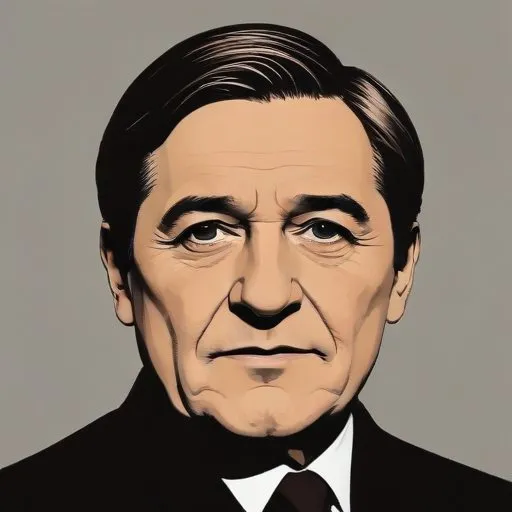
Gerald Gtting: The Loyalist of East Germany's Christian Democratic Union
A Life of Politics and Service
Gerald Gtting is known for his unwavering dedication to the East German Christian Democratic Union (CDU), serving as its chairman from 1966 to 1989. During his tenure, he played a crucial role in shaping the party's policies and ideology, often facing criticism for his close ties to the ruling Socialist Unity Party (SED).
Early Life and Education
Born on June 9, 1923, in Nietleben, Prussian Province of Saxony, Gtting grew up in a tumultuous era. During World War II, he served in the Reichsarbeitsdienst and later in the Wehrmacht. After the war, he was briefly held as a prisoner of war by US forces in 1945. Upon his release, Gtting pursued higher education, studying German studies, history, and philology at the
Martin Luther University of Halle from 1946 to 1948.
Rise to Prominence
Gtting joined the CDU in 1946, quickly rising through the ranks. In 1949, he became the General Secretary of the CDU and was elected to the People's Chamber (Volkskammer), the East German legislative body. Over the next four decades, he held various influential positions, including Chairman of the CDU faction in the People's Chamber (1958-1963), Deputy Prime Minister of the GDR (1963-1966), and Deputy Chairman of the Council of State (1963-1989).
Leadership and Controversy
As Chairman of the CDU, Gtting worked closely with the SED-dominated National Front, leading to criticism that he was too accommodating to the communist regime. He played a key role in purging CDU members who opposed the SED's influence, earning him the reputation as a loyalist to the regime. Despite this, Gtting maintained a strong presence in East German politics, serving as Chairman of the People's Chamber from 1969 to 1976 and its Vice-Chairman from 1969 to 1989.
Legacy and Impact
Gtting's legacy is complex, marked by both loyalty to the CDU and accommodation to the communist regime. While he worked to preserve the CDU's identity, his close ties to the SED raised questions about his commitment to democratic principles. Nevertheless, his dedication to public service and politics left an indelible mark on East Germany's political landscape.
- Gtting received several honors, including the Patriotic Order of Merit in 1963 and the Star of People's Friendship in 1973.
- He was a member of the Central Committee of the CDU from 1954 to 1989.
- Gtting passed away on May 19, 2015, leaving behind a legacy of political service and controversy.
Remembering Gerald Gtting
Gerald Gtting's life was a testament to his commitment to public service and politics. While his loyalty to the CDU and accommodation to the SED regime raised questions, his impact on East German politics cannot be ignored. As we reflect on his legacy, we are reminded of the complexities of politics and the importance of critically examining the actions of those who shape our world.
FAQ
What was Gerald Göttings role in East German politics?
Gerald Götting was a German politician who served as a leading figure in the Socialist Unity Party of Germany, the ruling party of East Germany, from 1949 to 1989.
What were Gerald Göttings views on socialism?
Gerald Götting was a strong advocate for socialism, arguing that it was the only just and equitable system for organizing society and achieving economic development.
What was Gerald Göttings relationship with Erich Honecker?
Gerald Götting was a close ally and confidant of Erich Honecker, the General Secretary of the Socialist Unity Party and leader of East Germany from 1971 to 1989.
What was Gerald Göttings take on German reunification?
Gerald Götting was initially opposed to German reunification, fearing that it would lead to the demise of socialism in East Germany and the loss of national sovereignty.
What was Gerald Göttings legacy?
Gerald Göttings legacy is as a leading figure in East German politics, shaping the countrys socialist system and development, and grappling with the complexities of German reunification.