


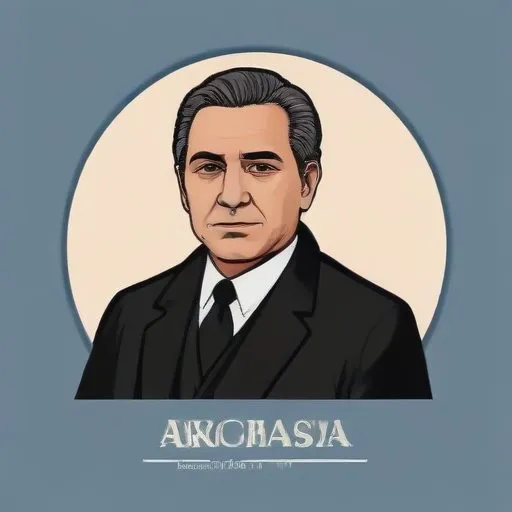
Gervasio Antonio de Posadas is remembered as a prominent figure in Argentina's struggle for independence, serving as a member of the Second Triumvirate and later as the Supreme Director of the United Provinces from 1814 to 1815. During his tenure, he played a crucial role in shaping the country's early years, leaving an indelible mark on its history.
Born on June 18, 1757, in Buenos Aires, Posadas pursued his early studies at the convent of San Francisco. He later studied and practiced law with Manuel José de Labardén, laying the foundation for his future career in public service.
In 1789, Posadas was appointed notary general for the bishopric, a position he held until the events of the May Revolution in 1810. Although he was caught off guard by the revolution, his subsequent involvement with the Sociedad Patriótica, a faction led by Cornelio Saavedra, earned him a reputation as a dedicated patriot.
Posadas' association with Saavedra led to his exile to Mendoza in 1811, following the riots of April 5. However, a month later, he was appointed solicitor-procurator for the City of Buenos Aires, marking a turning point in his career.
In 1813, Posadas became a member of the Second Triumvirate, alongside Nicolás Rodríguez Peña and Juan Larrea. The trio was commissioned to draft a constitution for the Asamblea del Año XIII, which later granted executive power to the Triumvirate. On January 22, 1814, Posadas became the Supreme Director of the United Provinces, a position he held for a year.
During his rule, Posadas faced numerous challenges, including the exile of Saavedra and Campana, the fall of Montevideo to the United Provinces, and conflicts with José Gervasio Artigas and the Liga Federal on the Banda Oriental. The restoration of Ferdinand VII of Spain to the throne in 1815 further complicated matters.
Posadas was succeeded by his nephew, Carlos María de Alvear, who was soon removed by a military coup d'état. By August 1815, the entire Alvearista faction was in disgrace, and Posadas was jailed. He spent the remainder of his life in relative obscurity, passing away on July 2, 1833, in Buenos Aires.
Like many prominent Argentines of the 19th century, Posadas was a freemason, reflecting his commitment to the principles of liberty, equality, and fraternity.
Posadas' legacy is complex, with his tenure marked by both significant achievements and challenges. Despite the controversies surrounding his rule, he remains an important figure in Argentina's struggle for independence, laying the groundwork for the country's future development.
Born in 1778
Led the successful fight for independence in Argentina, Chile, and Peru, and is revered as a national hero in these countries. He's also credited with creating the Army of the Andes, a crucial force in the Latin American wars of independence.
Born in 1770
A key figure in Argentina's struggle for independence, he created the country's flag and played a crucial role in its early development.
Born in 1811
A pioneering journalist and politician who modernized Argentina's education system and infrastructure, earning him the nickname "Father of Education" in Argentina.
Born in 1821
A 19th-century leader who modernized Argentina's economy and infrastructure, and is also revered for his literary and journalistic contributions.
