


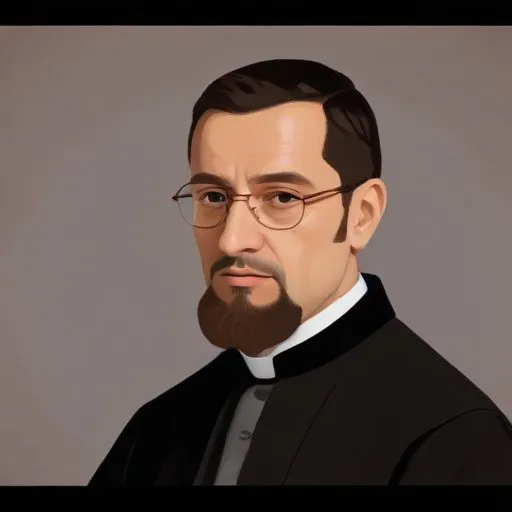
A 17th-century Italian priest and composer who wrote innovative oratorios and sacred music, influencing the development of classical music.
Giacomo Carissimi, a prolific Italian composer and music teacher, is renowned for establishing the characteristic features of the Latin oratorio, a genre that would shape the course of Baroque music. His contributions to the musical world are multifaceted, with compositions ranging from masses and motets to cantatas, leaving an indelible mark on the development of music in northern European countries.
Although the exact birthdate of Carissimi remains unknown, it is believed to be around 1604 or 1605 in Marino, near Rome, Italy. His early life is shrouded in mystery, with little information available about his family and upbringing. His parents, Amico and Livia, had four daughters and two sons, with Giacomo being the youngest.
Carissimi's first known appointments were at Tivoli Cathedral, where he sang in the choir from October 1623 and later became the organist from October 1624 to October 1627. This early experience laid the foundation for his future successes. In 1628, he moved to Assisi, becoming the maestro di cappella at the Cathedral of San Rufino. Later, in 1628, he obtained the same position at the church of Sant'Apollinare, belonging to the Collegium Germanicum in Rome, a position he held until his death.
Carissimi's talent and reputation earned him several offers to work in prominent establishments, including an opportunity to succeed Claudio Monteverdi at San Marco di Venezia in Venice. However, he chose to remain in Rome, where he was ordained a priest in 1637. In 1656, Christina of Sweden, then living in Rome, appointed Carissimi as her maestro di cappella del concerto di camera, a testament to his exceptional skill and stature in the musical world.
Carissimi's compositional output was remarkable, with a focus on sacred music. His Latin oratorios, characterized by their use of biblical texts and dramatic expression, set a new standard for the genre. He also composed numerous masses, motets, and cantatas, showcasing his mastery of various forms and styles.
Carissimi's influence extends beyond Italy, with his music disseminated widely throughout northern European countries. His pupils, including Johann Caspar Kerll in Germany and Marc-Antoine Charpentier in France, carried his legacy forward, shaping the musical landscape of their respective regions. Today, Carissimi is recognized as one of the most important figures of the Roman School, a testament to his enduring impact on the development of Western classical music.
Giacomo Carissimi's life and works serve as a poignant reminder of the power of music to transcend time and borders. His innovative spirit, technical mastery, and dedication to his craft have left an indelible mark on the world of classical music, ensuring that his legacy will continue to inspire and enrich future generations of musicians and music lovers alike.
Born in 1567
A Baroque music pioneer who revolutionized the opera and sacred music genres with innovative harmonies and orchestration, leaving an indelible mark on classical music.
Born in 1585
A renowned Baroque composer and organist, known for his contributions to the development of the oratorio and passion genres, creating over 500 works that showcased his mastery of choral music.
Born in 1678
A virtuosic violinist and prolific composer, he crafted over 400 concertos, including "The Four Seasons," which remains a beloved and iconic masterpiece of classical music.
Born in 1685
A virtuosic harpsichordist and composer, renowned for crafting over 550 sonatas that showcased his innovative and expressive style, blending Italian and Portuguese influences. 42
Born in 1710
A Baroque composer, violinist, and organist who made significant contributions to the development of opera and sacred music, particularly with his famous "Stabat Mater" composition.
Born in 1686
A renowned Baroque composer and teacher, known for his operas and vocal music, influencing many famous composers, including Haydn and Mozart.
Born in 1685
A renowned Baroque composer and organist, famous for creating majestic orchestral suites, operas, and oratorios, including the iconic "Messiah" masterpiece.
Born in 1653
A virtuosic violinist and composer who revolutionized the concerto grosso form, creating a new era of classical music. His influential works elevated the violin to a solo instrument, shaping the course of Western classical music.
