


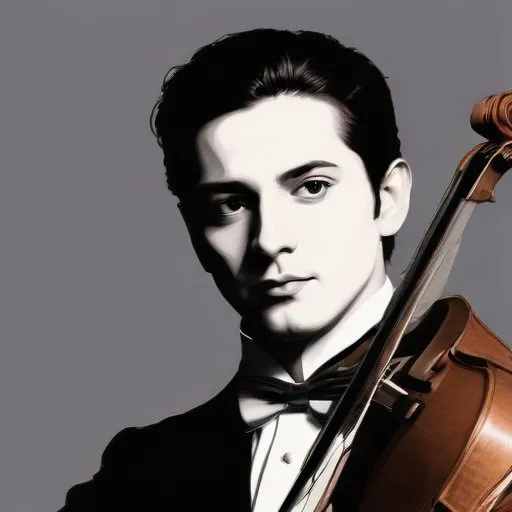
A 17th-century virtuoso violinist and composer who wrote over 40 operas, blending Italian and German styles, and was a prominent figure in the development of the concerto grosso.
Giovanni Maria Bononcini, an Italian violinist and composer, is best known for his significant contributions to the world of music, particularly in the 17th century. His treatise, Musico prattico, published in 1673, is still revered today for its insightful guidance on music composition and performance.
Born in 1642, Bononcini's life was deeply rooted in music from an early age. His talent as a violinist earned him a position as a court musician at Modena in 1671, where he would go on to compose some of his most notable works.
Bononcini's extensive portfolio includes a range of compositions, from sonatas and symphonies to arias and madrigals. Some of his notable works include:
Bononcini's sons, Giovanni Bononcini and Antonio Maria Bononcini, would go on to become renowned composers in their own right, solidifying the family's position as a musical dynasty. His influence on the development of Italian Baroque music is still felt today, with his compositions continuing to inspire and delight audiences worldwide.
Bononcini's contributions to music theory and composition have had a lasting impact on the classical music world. His treatise, Musico prattico, remains an essential resource for music scholars and enthusiasts alike, providing valuable insights into the techniques and practices of 17th-century music composition.
In conclusion, Giovanni Maria Bononcini's life and works serve as a testament to the power of dedication and passion. His legacy continues to inspire and educate, solidifying his place as one of the most important figures in the history of classical music.
Born in 1653
A virtuosic violinist and composer who revolutionized the concerto grosso form, creating a new era of classical music. His influential works elevated the violin to a solo instrument, shaping the course of Western classical music.
Born in 1678
A virtuosic violinist and prolific composer, he crafted over 400 concertos, including "The Four Seasons," which remains a beloved and iconic masterpiece of classical music.
Born in 1658
A virtuosic violinist and composer, he helped establish the concerto grosso form and wrote influential works that shaped the classical music landscape. His compositions remain a staple of Baroque music.
Born in 1685
A master of Baroque music, he composed over 1,000 works, including orchestral suites, cantatas, and passions, that still inspire and influence musicians today. His innovative use of counterpoint and harmony raised the bar for classical music.
Born in 1685
A renowned Baroque composer and organist, famous for creating majestic orchestral suites, operas, and oratorios, including the iconic "Messiah" masterpiece.
Born in 1685
A virtuosic harpsichordist and composer, renowned for crafting over 550 sonatas that showcased his innovative and expressive style, blending Italian and Portuguese influences. 42
Born in 1686
A renowned Baroque composer and teacher, known for his operas and vocal music, influencing many famous composers, including Haydn and Mozart.
Born in 1660
Baroque-era mastermind behind over 600 cantatas, operas, and orchestral works, shaping the course of classical music with his innovative style and harmonic genius.
