


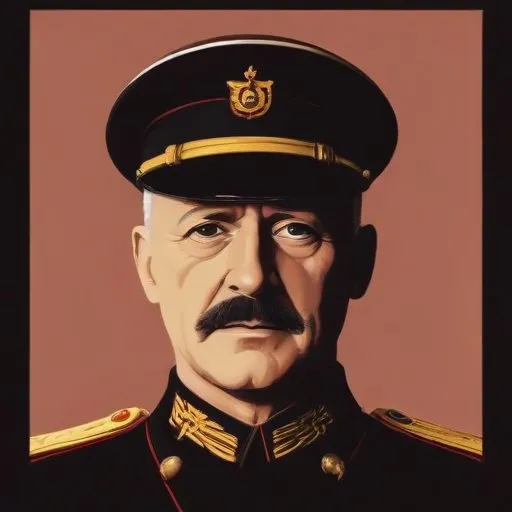
A highly decorated Waffen-SS general during World War II, known for his bravery and tactical genius, particularly during the Battle of Kursk. He later became a successful businessman and author.
Heinz Harmel is remembered as one of the most skilled and feared commanders of the Waffen-SS during World War II, earning the prestigious Knights Cross of the Iron Cross with Oak Leaves and Swords for his bravery and tactical prowess. As the commander of the 10th SS Panzer Division Frundsberg, Harmel was instrumental in some of the war's most pivotal battles, including the Battle of France, the Balkans Campaign, and the fight for Normandy.
Born on June 29, 1906, in Methlingen, Germany, Harmel volunteered for the SS-Verfügungstruppe (later known as the Waffen-SS) in 1935. He quickly rose through the ranks, serving as a company commander in the SS-Regiment Der Führer during the Battle of France in 1940.
In 1941, Harmel participated in the Balkans Campaign and Operation Barbarossa, demonstrating his military prowess and earning the respect of his superiors. In December 1941, he took command of SS-Infanterie-Regiment Deutschland, leading his troops to victory in the capture of Kharkov on March 15, 1943.
Harmel's bravery and leadership were recognized with several prestigious awards, including:
In early 1944, Harmel took command of the 10th SS Panzer Division Frundsberg, leading his troops to Normandy in the summer of that year. Ordered to break the enemy's lines and free the encircled German units in the Falaise Pocket, Harmel's division suffered heavy losses and serious damage. Despite these setbacks, Harmel continued to fight valiantly, participating in the battles around Nijmegen during Operation Market Garden and later in Alsace, where he was tasked with establishing a bridgehead to join the Colmar Pocket.
Heinz Harmel's military career and bravery have become the stuff of legend, earning him a place among the most respected and feared commanders of World War II. While his legacy is shrouded by the controversy of his association with the Nazi regime, Harmel's tactical genius and courage in the face of overwhelming odds cannot be denied.
Harmel passed away on September 2, 2000, at the age of 94, leaving behind a complex and multifaceted legacy that continues to fascinate and educate historians and military enthusiasts to this day.
Born in 1891
A renowned World War II military strategist, known for leading the Afrika Korps and earning the respect of both allies and enemies with his tactical genius.
Born in 1888
A pioneering tank commander who revolutionized modern warfare with his innovative blitzkrieg tactics, earning him the nickname "Father of the Panzerwaffe".
Born in 1880
A German field marshal who led the Wehrmacht during World War II, playing a key role in the invasion of Poland and the Battle of Moscow. He was a prominent figure in the German high command during the war.
Born in 1882
A high-ranking military officer who played a crucial role in World War II, particularly in the Battle of France and the plot to assassinate Adolf Hitler.
Born in 1891
A skilled and highly decorated military leader, known for his tactical genius and defensive strategies during World War II, earning him the respect of both his allies and enemies.
Born in 1887
A highly decorated military strategist who played a crucial role in several key battles during World War II, including the invasion of France and the Siege of Leningrad.
Born in 1893
A high-ranking Nazi official, he was a decorated World War I fighter pilot and later became a prominent politician, serving as Minister President of Prussia. He's infamous for his role in the Nazi regime and war crimes trials.
Born in 1915
A notorious Waffen-SS commander, infamous for his role in the Malmedy massacre during the Battle of the Bulge, and other war crimes.
