


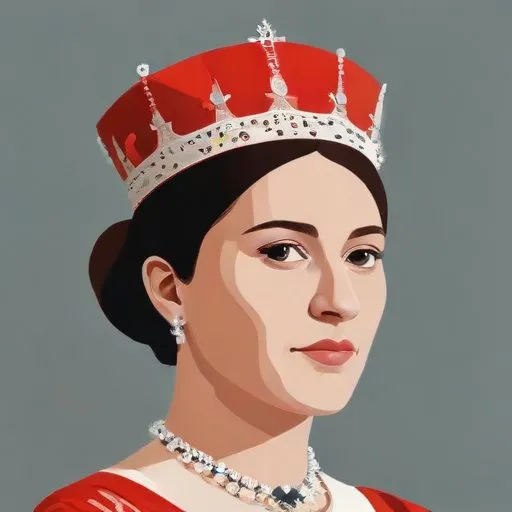
Isabella Jagiellon, the eldest child of King Sigismund I the Old of Poland and his Italian wife Bona Sforza, is remembered as the queen consort of Hungary, a tumultuous and contested throne that she fought tirelessly to secure for her son. Her marriage to John Zápolya, Voivode of Transylvania and King of Hungary, in 1539, marked the beginning of a lifelong struggle for power and recognition in the face of rival claimants and foreign intervention.
Born on January 18, 1519, in Kraków, Isabella spent her childhood at Wawel Castle and the hunting castle in Niepołomice. She also spent time in the Grand Duchy of Lithuania between 1527-1529 and 1533-1536. Her early life was marked by marriage negotiations, intended to secure alliances with other European royal houses.
Isabella's marriage to John Zápolya was a strategic move to counter the claims of Ferdinand of Austria, who sought to add Hungary to the Habsburg domains. The union produced a son, John Sigismund Zápolya, in July 1540, just two weeks before John's death. This event sparked a succession crisis, with Isabella determined to secure the throne for her infant son.
Sultan Suleiman the Magnificent of the Ottoman Empire, who viewed Hungary as a vassal state, intervened in the succession dispute, establishing Isabella as regent of the eastern regions of the medieval Kingdom of Hungary on behalf of her son. This semi-independent buffer state, known for its freedom of religion, became a source of tension between Isabella and Ferdinand, who continued to assert his claims to the throne.
In 1551, Isabella was forced to abdicate by Bishop George Martinuzzi, who conspired with Ferdinand. She returned to her native Poland, only to be recalled to Transylvania in 1556, when Sultan Suleiman threatened to invade Hungary. Isabella ruled as her son's regent until her death on September 15, 1559, leaving behind a legacy of perseverance in the face of adversity.
Isabella Jagiellon's turbulent life and reign had a profound impact on the history of Hungary and Eastern Europe. Her determination to secure the throne for her son, despite opposition from powerful forces, ensured the survival of a semi-independent Hungarian state. Today, she is remembered as a strong and determined queen, who navigated the treacherous waters of royal politics with courage and cunning.
Born in 1456
King of Hungary and Croatia from 1490 to 1516, known for his attempts to strengthen the Hungarian monarchy and defend against Ottoman Empire expansion.
Born in 1326
King of Hungary and Poland who ruled with an iron fist, expanding his kingdom and establishing a strong centralized government. He's also known for his military campaigns against the Ottoman Empire.
Born in 1503
Queen of England from 1382 to 1394, known for her strong diplomatic skills and cultural influence, introducing European customs and fashion to the English court.
Born in 1566
The Polish and Swedish monarch who ruled from 1587 to 1632, known for his attempts to restore Catholicism in Sweden and his involvement in the Polish-Lithuanian Commonwealth's Golden Age. He played a significant role in shaping the fate of Eastern Europe during the 17th century.
Born in 1595
The Polish king who ruled from 1632 to 1648, known for his military campaigns and cultural achievements, including the establishment of the first Polish opera house. He was a strong leader who promoted arts and education.
Born in 1629
The Polish-Lithuanian king who led the Polish-Lithuanian Commonwealth to victory against the Ottoman Empire in the Battle of Vienna in 1683, saving Europe from Ottoman conquest. He's also known for his military prowess and cultural achievements.
