


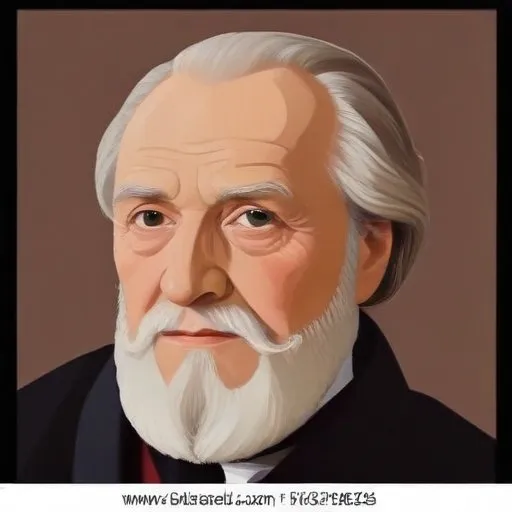
A 17th-century German scholar and critic, renowned for his meticulous editing and annotation of classical texts, significantly contributing to the development of classical studies. His work remains a cornerstone for understanding ancient Greek and Roman literature.
Johann Georg Graevius, a 17th-century German classical scholar and critic, left an indelible mark on the world of classical studies. He is renowned for his monumental work, Thesaurus antiquitatum Romanarum, a 12-volume magnum opus that remains a cornerstone of classical scholarship to this day.
Graevius was born on January 29, 1632, in Naumburg, Electorate of Saxony, to a humble family. Initially destined for a career in law, his life took a dramatic turn when he met Johann Friedrich Gronovius in Deventer, who kindled his passion for philology. Under Gronovius' influence, Graevius abandoned jurisprudence and immersed himself in classical studies.
He completed his education under the tutelage of Daniel Heinsius at Leiden and David Blondel at Amsterdam. During his time in Amsterdam, Graevius converted from Lutheranism to the Reformed Church, a decision that would shape his future academic pursuits.
In 1656, Graevius was appointed chair of rhetoric at the University of Duisburg, a position he held for two years. On Gronovius' recommendation, he succeeded his mentor at Deventer in 1662. Later, in 1667, he moved to the University of Utrecht, where he taught rhetoric, history, and politics until his death in 1703.
Graevius' exceptional teaching skills and profound knowledge drew students from all over the world, including prominent figures like Lorenzo Magalotti. His reputation earned him recognition from monarchs, including Louis XIV, who honored him with special distinction, and William III of England, who appointed him historiographer royal.
Graevius' most significant contributions to classical studies are his two monumental works: Thesaurus antiquitatum Romanarum (1694-1699) and Thesaurus antiquitatum et historiarum Italiae (published posthumously). Although these works have been subject to some criticism, they remain essential references for scholars of classical antiquity.
After Graevius' death, his extensive library, rich in antiquarian classical texts, was purchased by Johann Wilhelm, Elector Palatine, and later transferred to Heidelberg University Library, where it remains a valuable resource for scholars today.
Graevius' scholarly contributions have had a lasting impact on classical studies, shaping the discipline for generations to come. His work has inspired numerous scholars, including Pieter Burmann, who continued his Thesaurus project after Graevius' death.
As a testament to his legacy, Graevius' work remains a cornerstone of classical scholarship, with his Thesaurus antiquitatum Romanarum continuing to influence research and academic inquiry in the field.
Throughout his life, Graevius maintained a strong network of relationships with prominent scholars and intellectuals of his time. His conversion to the Reformed Church and his subsequent academic pursuits were influenced by his mentor, David Blondel.
Graevius' personal life was marked by several key milestones, including his appointment as historiographer royal by William III of England and his visit from Lorenzo Magalotti, a prominent Italian scholar.
Graevius passed away on January 11, 1703, in Utrecht, leaving behind a rich legacy of scholarly contributions that continue to shape our understanding of classical antiquity.
Born in 1646
Developed calculus independently of Isaac Newton, and made major contributions to the fields of philosophy, politics, and history.
Born in 1724
Developed influential philosophical frameworks, such as the Critique of Pure Reason, that shaped modern Western thought on ethics, morality, and human understanding.
Born in 1770
A German philosopher and academic who developed a comprehensive and systematic philosophy that emphasized the unity of all things and the dialectical process of thesis, antithesis, and synthesis. His ideas have had a profound impact on modern thought, influencing fields such as philosophy, politics, and art.
Born in 1788
A pessimistic philosopher who wrote about the human condition, emphasizing the struggles and sufferings of life, and is famous for his concept of the "will to life".
Born in 1749
A German literary giant who penned iconic works like "Faust" and "The Sorrows of Young Werther", shaping the Romantic movement and influencing countless writers.
Born in 1759
A renowned poet and playwright who crafted influential works that explored the human condition, morality, and the struggle for freedom, leaving a lasting impact on German literature.
Born in 1729
A prominent Enlightenment thinker, he's known for his influential writings on philosophy, literature, and theology, which helped shape modern German culture. He's also credited with developing the concept of dramatic irony in literature.
