


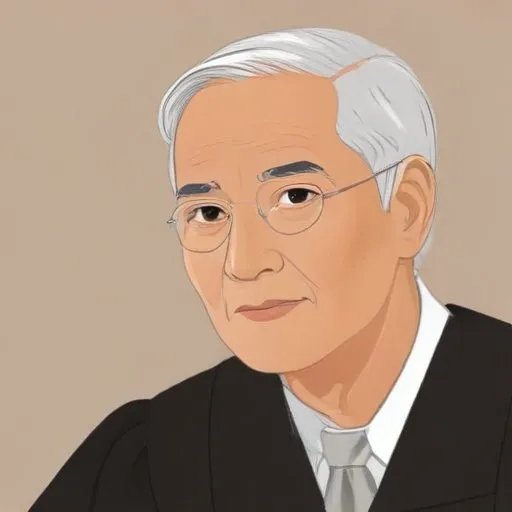
A Filipino lawyer and jurist who served as the 5th Chief Justice of the Supreme Court of the Philippines, known for his courageous stand against Japanese occupation during World War II. He is a national hero for his bravery and martyrdom.
Jos Abad Santos, the fifth chief justice of the Supreme Court of the Philippines, is revered for his unwavering commitment to democracy and his ultimate sacrifice in the pursuit of freedom during World War II. His refusal to cooperate with the Japanese occupation forces led to his execution, earning him a revered place in the annals of Philippine history.
Born on February 19, 1886, in San Fernando, Pampanga, Abad Santos was the seventh of ten children to Vicente Abad Santos and Toribia Basco. His brother Pedro would later become a prominent socialist leader during the Commonwealth era. Abad Santos's early education in his hometown laid the foundation for his future pursuit of justice and equality.
In 1904, he was sent to the United States as a government pensioner, where he completed his pre-law course at Santa Clara College in California, his Bachelor of Laws at Northwestern University in Illinois, and his Master of Laws at George Washington University in 1909. Admitted to the Philippine Bar in 1911, he served as assistant attorney at the Bureau of Justice from 1913 to 1917.
In 1919, Abad Santos played a pivotal role in establishing the Philippine Women's University, the country's first private non-sectarian women's institute of higher learning. He drafted the bylaws and constitution of the university, paving the way for women's empowerment and education in the Philippines.
Abad Santos's exceptional legal acumen earned him the appointment as the first Filipino corporate lawyer of the Philippine National Bank, Manila Railroad Company, and other government corporations. His expertise and commitment to justice propelled him to the highest echelons of the Philippine government.
In 1942, during World War II, he briefly served as the acting president of the Commonwealth of the Philippines and acting commander-in-chief of the Armed Forces of the Philippines. His refusal to cooperate with the Japanese occupation forces led to his capture and execution on May 1, 1942.
Abad Santos's ultimate sacrifice is revered in the Philippines. Together with Josefa Llanes Escoda and Vicente Lim, he is immortalized on the Philippines' 1,000-peso banknote, honoring Filipinos who fought and died resisting the Japanese occupation during World War II.
His legacy extends beyond his role as chief justice and acting president. Abad Santos's unwavering commitment to democracy, justice, and women's empowerment has inspired generations of Filipinos to strive for a better future.
Abad Santos's life and sacrifice serve as a powerful reminder of the importance of standing up against oppression and fighting for freedom. His legacy continues to inspire Filipinos to this day, as a testament to the power of courage and conviction in the face of adversity.
In conclusion, Jos Abad Santos's remarkable life and ultimate sacrifice will forever be etched in the annals of Philippine history as a shining example of unwavering commitment to democracy, justice, and freedom.
Born in 1878
The 2nd President of the Philippines, a key figure in the country's fight for independence from the US, known for his leadership during World War II and establishing a government-in-exile.
Born in 1878
The 4th President of the Philippines, a lawyer and politician who played a key role in the country's transition from American colonial rule to independence. He's most known for his efforts in rebuilding the war-torn nation after World War II.
Born in 1892
This Filipino leader served as the 5th President of the Philippines, playing a key role in rebuilding the country after World War II and shaping its post-war economy. He's remembered for his efforts to restore national sovereignty and promote economic growth.
Born in 1890
The 6th President of the Philippines was a leader who played a crucial role in rebuilding the country after World War II, and is known for his efforts to restore the economy and promote national unity.
Born in 1907
A Filipino leader who served as president from 1953 to 1957, known for his anti-corruption and social reform efforts, as well as his tragic death in a plane crash.
Born in 1896
The 8th President of the Philippines, a lawyer and politician, led the country towards economic growth and independence, implementing the Filipino First Policy to promote national development.
Born in 1910
A Filipino lawyer and politician who served as the 9th President of the Philippines, known for his efforts to reform the country's economy and introduce the Filipino language as the national language.
Born in 1917
A Filipino leader who ruled with an iron fist, implementing martial law and amassing wealth, leaving a legacy of controversy and economic turmoil.
