


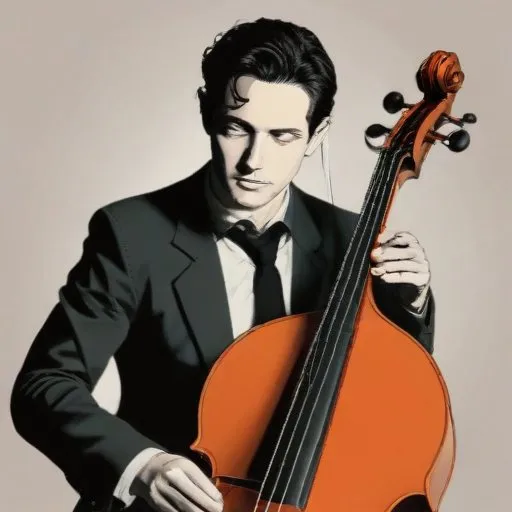
A Belgian cellist and composer who wrote over 120 works, including symphonies, concertos, and chamber music, and was a prominent figure in the Classical period. Known for his technical skill and expressive playing style.
Joseph Abaco, born Joseph Giuseppe Marie Clment Ferdinand dall'Abaco, was a renowned Italian violoncellist and composer who left an indelible mark on the world of classical music. He is best known for his mastery of the cello, composing nearly 40 sonatas for the instrument, as well as his innovative contributions to the development of classical music.
Abaco was born on March 27, 1710, in Brussels, the capital of the Spanish Netherlands, to a musical family. His father, Evaristo Felice dall'Abaco, was a skilled composer and musician who played a significant role in Abaco's early music education.
At the tender age of 19, Abaco entered the service of the Prince-elector of Cologne at Bonn, where he played in the court chamber orchestra. His exceptional talent and dedication earned him the position of music director in 1738. This appointment marked the beginning of Abaco's illustrious career, which would take him to England in 1740 and eventually to Verona, in the Republic of Venice, where he became a member of the prestigious Philharmonic Academy.
Abaco's compositional output was characterized by its unique blend of Baroque and Classical styles, which was quite distinct from the prevailing musical trends of his time. His works include:
In 1766, Abaco was bestowed the title of baron by Prince Maximilian of Bavaria, a testament to his remarkable achievements in the world of music.
Abaco lived a long and fulfilling life, passing away on August 31, 1805, at the age of 95, at his estate in Arbizzano di Valpolicella, Napoleonic Italy, near Verona. His legacy continues to inspire cellists and composers to this day, serving as a reminder of the power of dedication, hard work, and innovative spirit.
Through his life and works, Abaco left an indelible mark on the world of classical music, cementing his place as one of the most important figures of the 18th century.
Born in 1743
A renowned Italian cellist and composer, known for his contributions to the classical music repertoire, particularly his iconic "Minuet" from String Quintet in E major, Op. 11, No. 5.
Born in 1692
A virtuosic violinist and composer who wrote over 150 concertos and sonatas, known for his technically demanding and expressive works that showcased his mastery of the instrument.
Born in 1782
A virtuosic violinist and composer who revolutionized the instrument's technical possibilities, leaving an indelible mark on classical music.
Born in 1678
A virtuosic violinist and prolific composer, he crafted over 400 concertos, including "The Four Seasons," which remains a beloved and iconic masterpiece of classical music.
Born in 1653
A virtuosic violinist and composer who revolutionized the concerto grosso form, creating a new era of classical music. His influential works elevated the violin to a solo instrument, shaping the course of Western classical music.
Born in 1685
A master of Baroque music, he composed over 1,000 works, including orchestral suites, cantatas, and passions, that still inspire and influence musicians today. His innovative use of counterpoint and harmony raised the bar for classical music.
Born in 1685
A renowned Baroque composer and organist, famous for creating majestic orchestral suites, operas, and oratorios, including the iconic "Messiah" masterpiece.
Born in 1685
A virtuosic harpsichordist and composer, renowned for crafting over 550 sonatas that showcased his innovative and expressive style, blending Italian and Portuguese influences. 42
