


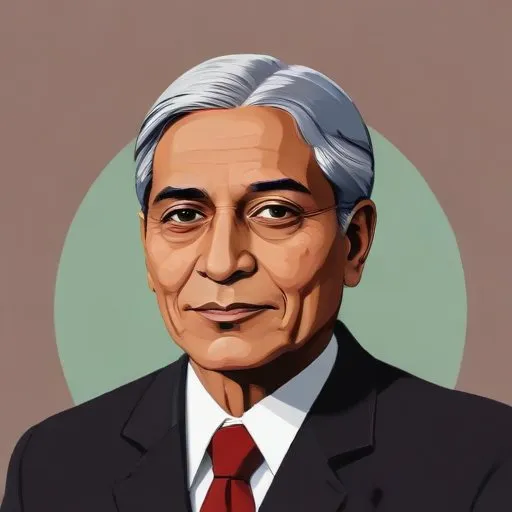
Indian engineer, lawyer, and politician who played a key role in India's freedom movement and was a strong advocate for women's rights and social reform. He was a close associate of Mahatma Gandhi and participated in the Non-Cooperation Movement.
Joseph Baptista, a pioneering Indian politician and activist, is renowned for his unwavering dedication to the Indian Home Rule Movement, closely affiliating with the likes of Lokmanya Tilak and Annie Besant. As the first president of the Indian Home Rule League, established in 1916, Baptista played a pivotal role in shaping India's struggle for self-governance.
Born on March 17, 1864, in Matharpacady, Mazagaon, Bombay (now Mumbai), Joseph Baptista hailed from the East Indian ethnic community. His father, John Baptista, was from Uttan, near Bhayandar. After completing his early education from St. Mary's School, Mumbai, Baptista pursued a degree in engineering from the College of Engineering in Pune. He furthered his education by obtaining a BA in political science from the prestigious Fitzwilliam College, Cambridge.
Baptista's involvement in politics began in 1901, when he joined the Bombay Municipal Corporation, serving for 17 years. During this period, he was deeply influenced by the Irish Home Rule movement, which sparked his ideas for an Indian equivalent. His association with Lokmanya Tilak, a prominent Indian nationalist, blossomed into a strong partnership, with Baptista coining the phrase "Swaraj is my Birthright," later popularized by Tilak.
Baptista's contributions to the Indian Home Rule Movement were instrumental in shaping the country's struggle for independence. His dedication, passion, and leadership inspired a generation of Indian nationalists. As the first president of the Indian Home Rule League, he played a crucial role in popularizing the movement and generating widespread support.
In 1925, Baptista was elected as the mayor of Bombay, a testament to his growing influence and recognition within the Indian political landscape.
Baptista's life was marked by his unwavering commitment to the Indian Home Rule Movement. His association with prominent Indian nationalists, such as Lokmanya Tilak and Annie Besant, not only shaped his ideology but also forged lasting bonds. Baptista's legacy extends beyond his political accomplishments, serving as a beacon of inspiration for future generations.
At the heart of Baptista's philosophy lay his ardent desire for Indian self-governance. He firmly believed that Swaraj, or home rule, was an inherent right of the Indian people. This conviction drove his activism, inspiring him to coin the phrase "Swaraj is my Birthright," which became a rallying cry for the Indian Home Rule Movement.
In the context of Indian nationalism, Baptista's contributions are often overshadowed by those of his contemporaries, such as Lokmanya Tilak and Mahatma Gandhi. However, his unique blend of political acumen, legal expertise, and unwavering dedication to the Home Rule Movement set him apart as a distinct voice within the Indian nationalist landscape.
Joseph Baptista's life and work are intricately woven into the fabric of India's struggle for independence. His contributions to the Indian Home Rule Movement, though often understated, played a vital role in shaping the country's trajectory. As India looks back on its rich history, Baptista's unwavering commitment to the cause of Swaraj serves as a reminder of the power of individual resolve and collective action.
Born in 1861
A renowned Indian engineer, scholar, and statesman who played a crucial role in the development of India's infrastructure and industry, earning him the country's highest civilian honor. He is most known for his innovative irrigation systems and hydroelectric projects.
Born in 1889
India's first Prime Minister, a key figure in the country's struggle for independence from British rule, and a champion of democracy and secularism. He played a crucial role in shaping modern India's government and economy.
Born in 1869
Indian freedom fighter, activist, and philosopher who led India to independence from British rule through non-violent civil disobedience, inspiring civil rights movements worldwide.
Born in 1891
Indian Minister of Law and Justice who fought for the rights of the marginalized and drafted the Indian Constitution, playing a key role in shaping modern India's democracy.
Born in 1875
Indian lawyer and politician who played a key role in India's struggle for independence and later became the country's first Deputy Prime Minister, known for his strong leadership and unification of the country.
Born in 1884
India's first president, a key figure in the country's struggle for independence, who played a crucial role in shaping the nation's early years. He's revered for his leadership and commitment to democracy.
Born in 1878
The first Indian Governor-General of India, serving from 1948 to 1950, and a key figure in the country's struggle for independence from British rule. He was a strong advocate for non-violent resistance and played a crucial role in shaping India's early years.
Born in 1888
A key figure in India's struggle for independence, he played a crucial role in shaping the country's education system and promoting unity among its diverse population.
